

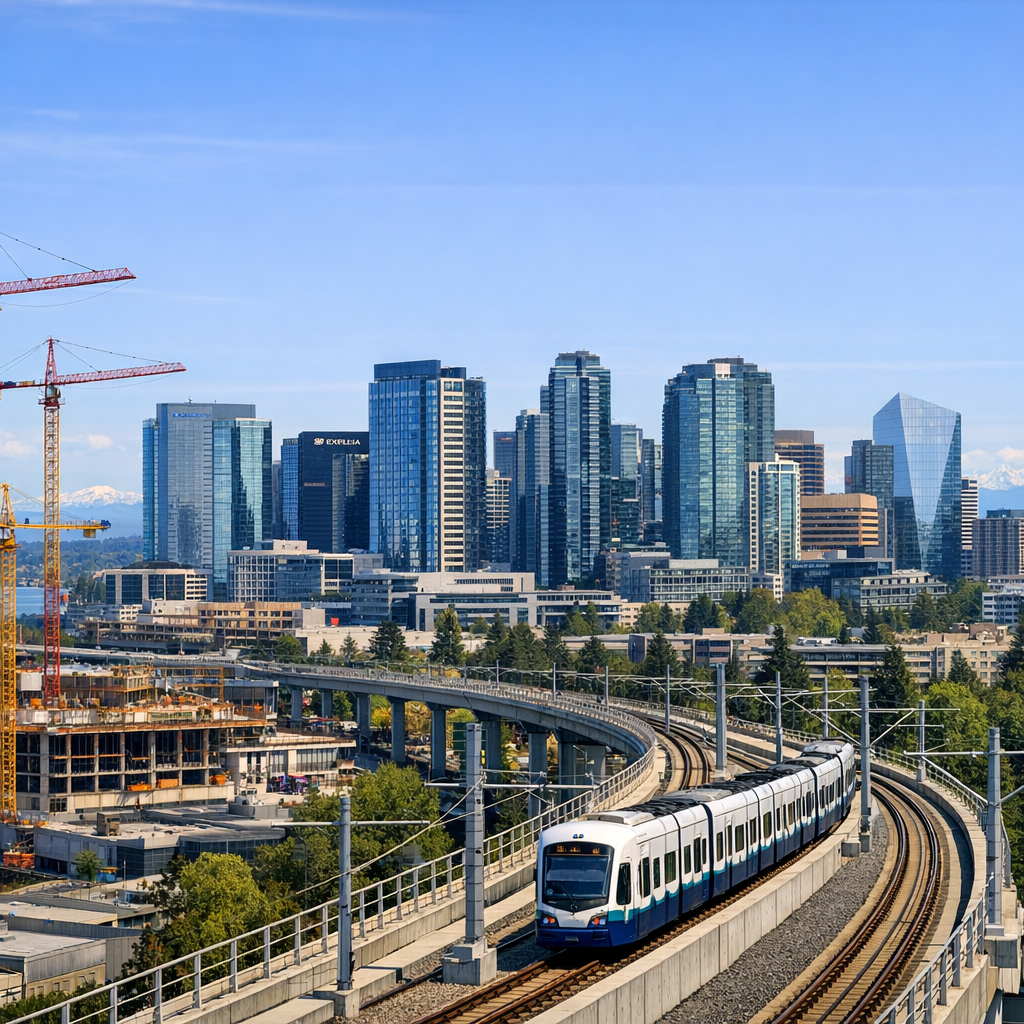
Bellevue, Washington, has experienced significant economic growth in recent years, solidifying its position as a major regional employment center. With over 150,000 jobs, Bellevue is the second-largest city in Washington State in terms of employment. The city’s job market has grown at an average annual rate of 1.12% since 2000, with projections estimating 192,800 jobs by 2035.
Housing Market Trends
The housing market in Bellevue reflects the city’s economic vitality. As of April 2026, the average home value was $1,527,243, a 3.3% decrease over the past year. Homes typically go pending in around nine days, indicating a competitive market. The median sale price in March 2026 was $1.5 million, with homes receiving an average of three offers and selling in approximately eight days.
Infrastructure Developments
Significant infrastructure projects are underway to support Bellevue’s growth. Notably, Sound Transit’s light rail service between Seattle and Bellevue is set to commence on March 28, 2026. This new line will connect Bellevue to Seattle’s Chinatown-International District station, enhancing regional connectivity and providing expanded transit options from Redmond to Lynnwood. Trains will run every eight minutes during peak periods and every 10-15 minutes at other times.
Business and Cultural Growth
Bellevue’s business environment continues to thrive, with 1,400 new businesses opening in the city last year. The city also hosts events like Bellevue Fashion Week, which showcases emerging talent and has raised over $1.4 million for local nonprofits since its inception. These developments contribute to Bellevue’s reputation as a vibrant economic and cultural hub in the Pacific Northwest.