

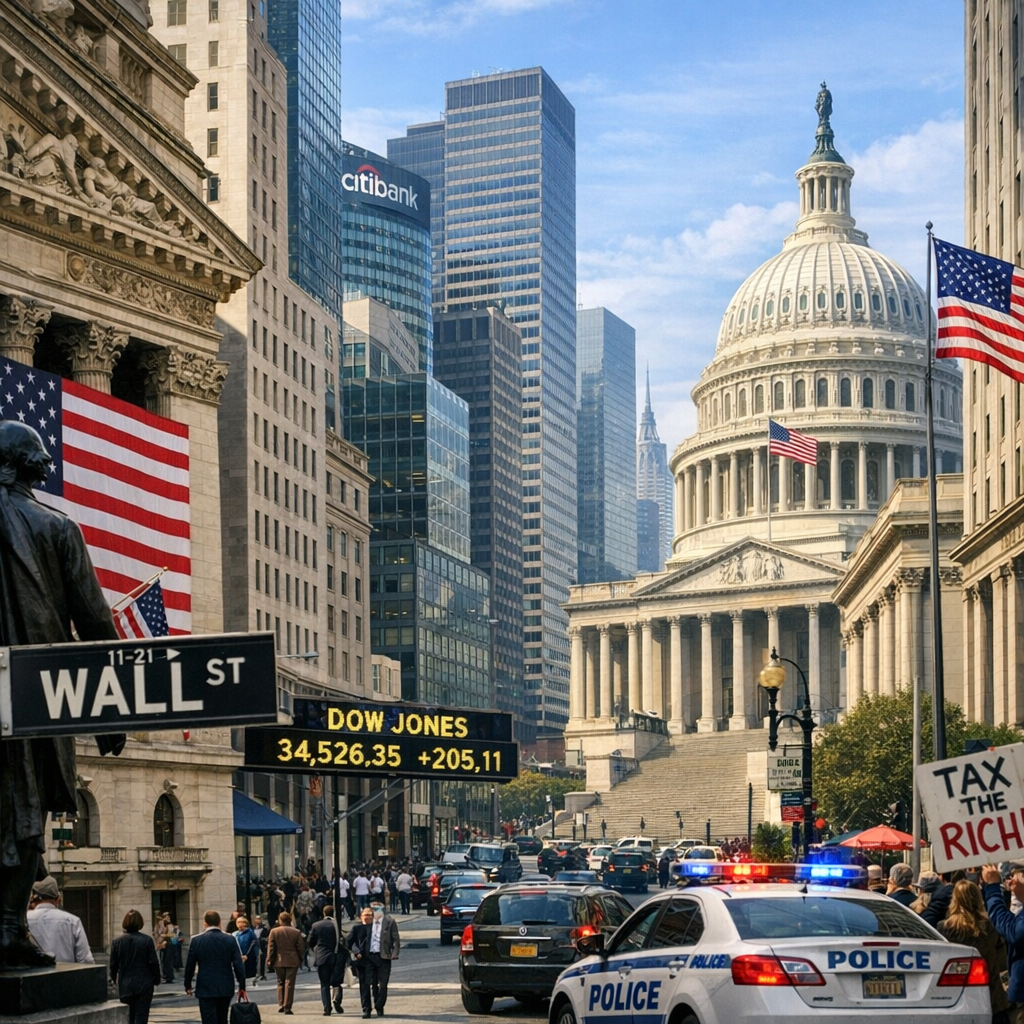
The United States is experiencing notable shifts in both its economic performance and political dynamics. Understanding these changes is crucial for comprehending the nation’s current trajectory.
Economic Overview
In the first quarter of 2026, the U.S. economy expanded at an annualized rate of 2%, marking a recovery from the previous quarter’s sluggish 0.5% growth. This rebound was largely attributed to increased federal spending following a 43-day government shutdown. However, the ongoing conflict in Iran has introduced economic uncertainties, particularly affecting energy prices and inflation.
Consumer spending, which constitutes approximately 70% of the U.S. economy, grew by 1.6% during this period. Notably, business investment surged by 8.7%, driven by advancements in artificial intelligence sectors. Conversely, residential investment declined for the fifth consecutive quarter, dropping by 8%.
Political Landscape
The U.S. political arena continues to be dominated by two major parties: the Democratic Party and the Republican Party. While these parties contest presidential elections every four years and maintain national organizations, they often function as loose alliances of state and local entities between elections. Occasionally, other parties challenge the dominance of the Democrats and Republicans, but the two-party system remains prevalent.
Recent years have seen shifts in political engagement, particularly on social media platforms. Data indicates a decline in overall platform use, with younger and older Americans increasingly abstaining from social media. Platforms like Facebook, YouTube, and Twitter have experienced reduced usage, while TikTok and Reddit have seen modest growth. Politically, most platforms have shifted toward Republican users, with Twitter experiencing the most significant change, as posting has flipped nearly 50 percentage points from Democrats to Republicans. This trend suggests a more fragmented and polarized digital public sphere.
Understanding these economic and political developments is essential for grasping the current state of the nation and anticipating future trends.