

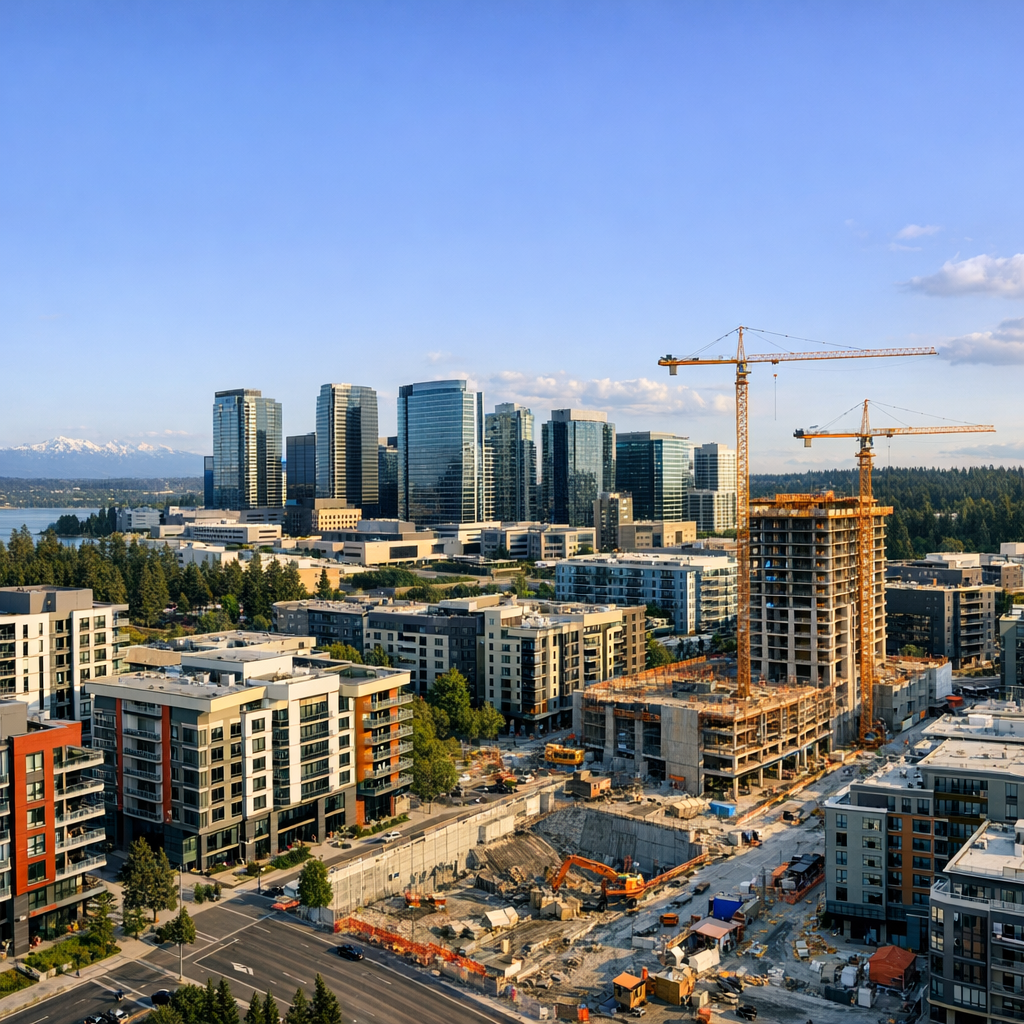
Bellevue, Washington, has long been recognized for its dynamic real estate market, characterized by robust demand and a thriving economy. As the city continues to evolve, understanding the current housing trends, rental landscape, and upcoming developments is essential for residents and potential buyers alike.
Current Market Trends
Recent data indicates a slight softening in Bellevue’s housing market. The average home value stands at approximately $1.5 million, reflecting a 3.7% decrease over the past year. Homes are typically going pending in around 11 days, suggesting that while demand remains strong, buyers are exercising more caution in their purchasing decisions.
In the broader Seattle area, which includes Bellevue, there has been a notable increase in housing inventory. Active listings on the Eastside have surged by about 43% year over year, leading to a 3.78% decline in prices. This trend provides buyers with more options and potentially greater negotiating power.
Rental Market Dynamics
The rental market in Bellevue remains competitive. The average rent is approximately $2,742, which is higher than the national average of $1,951. This represents a modest year-over-year increase of 0.6%. The steady rental prices reflect the city’s desirability and the influx of professionals seeking proximity to major tech employers.
New Developments and Urban Growth
Bellevue’s transformation from a suburban community to a vibrant urban center is evident in its ongoing developments. The city has become a hub for major tech companies, including Microsoft, Amazon, and Expedia, attracting a diverse workforce and fostering economic growth. This influx has spurred the development of luxury retail spaces, sophisticated dining options, and cultural venues, enhancing the city’s appeal.
Infrastructure improvements, such as the expansion of the East Link light rail line connecting Bellevue and Redmond, are set to further integrate the city into the regional transit network. This development is expected to enhance accessibility and support continued growth in the housing market.
Conclusion
Bellevue’s real estate landscape is characterized by a blend of stability and transformation. While home values have experienced a slight decline, the market remains active, with properties moving relatively quickly. The rental sector continues to thrive, reflecting the city’s ongoing appeal. As Bellevue embraces new developments and infrastructure projects, it solidifies its position as a dynamic and desirable place to live and invest.