

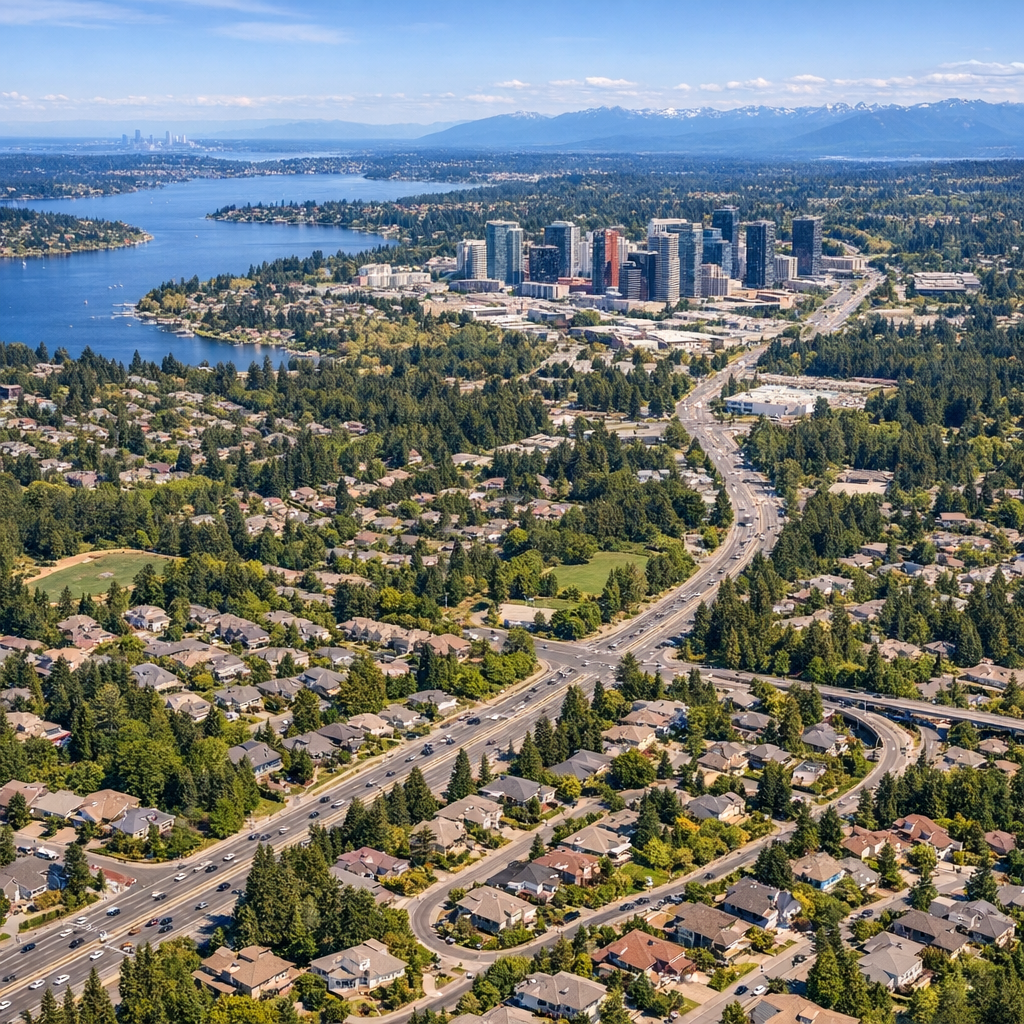
Bellevue is undergoing significant transformations aimed at enhancing community well-being and addressing future challenges. Recent developments in housing, transportation, and sustainability reflect the city’s proactive approach to growth and quality of life.
Housing Initiatives
In response to the region’s housing shortage, the Bellevue City Council has approved updates to its housing regulations to allow for ‘middle housing’—including duplexes, cottage courts, and small apartment buildings—in neighborhoods previously restricted to single-family homes. This change aims to increase housing options and affordability within the city.
Additionally, the council has advanced an updated Affordable Housing Strategy for 2026-2032, targeting the production and preservation of over 5,700 affordable units for residents earning between 0% and 80% of the area median income. This strategy underscores Bellevue’s commitment to meeting the housing needs of its growing workforce and community.
Transportation Enhancements
To improve road safety, the city has initiated the ‘Safe Speeds Bellevue’ program, which involves reducing speed limits on numerous arterial roads. For instance, streets like Bel-Red Road and NE 20th Street will see speed limits drop from 35 mph to 25 mph, aiming to decrease high-end speeding and reduce the severity of traffic incidents.
Furthermore, Bellevue is introducing a paid curb pricing program in its densest neighborhoods, including Downtown, Wilburton, BelRed, and the Spring District. This dynamic, demand-based pricing model will feature hourly rates ranging from $1 to $8, managed by the city’s transportation department to maintain optimal on-street parking availability.
Sustainability Efforts
Building on its previous environmental initiatives, Bellevue has released the 2026-2030 Sustainable Bellevue Plan. This comprehensive strategy outlines high-impact actions across five key areas: Climate Change, Energy & Buildings, Mobility & Land Use, Materials & Waste, and Natural Systems. The plan sets ambitious goals, including reducing community greenhouse gas emissions by 50% by 2030 and achieving carbon neutrality by 2050, positioning Bellevue as a leader in sustainability and resilience.
These concerted efforts in housing, transportation, and sustainability demonstrate Bellevue’s dedication to fostering a livable, inclusive, and forward-thinking community for all residents.