

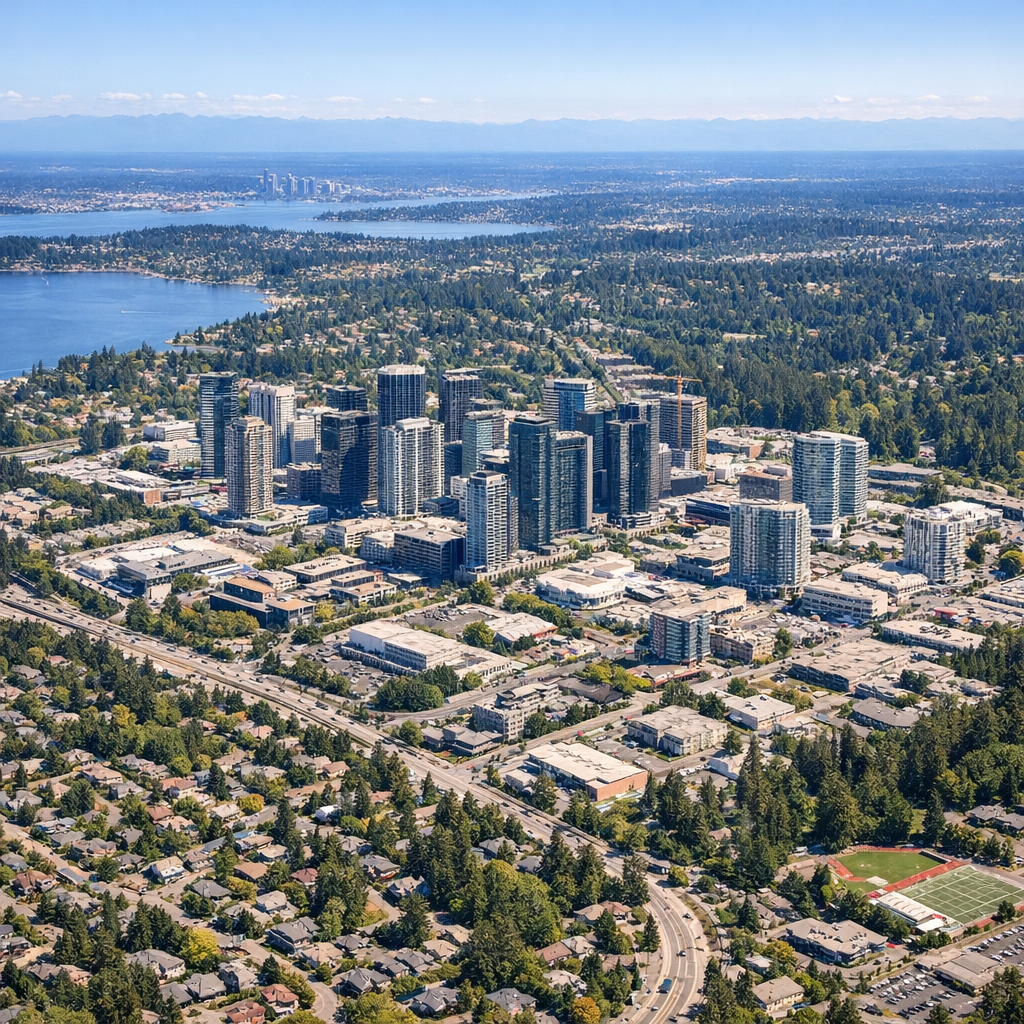
Bellevue, Washington, has experienced significant economic growth over the past decade, solidifying its position as a major regional employment center. With a population of approximately 151,199 as of 2023, Bellevue stands as the fifth-largest city in the state. The median household income is notably high at $161,300, reflecting the city’s robust economic health.
Employment and Workforce
As of 2015, Bellevue boasted over 150,000 jobs, making it the second-largest city in Washington in terms of employment. The city’s job market has shown resilience, with an average annual growth rate of 1.12% since 2000. Projections indicate that by 2035, the number of jobs in Bellevue could reach 192,800. This growth underscores Bellevue’s role as a dynamic economic hub in the region.
Housing Market Trends
The housing market in Bellevue has seen fluctuations in recent years. As of May 2026, the average home value was $1,499,175, marking a 3.7% decrease over the past year. Homes typically go pending in around 11 days, indicating a competitive market. The median sale price per square foot stands at $662, down 8.7% from the previous year. These trends suggest a cooling in the housing market, potentially offering opportunities for prospective buyers.
Transportation Developments
Transportation infrastructure has been a focal point for Bellevue’s growth. The introduction of the Sound Transit 2 Line has significantly enhanced connectivity. This light rail service, which began on March 28, 2026, links Bellevue to Seattle’s Chinatown-International District station, providing residents with efficient transit options across Lake Washington. Trains run every eight minutes during peak times, facilitating smoother commutes and bolstering economic ties between the cities.
Business Climate and Economic Outlook
Local business leaders have expressed optimism about Bellevue’s economic trajectory. Brent Beardall, President and CEO of WaFd Bank, highlighted the national economy’s resilience, with growth projections exceeding 2% for the remainder of 2026. However, he also noted challenges specific to Washington state, including high sales, business, capital gains, and estate taxes, which could impact Eastside businesses. Despite these concerns, Bellevue’s strategic planning and regional partnerships continue to drive its economic success.
Community Sentiment
Community sentiment remains positive. According to the 2026 VIBe Check survey, 75% of Bellevue voters believe the city is headed in the right direction, and 96% feel safe downtown during the day. Such confidence reflects the city’s effective governance and commitment to maintaining a high quality of life for its residents.
In conclusion, Bellevue’s economic landscape is characterized by steady employment growth, a dynamic housing market, and significant transportation advancements. While challenges exist, the city’s proactive approach and community engagement position it well for sustained prosperity.