

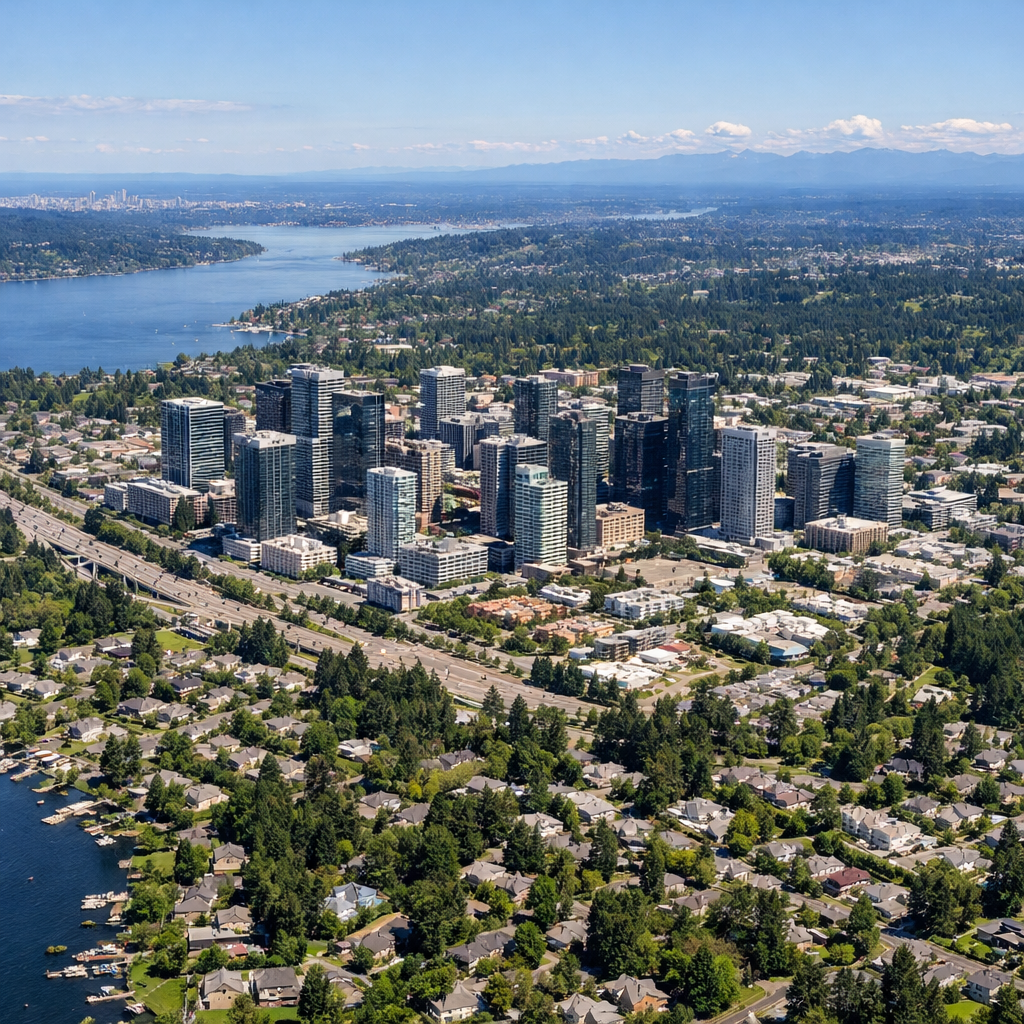
Bellevue, Washington, continues to solidify its position as a dynamic economic hub in the Pacific Northwest. With a population of approximately 154,193 as of July 2025, the city has experienced a 1.5% growth since 2020. This growth is accompanied by a median household income of $165,576, significantly higher than both state and national averages.
Housing Market Trends
The housing market in Bellevue reflects the city’s economic vitality. As of May 2026, the average home value stands at $1,499,175, marking a 3.7% decrease over the past year. Homes typically go pending in around 11 days, indicating a competitive market.
Business Climate and Employment
In 2025, Bellevue’s visitor economy supported approximately 14,000 hospitality industry jobs and generated $142 million in state and local taxes.
However, local business leaders have expressed concerns about the state’s financial direction. Brent Beardall, President and CEO of WaFd Bank, highlighted that Washington now ranks among the highest in the nation for sales, business, capital gains, and estate taxes. This tax environment poses challenges for Eastside businesses and investors.
Infrastructure Developments
Significant infrastructure projects are underway to enhance connectivity and support economic growth. Notably, Sound Transit’s light rail connection between Seattle and Bellevue is set to commence service on March 28, 2026. This project aims to unite both sides of Lake Washington with high-capacity transit, facilitating easier commutes and potentially boosting local businesses.
Conclusion
Bellevue’s economic landscape is characterized by robust growth, a competitive housing market, and ongoing infrastructure developments. While challenges such as the state’s tax environment exist, the city’s strategic initiatives and investments position it well for sustained prosperity.