

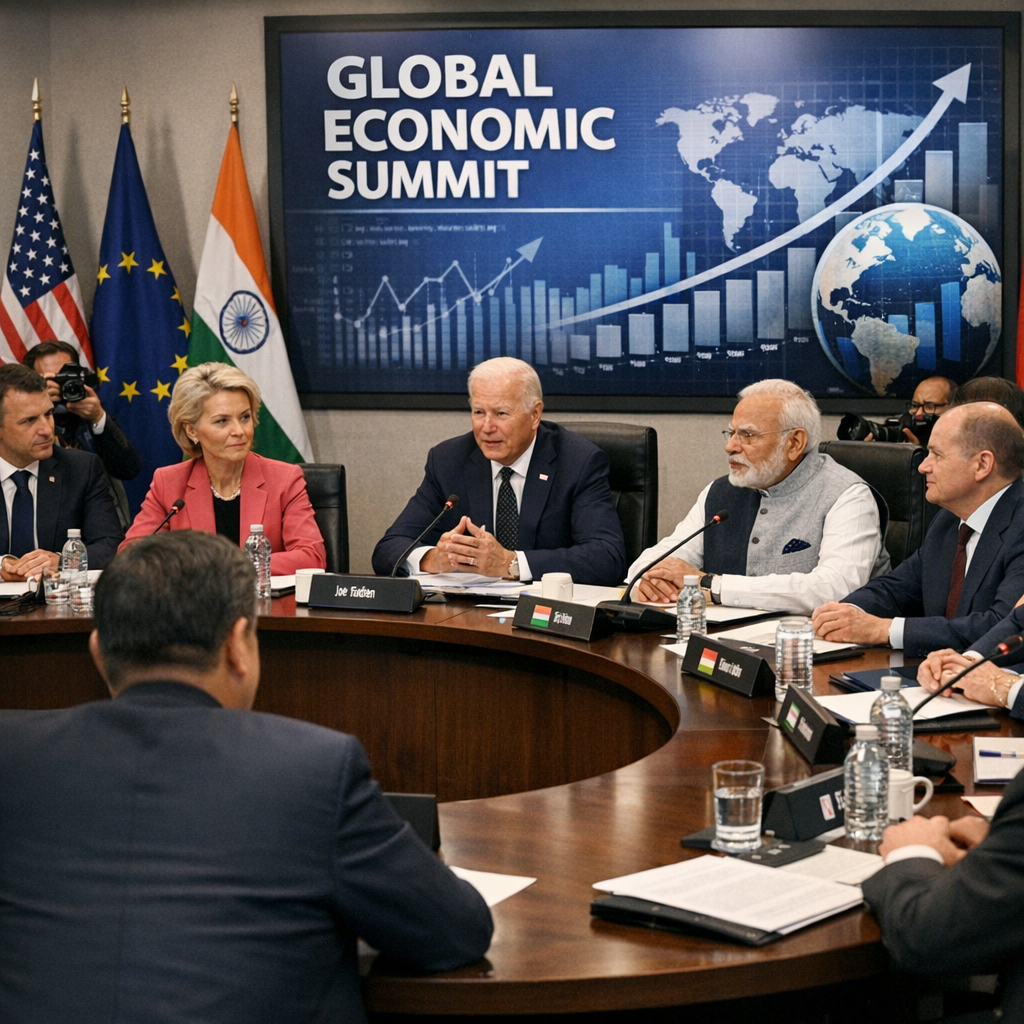
The global economy has demonstrated remarkable resilience in the face of recent geopolitical challenges, including trade tensions and regional conflicts. Projections indicate a steady growth rate of approximately 2.7% in 2026, reflecting the adaptability of economies worldwide.
United States: AI Investments Fuel Growth
In the United States, substantial investments in artificial intelligence (AI) and digital infrastructure are key drivers of economic expansion. These investments are bolstering productivity and fostering innovation across various sectors, contributing to a projected GDP growth of 2.1% in 2026.
Europe: Navigating Energy Challenges
European economies are contending with energy price volatility and supply chain disruptions. Despite these challenges, strategic fiscal policies and a focus on renewable energy sources are helping to stabilize growth, with the Eurozone expected to achieve a growth rate of 0.8% in 2026.
Asia: India’s Robust Expansion
In Asia, India stands out with a projected growth rate of 6.4% in 2026, driven by strong consumer demand and a burgeoning technology sector. Conversely, China’s growth is anticipated to moderate to 4.5%, influenced by structural adjustments and a cooling property market.
Latin America: Facing Economic Pressures
Latin American economies are experiencing pressures from low commodity prices and trade issues. However, targeted policy interventions and efforts to diversify economies are underway to mitigate these challenges and support sustainable growth.
Global Outlook: Cautious Optimism
While the global economic outlook remains cautiously optimistic, it is essential for policymakers to address underlying vulnerabilities. Continued investments in technology, infrastructure, and education, coupled with prudent fiscal policies, will be crucial in sustaining growth and enhancing economic resilience in the years ahead.