

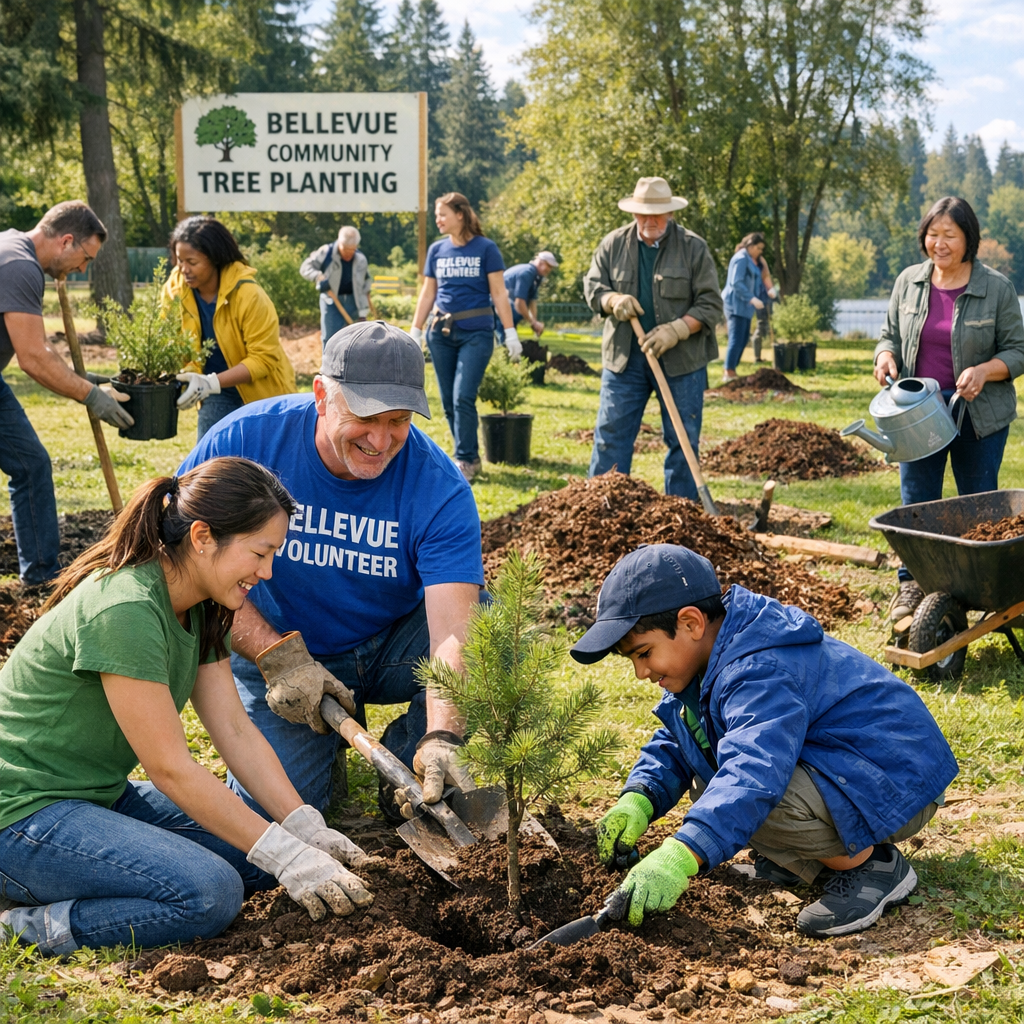
Bellevue is making significant strides in environmental sustainability, thanks to the combined efforts of its residents and city initiatives. The city’s commitment to reducing greenhouse gas emissions and enhancing climate resilience is evident in various programs and community actions.
Community Engagement and Achievements
In a recent survey, 81% of Bellevue residents reported experiencing climate-related hazards such as extreme heat, wildfire smoke, and flooding. This awareness has spurred community involvement in sustainability efforts. Notably, Bellevue’s greenhouse gas emissions decreased by 4.6% from 2023 to 2024, driven by reduced energy use and a shift toward renewable energy sources. Since 2011, municipal emissions have dropped by 52%, showcasing the city’s dedication to environmental stewardship.
City Initiatives and Programs
The 2026-2030 Sustainable Bellevue Plan outlines strategies across five key areas: climate change, energy and buildings, mobility and land use, materials and waste, and natural systems. This plan aims to achieve carbon neutrality by 2050, with a 50% reduction in community-wide greenhouse gas emissions by 2030. Programs like the Clean Buildings Incentive Program and Energy Smart Eastside support residents and businesses in improving energy efficiency and transitioning to cleaner energy sources.
Individual Actions and Resources
Residents can contribute to Bellevue’s sustainability goals by participating in the Bellevue Climate Challenge, which offers resources and guidance on reducing carbon footprints. Simple actions such as drinking tap water instead of bottled, regularly inflating tires, and planting trees can collectively make a significant impact. The city’s Environmental Performance Dashboard provides up-to-date information on Bellevue’s progress and offers additional ways for individuals to get involved.
Bellevue’s journey toward sustainability is a collaborative effort, with both the city and its residents playing vital roles. By staying informed and actively participating in these initiatives, we can ensure a healthier, more resilient community for future generations.