

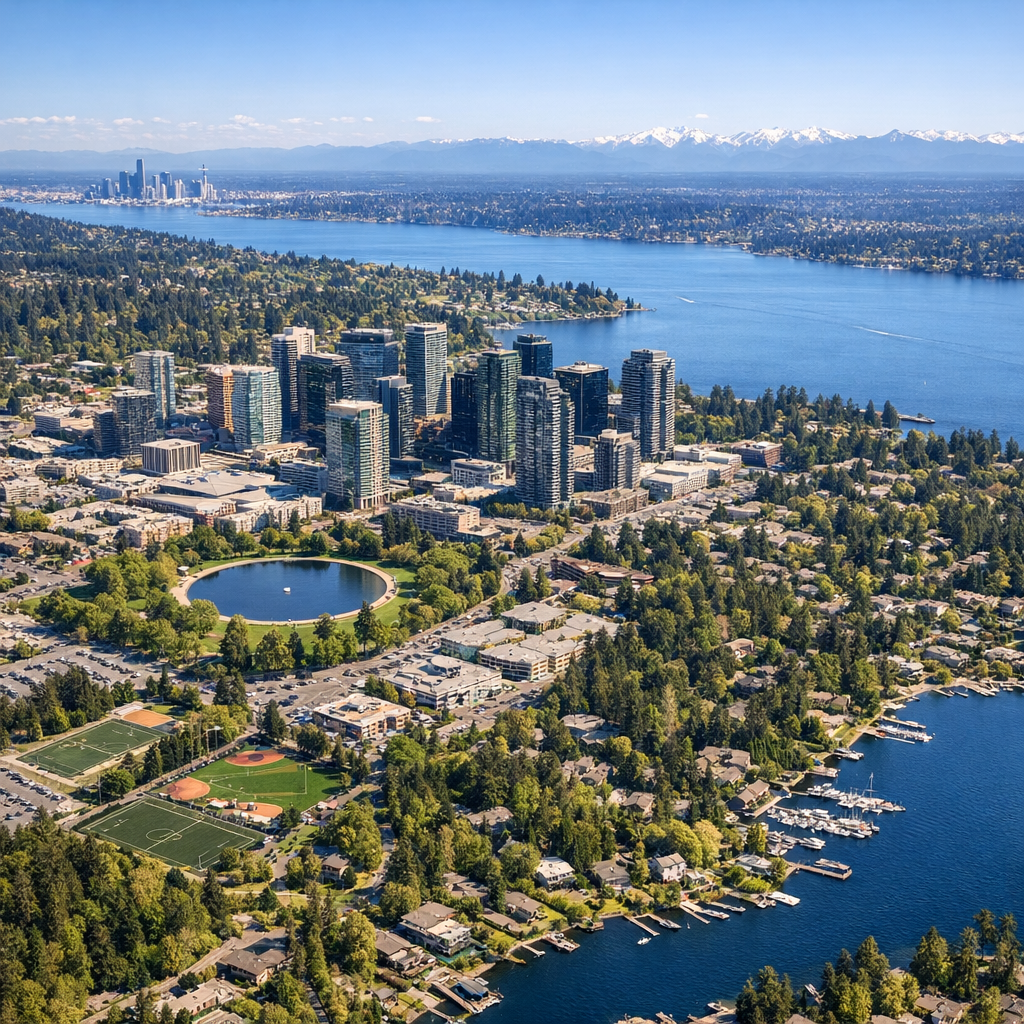
Bellevue has long been recognized for its commitment to environmental stewardship. The city’s 2026-2030 Sustainable Bellevue Plan outlines a comprehensive strategy to achieve carbon neutrality by 2050, emphasizing energy efficiency, renewable energy adoption, and community engagement.
Energy Efficiency and Renewable Energy
Buildings and energy use are significant contributors to Bellevue’s greenhouse gas emissions. Residential energy use accounts for 23% of community-wide emissions, while commercial energy use, including multifamily buildings, accounts for 28%. To address this, the city has implemented programs like the Clean Buildings Incentive Program, assisting commercial building owners in enhancing energy efficiency. Additionally, the Energy Smart Eastside initiative supports homeowners in transitioning to energy-efficient heat pumps, reducing reliance on fossil fuels.
Community Engagement
Recognizing the importance of community involvement, Bellevue has launched the Bellevue Climate Challenge. This program encourages residents to take actionable steps toward reducing their carbon footprint, offering resources and tracking tools to monitor progress. By fostering a collaborative approach, the city aims to empower individuals and businesses to contribute to its sustainability goals.
Natural Systems and Urban Forestry
Bellevue’s natural systems play a crucial role in enhancing the city’s resilience to climate change. The city has set a goal to achieve a 40% citywide tree canopy by 2050. Recent assessments indicate a slight decrease in tree canopy from 39.6% to 39.3% between 2021 and 2023, highlighting the need for continued efforts in urban forestry and green space preservation.
Looking Ahead
As Bellevue continues to grow, balancing development with environmental responsibility remains a priority. The city’s proactive measures, combined with community participation, position Bellevue as a leader in sustainability. Residents are encouraged to stay informed and engaged through city resources and programs, contributing to a healthier, more resilient community for future generations.