

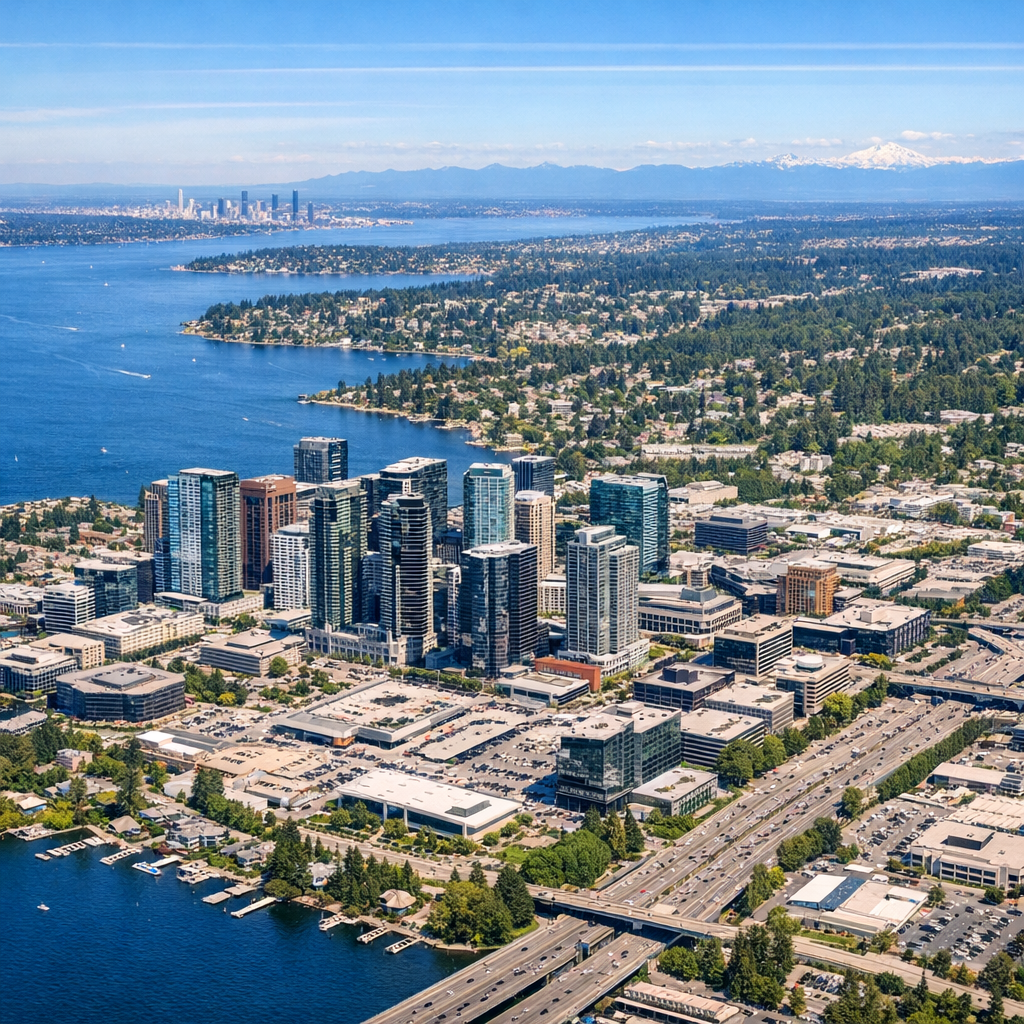
Bellevue, Washington, has experienced significant economic growth over the past two decades, solidifying its position as a dynamic regional center. With a population of approximately 151,199 residents, Bellevue stands as the fifth-largest city in the state. The city’s diverse and highly educated workforce has been a driving force behind its economic success.
Employment Trends
As of 2015, Bellevue boasted over 150,000 jobs, making it the second-largest city in Washington in terms of employment. The city has maintained an average annual job growth rate of 1.12% since 2000, with projections estimating employment to reach 192,800 by 2035. This steady growth underscores Bellevue’s resilience and adaptability in the face of economic fluctuations.
Business Environment
Bellevue’s business-friendly climate is evident in the positive feedback from local enterprises. According to the 2025 Business Survey, 71% of businesses believe the city is heading in the right direction, and 85% view Bellevue as a favorable place to conduct business. Additionally, 69% would recommend establishing a business in the city, highlighting the supportive environment for entrepreneurs and established companies alike.
Housing Market Dynamics
The housing market in Bellevue reflects the city’s economic vitality. As of May 2026, the median sale price of homes was $1.5 million, representing an 11.3% decrease from the previous year. Homes typically sell within eight days, indicating a competitive market. Despite the recent dip in prices, the high median home value underscores the desirability of Bellevue as a residential destination.
Transportation Infrastructure
Enhancements in transportation infrastructure have further bolstered Bellevue’s economic appeal. The introduction of the Seattle-to-Bellevue light rail service on March 28, 2026, has improved connectivity between the Eastside and downtown Seattle. This development is expected to facilitate commuter movement and support local businesses by increasing accessibility.
Conclusion
Bellevue’s economic landscape is characterized by robust employment growth, a favorable business environment, and a dynamic housing market. The city’s strategic investments in infrastructure and commitment to fostering a supportive climate for businesses and residents alike position it as a leading economic hub in the Pacific Northwest.