

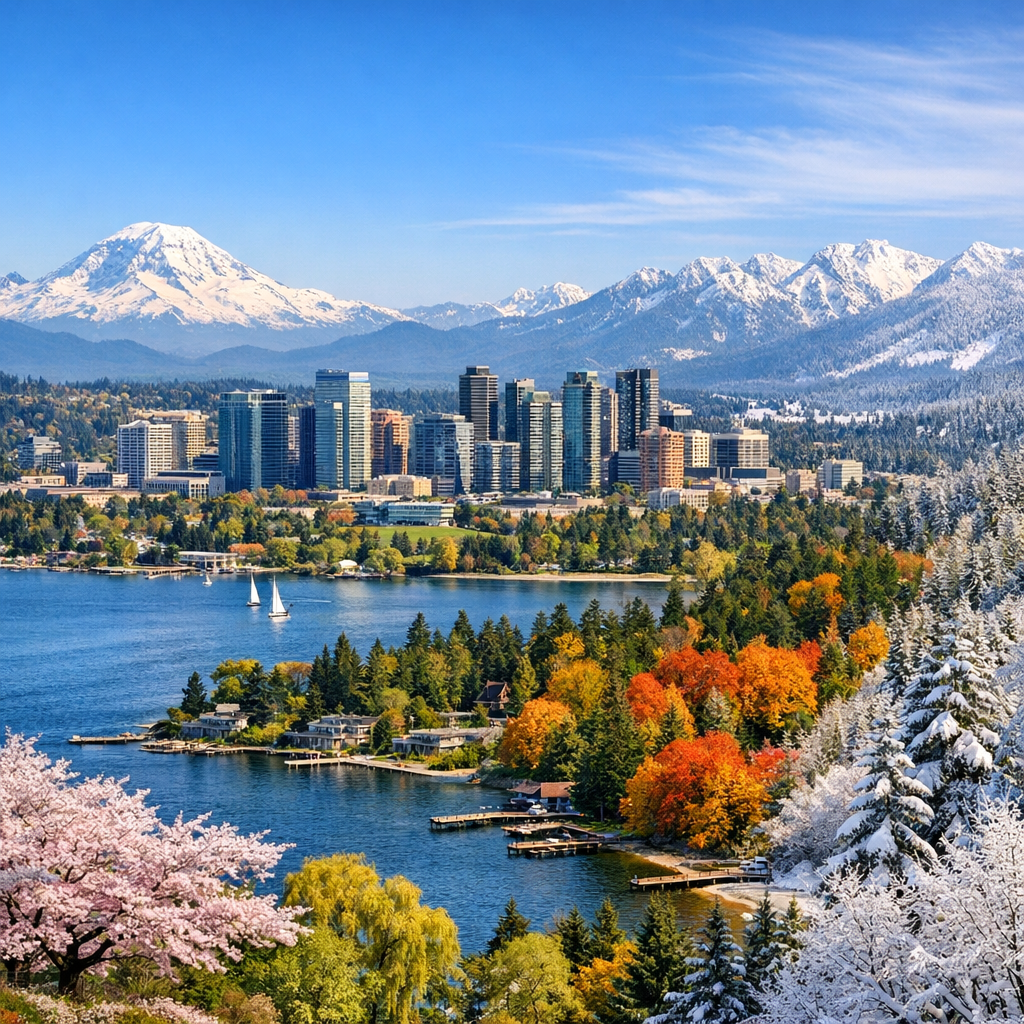
Bellevue, Washington, offers a temperate climate characterized by mild, wet winters and warm, dry summers. This unique weather pattern is influenced by the city’s proximity to Lake Washington and the Puget Sound, which moderate temperature extremes.
Seasonal Weather Patterns
Winter
During winter months, Bellevue experiences average high temperatures ranging from 46°F to 50°F, with lows between 36°F and 39°F. Snowfall is rare, averaging only 15 days below freezing annually. Most precipitation occurs during this season, contributing to the city’s lush greenery.
Spring
Spring brings a gradual warming, with average highs increasing from 50.5°F in March to 64.6°F in May. Rainfall decreases, and daylight hours extend, providing ideal conditions for outdoor activities and the blooming of local flora.
Summer
Summers are warm and dry, with average highs between 69.3°F and 76.6°F. July and August are the warmest months, offering ample sunshine and minimal rainfall, making them perfect for enjoying Bellevue’s numerous parks and outdoor spaces.
Autumn
Autumn sees a return to cooler temperatures, with highs decreasing from 70°F in September to 48.6°F by November. Rainfall begins to increase, preparing the region for the wetter winter months ahead.
Climate Change and Its Impacts
Climate change is already affecting Bellevue. A recent survey indicated that 81% of residents have experienced climate-related hazards such as extreme heat, wildfire smoke, and flooding. Projections suggest that by 2050, the city could experience an additional 30-32 days of extreme heat above 88°F annually, placing added strain on health, infrastructure, and natural systems.
City Initiatives and Community Action
In response to these challenges, Bellevue has adopted the 2026-2030 Sustainable Bellevue Plan, aiming for carbon neutrality by 2050. The plan focuses on reducing greenhouse gas emissions and enhancing the city’s resilience to climate impacts. Residents are encouraged to participate in the Bellevue Climate Challenge, which offers actionable steps to reduce individual carbon footprints and prepare for climate-related events.
Understanding Bellevue’s climate patterns and the ongoing efforts to address climate change is essential for residents. By staying informed and engaged, the community can work together to ensure a sustainable and resilient future.