

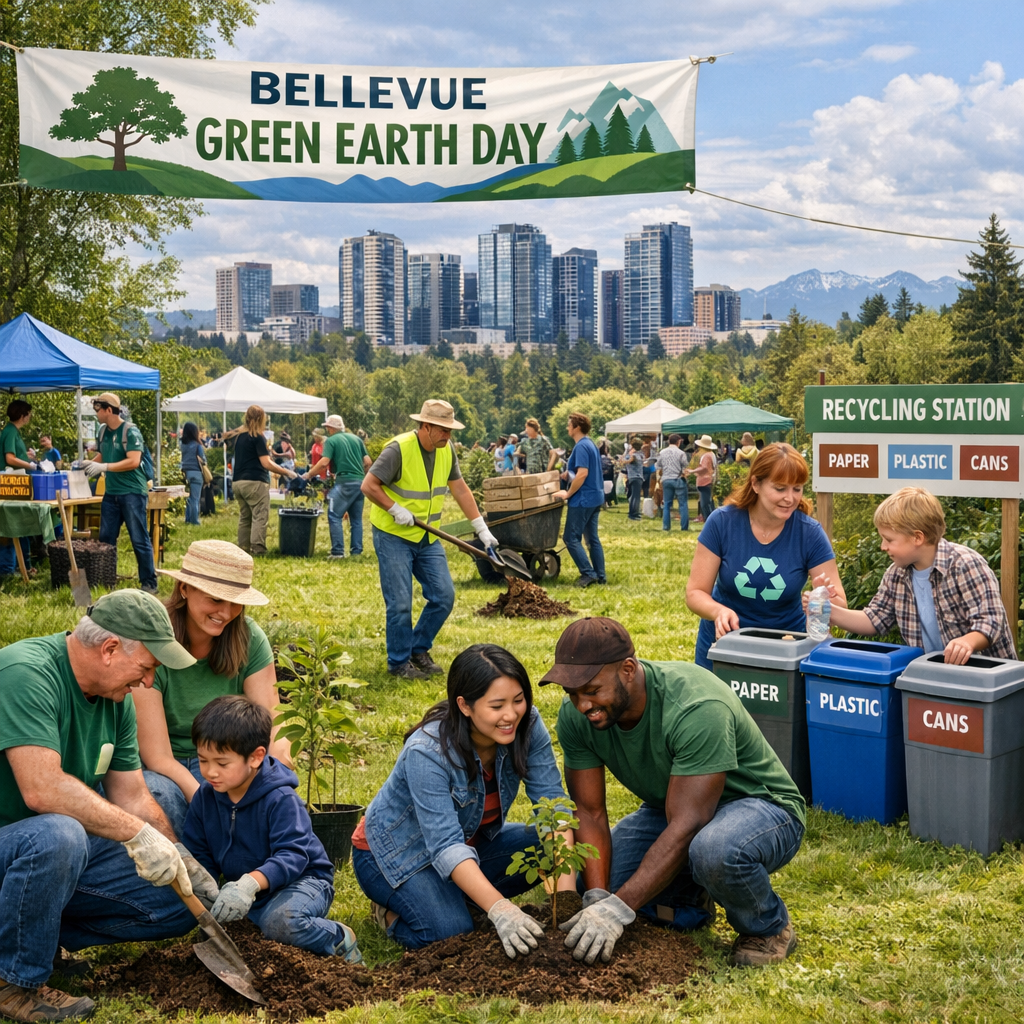
Bellevue has set ambitious goals to achieve carbon neutrality by 2050, focusing on reducing greenhouse gas emissions and enhancing environmental stewardship. The city’s Sustainable Bellevue Plan outlines strategies across key areas such as energy efficiency, waste management, and natural resource preservation.
Energy Efficiency and Renewable Energy
In 2024, 54% of Bellevue’s electricity came from renewable sources like solar and wind. The city aims to achieve 100% renewable energy by 2045 and reduce overall energy use by 30% by 2050. Residents can contribute by adopting energy-efficient appliances and considering renewable energy options for their homes.
Waste Reduction and Recycling
Bellevue is committed to achieving zero waste by 2050. In 2024, the city sent 67,937 tons of waste to landfills. To support waste reduction, residents are encouraged to recycle, compost, and minimize single-use plastics. Participating in local recycling programs and being mindful of consumption habits can significantly impact waste reduction efforts.
Preserving Natural Systems
As of 2023, Bellevue’s tree canopy covered 39% of the city, nearing the goal of 40%. Trees play a crucial role in absorbing carbon dioxide, managing stormwater, and providing habitat for wildlife. Residents can support this initiative by planting native trees and maintaining green spaces in their neighborhoods.
Community Engagement
Community involvement is vital to Bellevue’s sustainability efforts. The city offers various programs and resources to educate and engage residents, including workshops on energy conservation, waste reduction, and sustainable landscaping. By participating in these programs, residents can learn practical ways to contribute to the city’s environmental goals.
Bellevue’s commitment to sustainability is a collaborative effort that requires the active participation of all community members. By staying informed and involved, residents can help ensure a healthier, more resilient future for the city.