

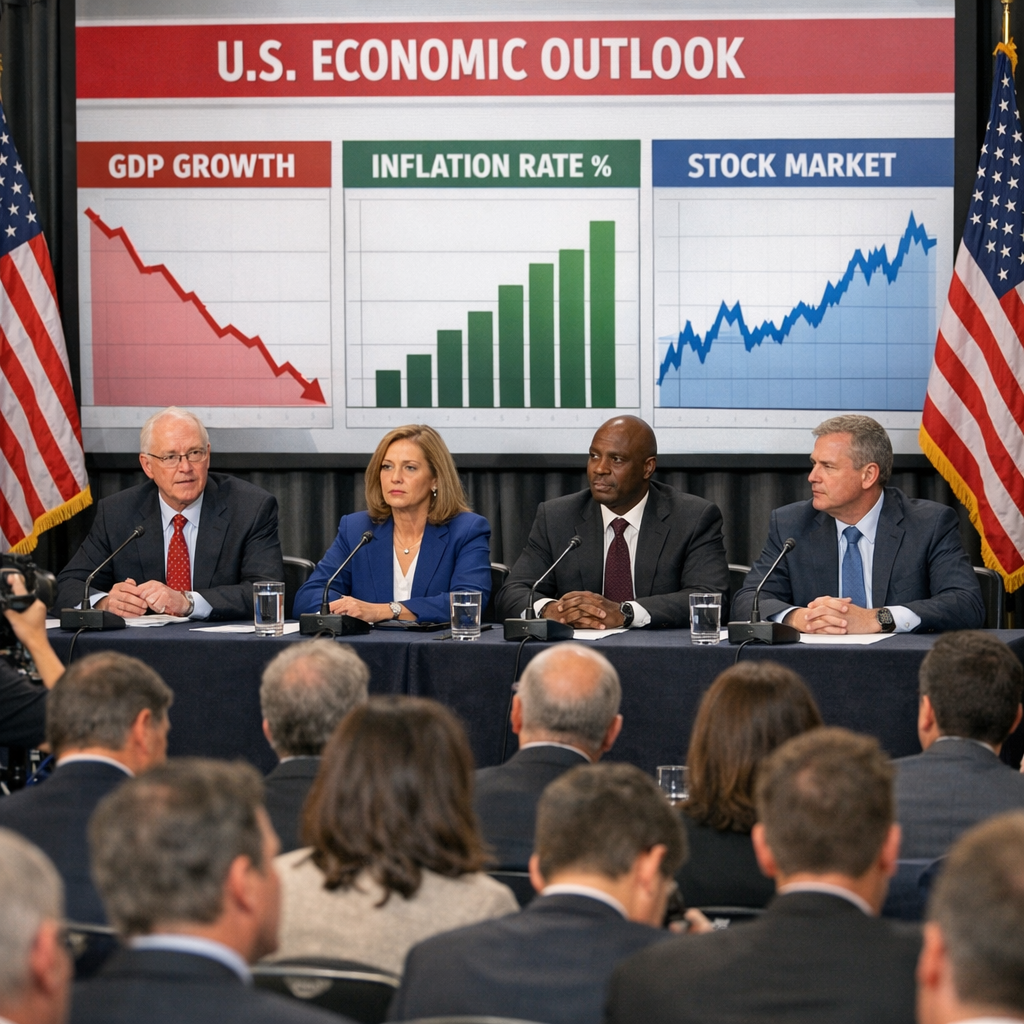
The United States economy is currently navigating a complex landscape shaped by various domestic and international factors. Understanding these elements is crucial for both policymakers and the public.
Economic Growth and Employment
Recent data indicates a slowdown in job growth, with the unemployment rate holding steady at 4.2%. This suggests that while the labor market remains resilient, there are signs of potential challenges ahead.
Inflation and Monetary Policy
Inflation has reached 4.2%, prompting discussions about potential interest rate hikes by the Federal Reserve. The central bank’s decisions in the coming months will be pivotal in balancing economic growth with inflation control.
National Debt Concerns
Financial leaders have expressed concerns over the rising national debt, which has surpassed $38 trillion. The increasing debt levels could lead to higher interest costs and may impact long-term economic confidence.
Global Trade and Tariffs
Trade relations continue to influence the U.S. economy. Recent developments in tariffs and international trade agreements have introduced uncertainties, affecting various sectors and potentially impacting economic stability.
Technological Investments
On a positive note, significant investments in artificial intelligence (AI) are driving growth in the tech sector. Major companies are projected to spend over $500 billion on AI-related infrastructure this year, fueling demand for data centers, semiconductors, and power generation.
In conclusion, while the U.S. economy demonstrates resilience, it faces challenges that require careful navigation. Staying informed and proactive will be essential in addressing these complexities.