

By Ava Washington
Forced Displacement at Record Levels
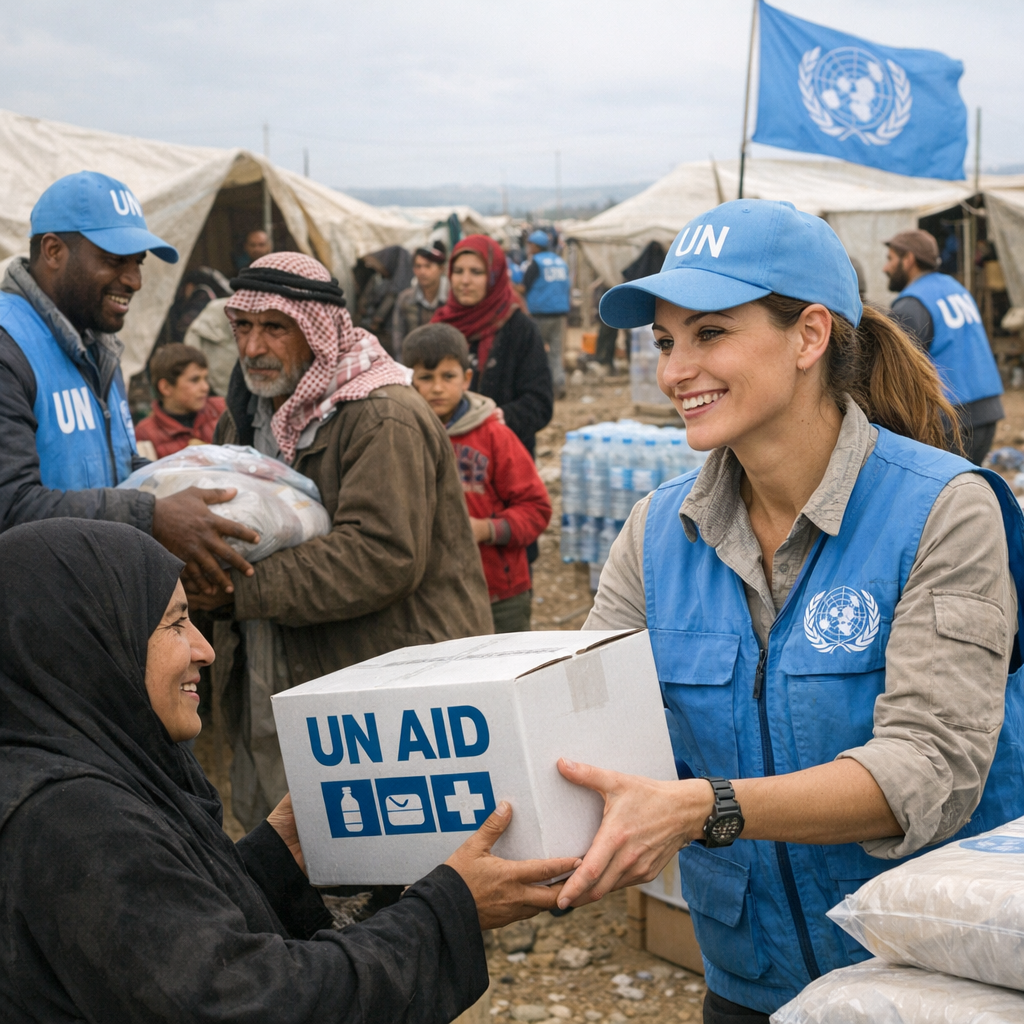
According to the latest report from UNHCR, the number of people globally who have been forced to flee their homes—due to war, violence, persecution or human rights abuses—reached a record high by the end of 2025 at an estimated 117.8 million individuals. That includes over 41 million who crossed international borders seeking refuge.
Six countries—Afghanistan, South Sudan, Sudan, Syria, Ukraine, and Venezuela—are responsible for more than 70% of refugees and displaced people. Most refugees are hosted by countries in the Global South, where resources are more limited.
The displacement crisis also extends internally: Sudan recorded the largest internally displaced population globally in 2025, with millions driven from their homes but not across international borders. This internal displacement exacerbates challenges of food security, healthcare access, and shelter.
South China Sea: Strategic Tensions and Risks of Escalation
The South China Sea remains one of the globe’s most contested maritime regions. Overlapping territorial claims by China, the Philippines, Vietnam, and other ASEAN countries have stoked tensions, as militarization and so-called “gray-zone” tactics—coercive actions that fall short of open conflict—increase.
In recent months, satellite imagery revealed that Vietnam has expanded infrastructure on 27 features across disputed reefs in the Spratly Islands— including ports, runways and military facilities—likely as a response to similar development done by China.
Meanwhile, China conducted military drills near Scarborough Shoal in response to the Philippines moving to extend its seabed rights. Such moves heighten the risk of miscalculation in the region. Top U.S. naval leadership has publicly warned that no single country should dominate the Indo-Pacific, emphasizing that coercive maritime maneuvers threaten peace and stability.
Why These Issues Matter to Us
What might seem like distant crises ripple out globally. Forced displacement drives migration to nearby and sometimes faraway countries, affecting supply chains, refugee resettlement efforts, and international aid priorities. Tensions in the South China Sea impact global trade, shipping routes, and security alliances—issues that influence economies including ours here in the U.S. West Coast.
As voters and global citizens, understanding these developments helps inform policy debates here in Washington state—about our role in refugee resettlement, foreign aid, and trade policy. It also underscores the importance of diplomacy, international norms, and multilateral institutions in preventing crises and maintaining stability.
Looking Ahead
– The world need not only emergency responses for refugees, but sustainable paths for protection, return when safe, and normalcy.
– ASEAN-China talks toward a binding Code of Conduct for the South China Sea may help limit conflicts—but only if enforcement and trust-building proceed.
– Global cooperation on humanitarian funding and climate resilience remains essential; many drivers of displacement—like extreme weather—are compounding crises.