

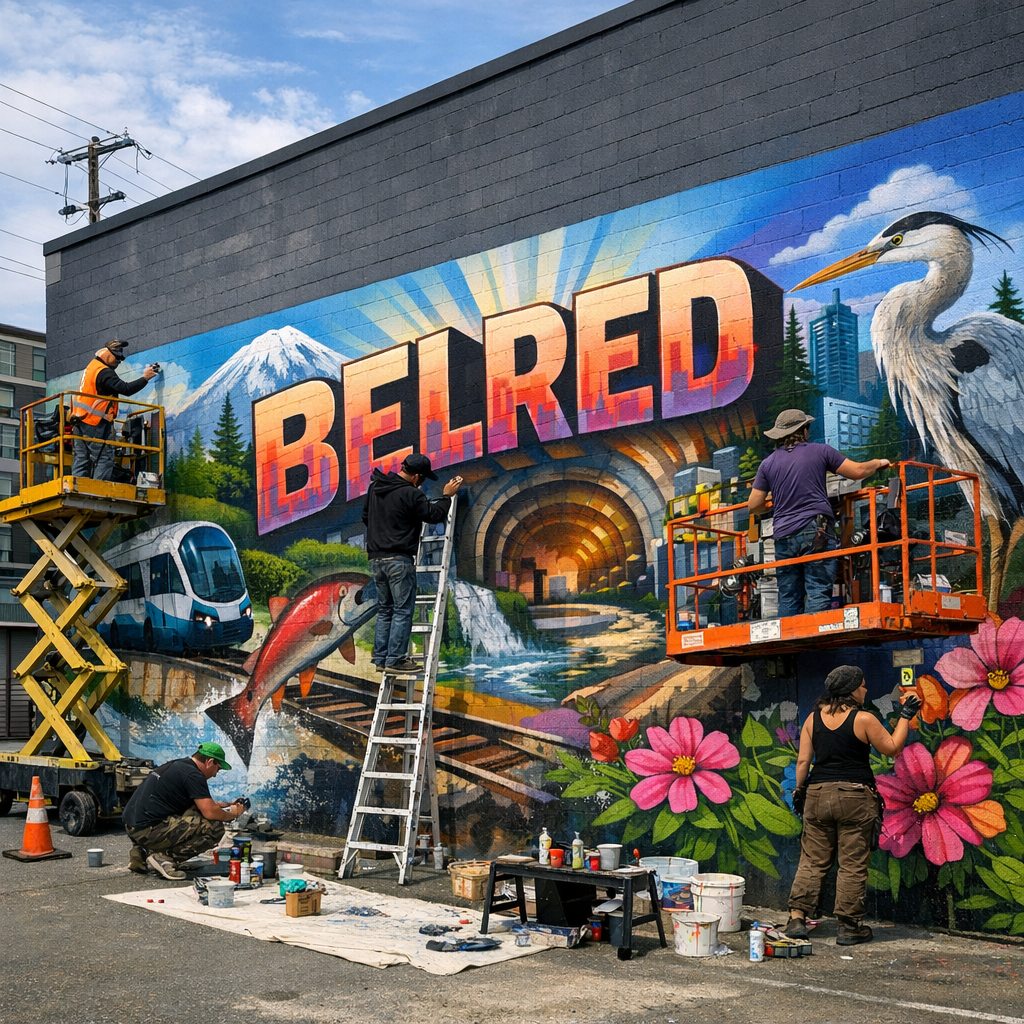
BelRed is changing. I see it every time I drive along Spring Boulevard or walk down 132nd Avenue NE. New apartment buildings rise beside old auto shops; art is cropping up where concrete once blanketed walls. The BelRed Arts District isn’t just about aesthetics — it’s an invitation to reflect on who we are as neighbors, creators, residents.
Public art as bridge and mirror
One of BelRed’s most visible transformations is its Mural Program, launched around 2023. Artists have been given walls to tell stories — of immigration, of environmental loss, of local histories both visible and masked. These murals don’t just decorate; they magnify community presence, offering recognition to those who might otherwise feel unseen. When a utility box is wrapped in artwork, it stops being merely infrastructure. It becomes a spot where someone’s story resides.
Artist housing and creative space
A less flashy but equally profound shift is under way with the city selecting developers to build multifamily housing components with amenities for artists on city-owned properties near BelRed’s light rail station. These buildings are striving not just for affordability, but to provide studios, shared workspaces, and cultural gathering points. For local creators — painters, potters, performers — this means fewer barriers to keeping their roots here.
Why this matters
- Diversity of voice: Affiliating public space with story-telling gives voice to our neighbors whose faces we might pass without knowing their names or histories.
- Civic connection: Shared art leads to shared care. When locals contribute to the look and feel of their neighborhood, there’s a deeper investment in its well-being.
- Resilience and belonging: In neighborhoods under change — rising rents, shifting demographics — art helps keep belonging alive. It reminds us that value isn’t only in what’s new, but in what lives alongside.
Where we go from here
BelRed is not done. There are practical challenges: ensuring affordable workspace remains affordable; making sure public art reflects community input; balancing developer pressures with human connection. But there is opportunity.
To make this vision real, we need to:
- Support programs that subsidize artist live-work space;
- Involve diverse voices in choosing public art—residents, workers, youth;
- Align zoning with places for art and performance in everyday life, not just in high-profile projects;
- Celebrate the artists: the ones who murmur in clay, the ones whose brushstrokes cover metal, those whose gigs sound off after sunset in a converted garage.
BelRed is writing its story with color, and its new chapter is beautiful because it offers room for all of us to write in. I believe we’ll be stronger for it — not just as viewers, but as participants.