

By Mia Cooper
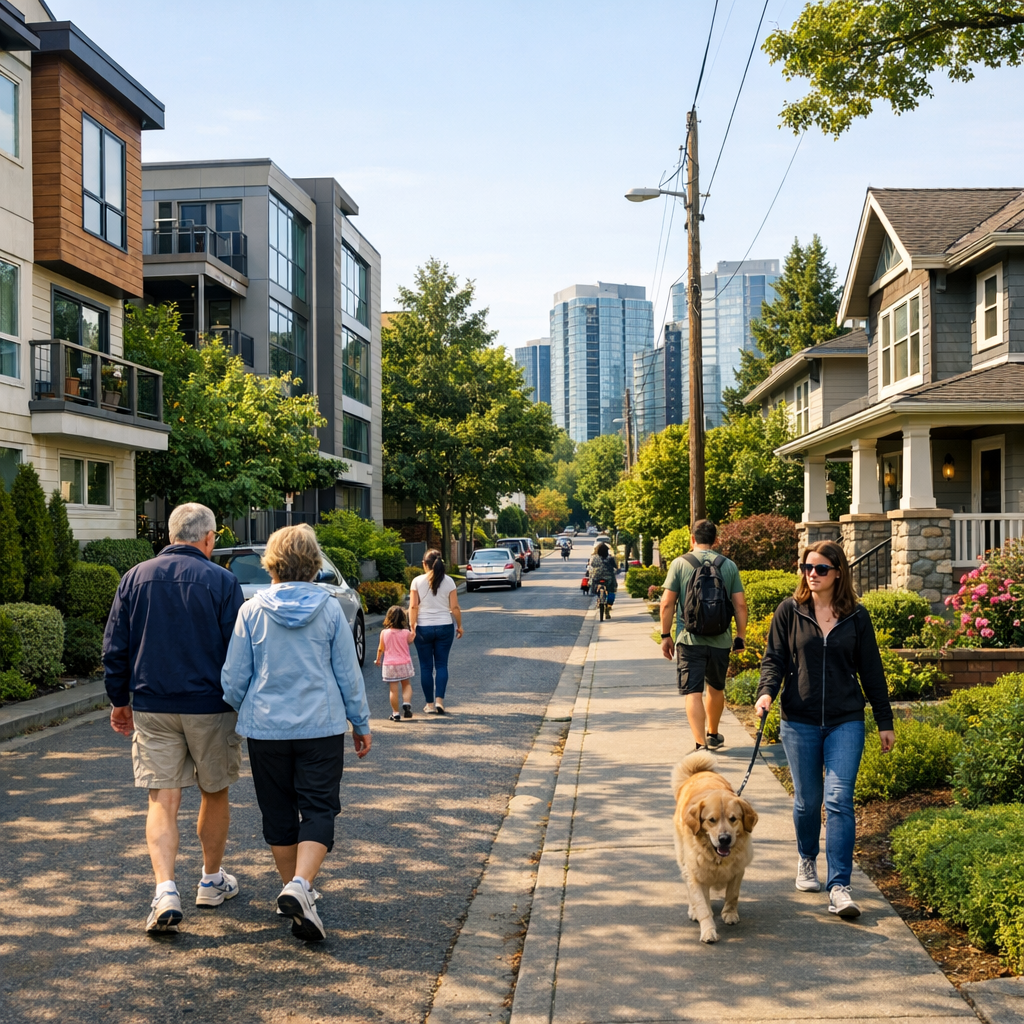
Walking down 4th Street on a Wednesday evening, I saw a sign in a coffee shop window: “Happiness is staying put.” I paused—Bellevue isn’t always a place where staying put feels possible anymore. As the city expands, many longtime neighbors worry that what drew them here is slipping away.
Housing isn’t just about dollars
Bellevue’s new Affordable Housing Strategy, approved in April 2026, aims to build or preserve 5,700 affordable homes over the next six years under broader goals of equity, stability, and diverse supply. It’s an ambitious plan shaped by hundreds of residents and dozens of organizations. Yet meeting those goals depends not just on funding, but on transforming rules, land use, and the voices that are heard.
Rules that leave lengthy permitting, high compliance costs, and zoning limitations in place—mean every possible path to affordability has hurdles. Resource access and clarity about programs are uneven. The people most affected—renters, immigrants, service workers—often feel least able to participate in decisions.
And for many families, affordability means more than a lowered rent. It means being able to stay in neighborhoods where kids go to the same school, or being close enough to work to save hours and gas per week. It means having gardens or parks where elders can walk. It means routines unbroken.
Growth by design, or growth without heart?
Bellevue voters in a 2025 survey placed affordability ahead of all other issues—over growth, over safety, over taxes. Infrastructure, transit, and sidewalks still mattered, but often as parts of the larger affordability equation.
Growth is visible: rising towers, expanding transit, tech-driven jobs. But concerns emerge when that growth feels uncontrolled—when single-family neighborhoods resist duplexes or accessory dwelling units, when developers build high-end units mostly, when traffic overwhelms older streets.
A prominent coalition—Streets Are For Everyone—is pushing for safer crosswalks, transit lanes, Vision Zero goals, and walkability, stressing that mobility access is part of everyday equity.
Meanwhile, Bellevue’s transportation funding gap—estimated at $1.7 billion over six years—underscores that paying for inclusive growth demands political will and community consensus as much as financial resources.
What I hear from neighbors
From conversations and community meetings I’ve attended, people offer overlapping stories and questions:
- A teacher juggling space and rent: working two jobs, commuting over county lines, but still paying a large portion of income just to stay near their classroom.
- An older neighbor who wishes to downsize, to a smaller home or apartment where yard maintenance isn’t a burden anymore—but can’t find anything affordable in Bellevue.
- Entrepreneurs who can’t live here yet whose customers and staffs struggle with long commutes since workers can’t find housing close to town.
- Families whose parents immigrated here, who bring traditions and talents—but who often see few options for staying in Bellevue, especially where translation, community centers, and culturally specific support are lacking.
Hope in what’s possible
Despite these challenges, Bellevue is not without hopeful signs:
- Strong community engagement in creating the 2026-2032 Affordable Housing Strategy, with well over 600 residents and over 60 organizations sharing input.
- City projects repurposing land—such as converting old buildings or underused sites—for mixed-income housing, or pairing affordability with transit access.
- Neighborhood leaders and coalitions pushing for complete streets—sidewalks, safe crossings—and greater transparency in how funds are spent.
What staying true to community might require from us
We need systems, not momentary fixes. Here are ideas worth keeping alive:
- Advocate for zoning flexibilities—allowing gentle density, accessory dwellings, clustering near transit.
- Push for inclusive public engagement—meetings held in multiple languages, at accessible times and places.
- Don’t assume affordability is just about low income. Middle-income families, teachers, service workers, immigrants—many need help.
- Hold local leaders accountable—track outcomes not just policies. If a strategy is adopted, are homes built? Are people moving in? Are underserved communities being served well?
- Cultivate neighbor-to-neighbor stories. When we talk about the effects—who stays and who leaves—we build empathy across divides.
Bellevue at its best has always been a place people could afford to see as home—not just a place to live, but to belong. The challenge ahead isn’t just balancing growth and cost—it’s keeping that sense of belonging alive, for all of us who call Bellevue home.