

By Evelyn Parker
The real estate and housing market in Bellevue continues to evolve—with rent, home prices, inventory, and city policy all shaping life for renters, homebuyers, and neighbors alike. Here’s what’s going on now, and what to know moving forward.
Homes for Sale: Prices & Inventory
The median sale price for homes in Bellevue stands around $1.55 million. That’s up slightly since last year—by a few percent—but still lower than peak values—and many homes are lingering on the market a bit longer than before. Active listings have increased, contributing to what experts call a more balanced market between buyers and sellers.
Typical homes now sell in roughly three weeks. Sellers can still fetch near-asking prices in desirable neighborhoods—but not always a multiple above. Downtown, Northwest Bellevue, and West Bellevue carry a premium, both in price per square foot and in lifestyle offerings.
Rental Market: Where Costs Cushion & Shift
For those renting in Bellevue, prices remain high though some metrics show modest cooling. The average rent for all apartments is between $2,700 and $3,100 per month, with one- and two-bedroom units dominating demand. From studios to larger units, many renters report year-over-year increases, though smaller gains than in past years.
Vacancy remains low, especially in newer, well-located buildings. But some renters are finding more bargaining power in less central districts or with older units—assuming condition and amenities are reasonable.
New Housing & City Policy Moves
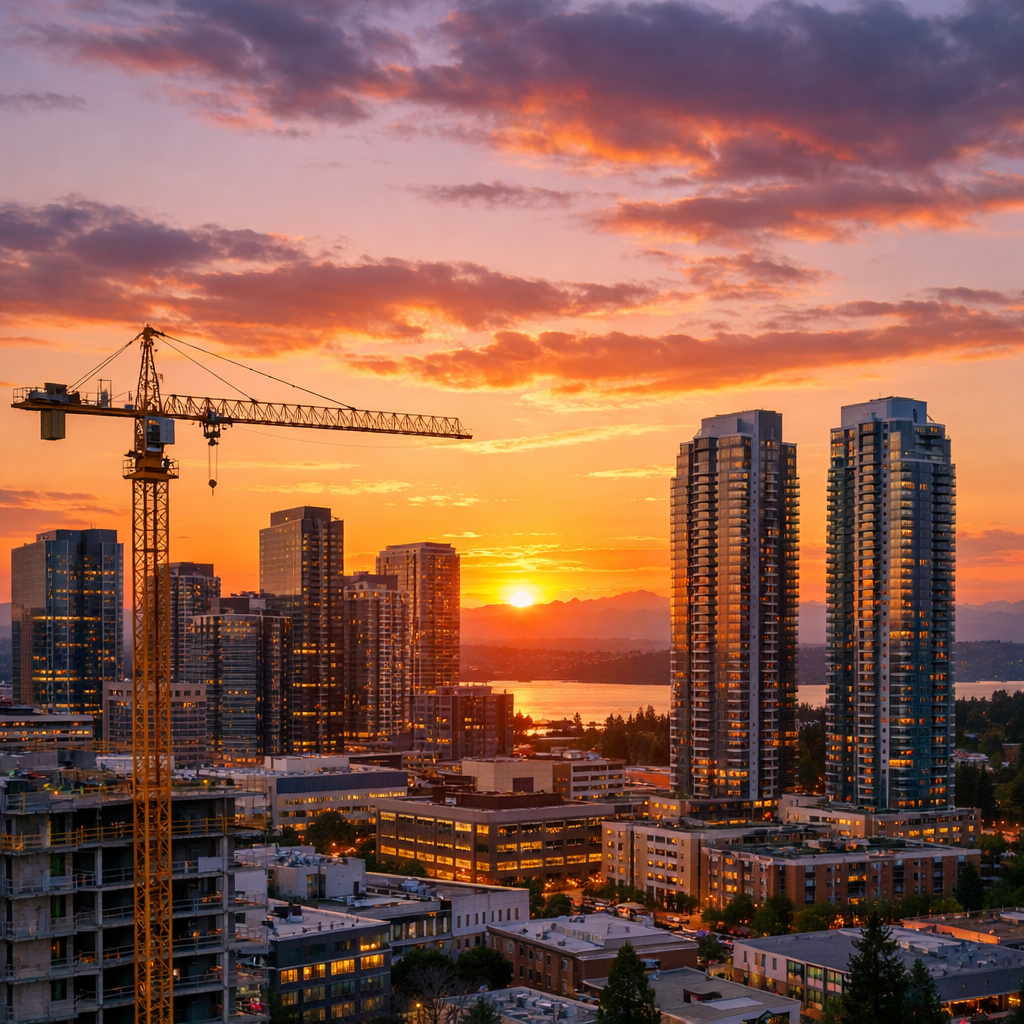
Bellevue’s development pipeline includes many residential projects, particularly downtown and in mixed-use areas, with dozens of multifamily complexes or condo projects under review or construction. The city is actively encouraging more supply as part of its long-term housing goals.
Recently adopted policies are aiming to ease development of accessory dwelling units (ADUs), duplexes, triplexes, and the like. The “Next Right Work” program, along with the new 2026-2032 Affordable Housing Strategy, seeks to reduce fees, streamline permitting, and push for more housing affordability and diversity.
What It Means for Buyers & Renters
If you’re buying: be prepared for high sticker prices and a process that rewards well-priced, well-located homes. With inventory rising a bit, there may be more choices—especially if you broaden your neighborhood search.
If you’re renting: budget accordingly. Asking rents may not drop sharply, but in some sub-areas less new demand or newer stock means better deals. Older units or those farther from transit tend to give more value.
All told, Bellevue remains an expensive housing market—though one that’s gradually shifting. With thoughtful policy, more supply, and steady—but not frantic—demand, it’s worth keeping an eye not just on price, but on what makes homes and neighborhoods livable.