

By Michael Carter
Understanding Bellevue’s Climate Landscape
Bellevue enjoys a temperate maritime climate—mild, wet winters and dry, warm summers. Rainfall peaks between October and April, with annual precipitation hovering around 36–37 inches. Summers bring daytime highs typically in the low to mid-70s°F, with low humidity and minimal snow in winter.
Seasonal Rhythms and Emerging Weather Patterns
Spring and fall offer gentle transitions with moderate temperatures and rain that supports our lush vegetation. But changes are underway: Bellevue is experiencing more frequent heat events, heavier rainfall episodes, and warmer stream and soil temperatures, trends linked to climate change.
Natural Systems and Environmental Resilience
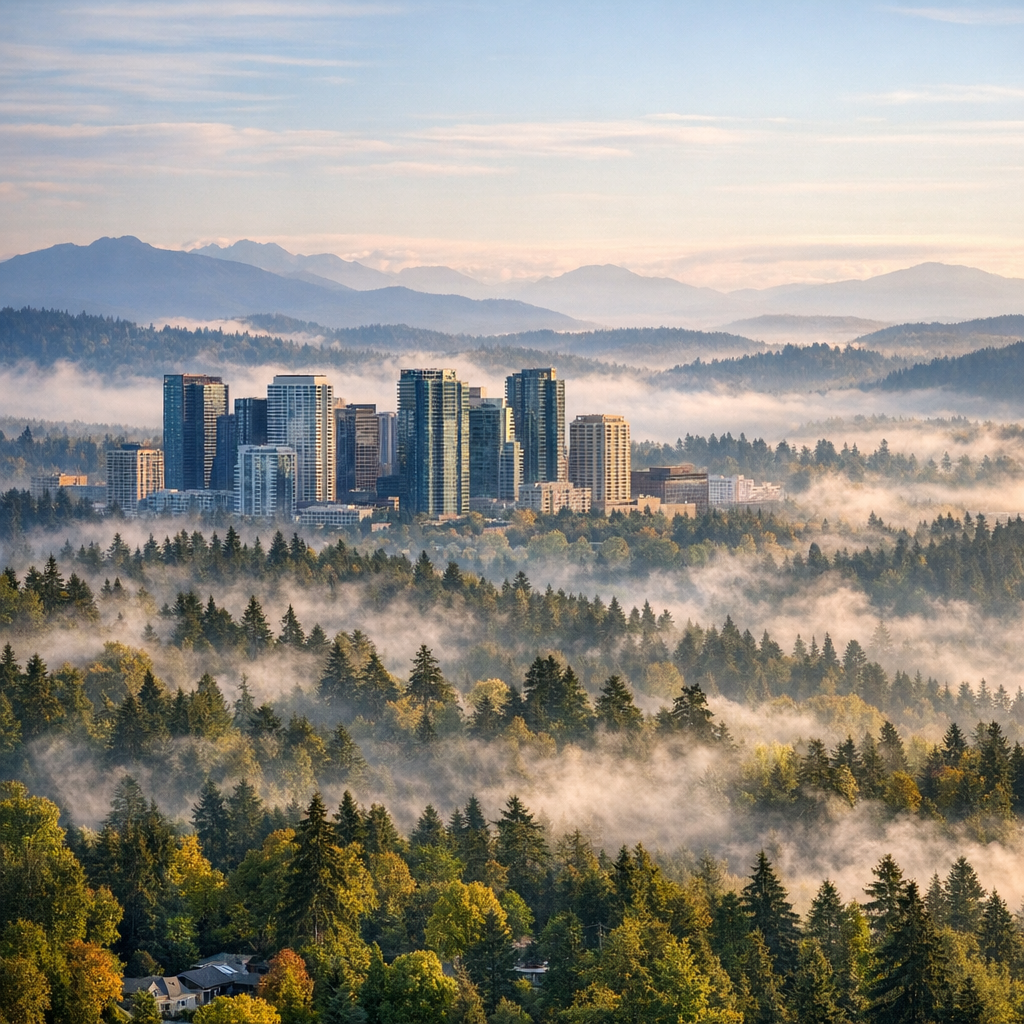
Trees, wetlands, streams, and green spaces aren’t just aesthetics—they’re key to our city’s environmental health. Bellevue currently has about 39% tree canopy coverage, thank-to parks and neighborhoods like Bridle Trails. But downtown has far less coverage, which can worsen heat impacts in urban areas.
Our city’s “critical areas”—streams, wetlands, habitats, flood zones—are protected under local, state and federal laws. These protections include buffers and setbacks to preserve ecological function, water quality, and prevent erosion and flood damage.
Sustainability Actions: What Bellevue is Doing
With the Sustainable Bellevue Plan (2026–2030), the city aims to reach carbon neutrality by 2050 and reduce emissions sharply by 2030. Efforts include promoting energy efficiency, expanding EV infrastructure, and improving land use.
Another priority is strengthening natural systems: targeting increased tree planting in neighborhoods with low canopy, restoring habitats, better stormwater management, and enhancing water conservation during dryer months. Resources like free tree giveaways help residents get involved.
What Residents Can Do
- Plant native trees or shrubs—especially in areas with less tree cover—to cool your home, absorb rain, and support wildlife.
- Conserve water by choosing drought‐resistant landscaping; rain gardens help absorb runoff instead of letting it flood into storm drains.
- Reduce waste: compost organic materials and recycle properly to lower methane emissions from landfills.
Looking Ahead: What to Watch
Climate projections suggest Bellevue will face warmer average temperatures, more intense rainstorms, potential flooding, and greater pressure on water resources and aquatic habitats in the coming decades.
Keeping our city resilient means supporting green infrastructure, protecting critical natural areas, and engaging in sustainability efforts—both individually and collectively. Bellevue’s natural foundations give us a strong start, but adapting to changing environmental conditions will take ongoing attention.