

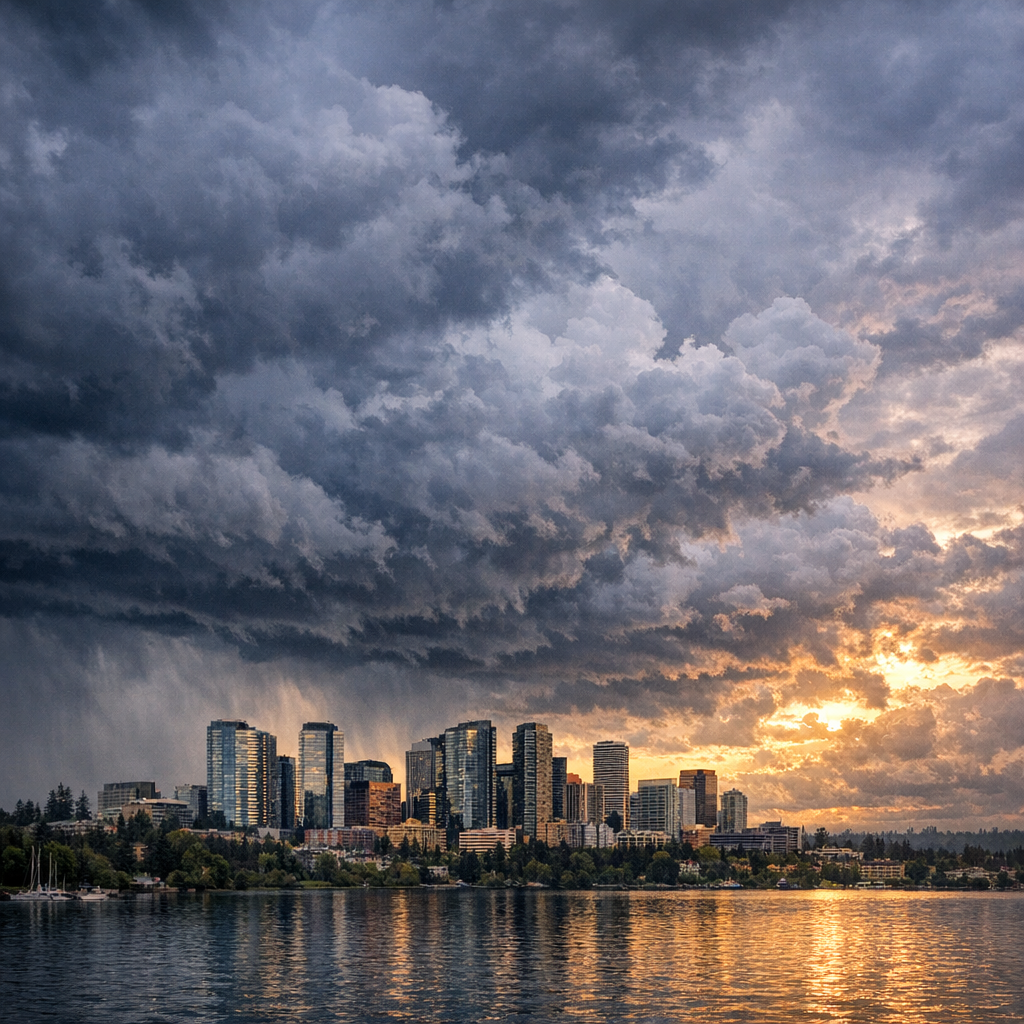
Hi, I’m Michael Carter writing from Bellevue. Our stretch between Puget Sound and the Cascades gives us a unique mix of weather and climate—and what seems like constant change. Here’s a look at what to expect, what’s shifting, and how Bellevue is adapting.
Weather Rhythms You Can Count On
Bellevue has what’s called a maritime climate: mild winters, dry summers, and most of our rain comes in fall through spring. On average we get about 37 inches of rain in a year and snowfall is rare. Winters see daytime highs in the upper 40s to low 50s°F, while summer highs usually hover around the mid to high 70s°F. Nights stay cool, even in summer. July and August are typically our warmest, driest months, while November tends to be the wettest.
Signs of Climate Shifts
Recent assessments show Bellevue is already seeing changes—more intense storms, drier periods, and hotter days. These shifts put pressure on the urban forest, water systems, and public health, especially when summer heat and wildfire smoke carry over from nearby areas.
Rising temperatures also mean our streams get warmer, and habitats that native species depend on are under threat. Erosion and flooding during heavy rainfall are becoming more frequent, especially where development and impervious surfaces block natural drainage.
Vulnerable Areas
- Neighborhoods with lot of pavement and fewer trees feel heat more—urban heat islands are a growing concern.
- Watersheds, streams, and creek beds are stressed by sudden heavy rain and by low water flow during dry spells.
- Homes without good ventilation or air filtration are hit harder during smoke or heat waves.
What Bellevue Is Doing & What You Can Do
The City of Bellevue has embraced a long‐term plan called the Sustainable Bellevue Plan. The city aims to cut greenhouse gas emissions nearly in half by 2030, and reach carbon neutrality by 2050. Key areas of focus include cleaner buildings, safer natural systems, better waste and water management, and more sustainable mobility. Examples: planting more trees in low‐canopy areas, encouraging electric vehicles, and pushing stronger building efficiency standards.
How Residents Can Help
- Plant native trees and shrubs in your yard—or help with local tree planting drives to increase canopy cover.
- Switch to lower‐carbon home heating or cooling systems, seal up drafts, and use efficient ventilation for air quality.
- Reduce waste—commute smarter, compost food scraps, recycle right, and eliminate single‐use plastics.
- Stay prepared—watch for heat wave alerts, smoke advisories, and flood risk warnings, especially during the wetter months.
Outlook Going Forward
Bellevue’s climate won’t change overnight, but the signs are clear: more extremes, more vulnerability, and more responsibility for all of us. Still, Bellevue’s goals are strong, the community cares, and every green action adds up.
We may not control the skies, but we can shape how well we weather them.