

By Mia Cooper
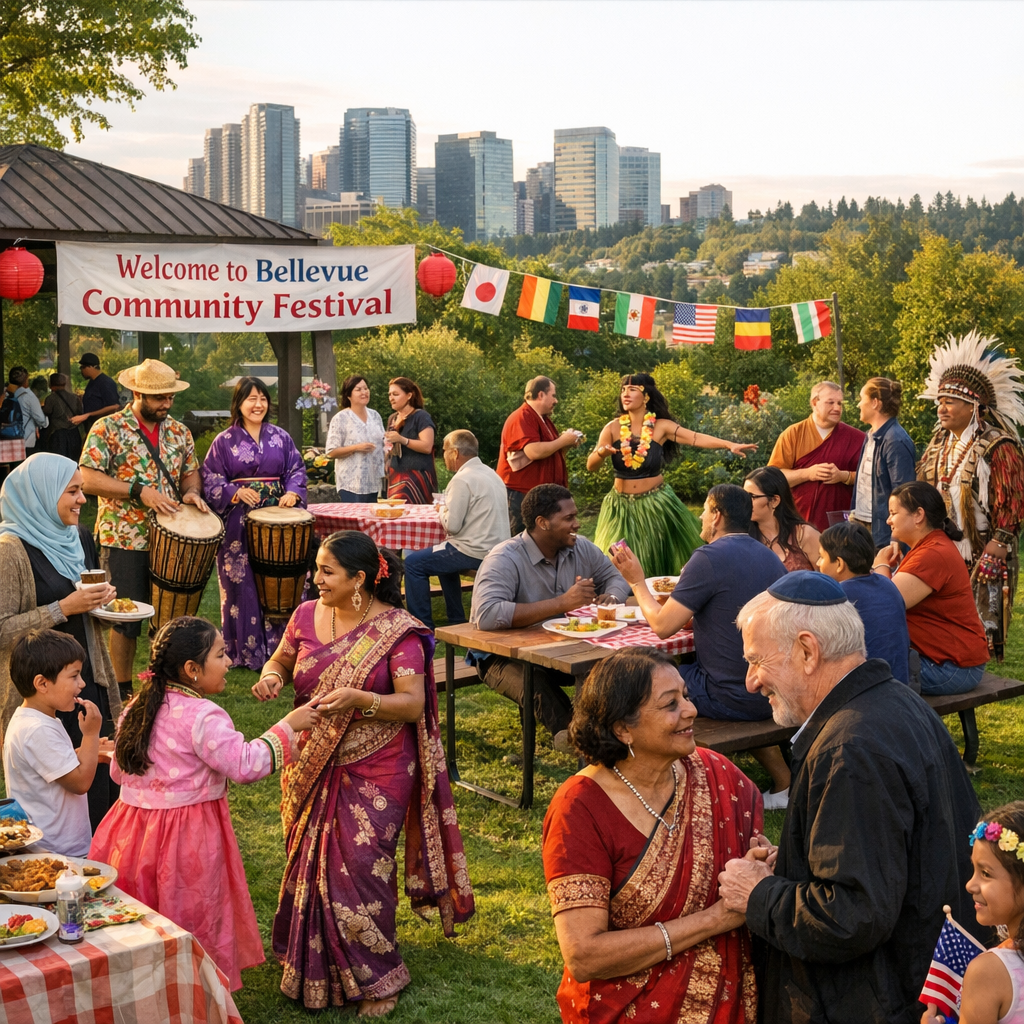
Bellevue is many things: trees draped over hills, freeways humming past high rises, a mix of voices carried on the breeze from the Crossroads market to downtown walkways. But what makes it feel like home draws deeper within us. I’ve gathered stories from neighbors—people still weaving their roots here—about what belonging looks like in our growing city.
Stories That Bind Us
“When my family arrived from Somalia, we didn’t speak English, but our neighbors at Crossroads helped us find jobs, schools, everything.” One resident told me that small kindnesses—an offer to translate paperwork, a reassured child on the school bus—erect invisible pillars of belonging. That is the Bellevue many want to keep alive: one where people help each other across languages and cultures. (Stories of resilience and support were a recurring theme in recent community engagement among Bellevue’s communities of color.)
An elder from the Filipino American community shared: “My grandmother has lived in this neighborhood for 40 years. She’s watched it change, but she’s also been the one organizing mutual aid during difficult times.” These multi-generational perspectives remind us that belonging is both continuity in our surroundings and an ability to shape them.
The Gaps We Feel, The Bridges We Build
Still, belonging isn’t evenly distributed. One immigrant entrepreneur summed it up: “I speak three languages but feel lost navigating city offices. The forms are confusing, the process takes forever.” Access to services and leadership representation matter—not just because fair systems are a goal, but because they signal who belongs.
Another parent, reflecting on their child’s school, observed: “They never see people who look like them in district leadership.” When our students—even our littlest ones—cannot see themselves reflected in decision-makers, something essential frays.
Blossoming Inclusion in Bellevue
One of Bellevue’s strong commitments has been through its Cultural Conversations program: a platform designed around resident stories and dialogue that focuses on inclusion, hope, and what people want from “The Bellevue We Hope For.” Another is the city’s Diversity Advantage Plan, which lays out stages toward greater belonging for all residents and includes tracking progress through public dashboards.
Alongside city-level strategy are events like “Pride on the Plaza,” organized by the City of Bellevue and local nonprofits. These gatherings provide space for queer residents to feel seen, for neighbors to connect, and for belonging to move from feeling toward action.
Home in Everyday Moments
Belonging often shows up in small, almost invisible moments. It’s the neighbor who checks in when you’re sick, or the school celebrating your culture, not just during special months. It’s having access to resources in languages you speak—trusting someone hears you, lifts up your concerns. It’s having streets, parks, libraries, city council members that feel like extensions of who you are.
We are many in Bellevue: diverse in culture, hopes, stories. What we share is this desire—to belong. To be known. To be home. Building neighborhoods of belonging takes intention, policy and heart. May our voices continue shaping the Bellevue we all call home.