

By Mia Cooper
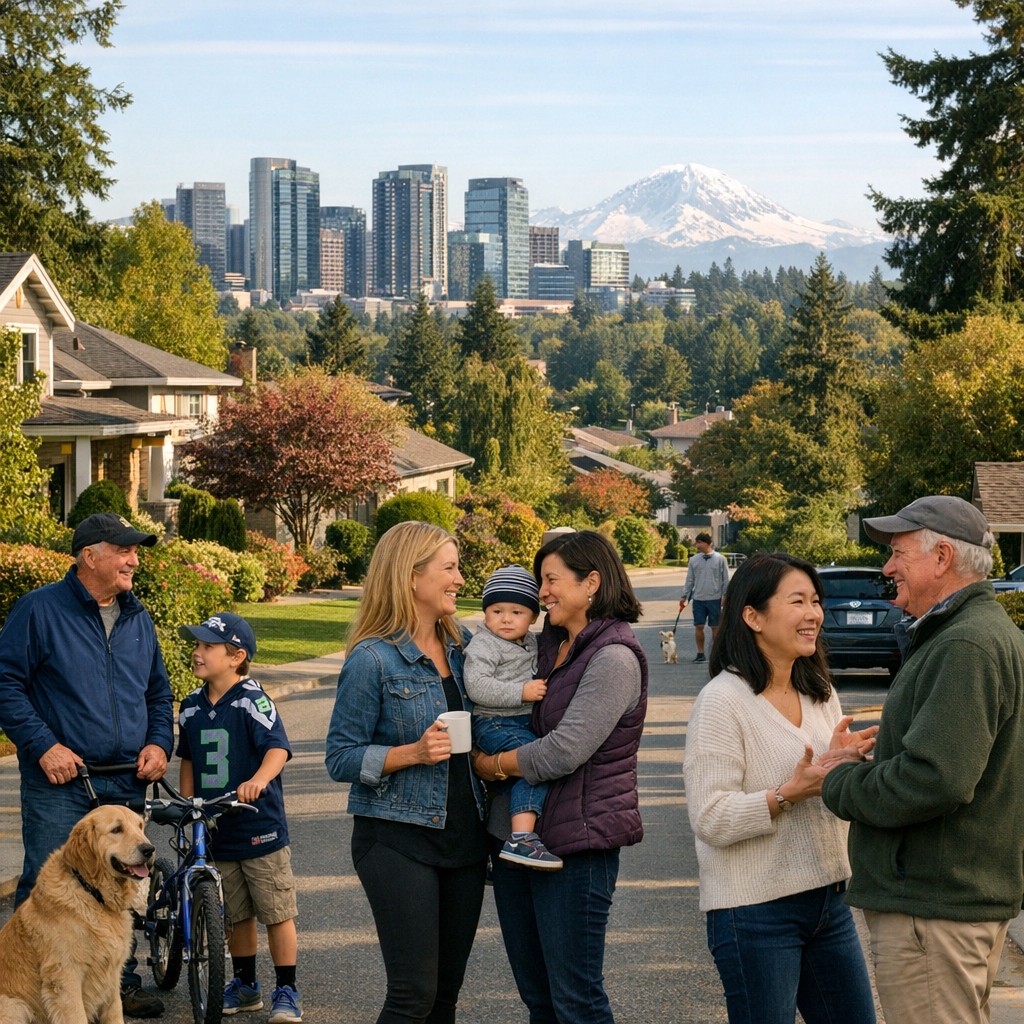
I moved to Bellevue over a decade ago for its schools, its greenery, its promise. But like many longtime and newer residents I talk to, I’m feeling both pride and anxiety—about what’s changing, and what feels at risk.
What Belonging Costs
“We love the neighborhood, but we’re stretching more than we used to.” That’s what a friend told me last week. Housing costs in Bellevue aren’t just rising—they’re reshaping who can call this place home. In recent community feedback through the Bellevue 2044 Comprehensive Plan, more than half of participants rated the city’s progress toward affordable housing as below average or worse. Many feel that the options for moderate-income families, or for younger workers just starting out, are dwindling. Belonging feels financial.
Safety Isn’t Just a Buzzword
Walking home after evening errands, I often think about how our safety has held up amid growth. Proudly, Bellevue remains one of the safest cities in the region. Still, many residents want more—more visible progress in street safety. The “Streets Are For Everyone” coalition has called attention to the number of serious traffic incidents that claimed lives or caused serious injuries, especially involving people walking, rolling, or biking. This isn’t just about fear, but about trust: that the city will protect its citizens not only in emergencies but in everyday moments.
Growth Without Losing What Makes Bellevue Bellevue
Bellevue’s expansion is impressive—new transit, new business, new faces. But at community sessions, I hear echoes of resistance as often as hope. Neighbors express worries about how increased density might threaten our parks, add congestion, or put pressure on infrastructure. Families from communities of color, immigrants and refugees, longtime renters—they often feel their questions and concerns risk being overlooked.
What People Say They Need
- Places for young people to gather—spaces that feel inclusive, vibrant, intergenerational.
- Affordable housing options that aren’t far from transit, schools, work.
- Faster ways to report hazards—broken sidewalks, dangerous intersections—and follow-through.
- Transparency and trust in how decisions are made, especially in planning and budgeting.
What I Hope For Bellevue
I hope for a Bellevue where rents don’t scare parents away; where new transit comes with safer streets; where growth adds richness, not division. A city where low-income and marginalized voices are heard early—not just after the fact. Because belonging is more than being present—it’s being seen, being safe, being heard.
A note to city leaders, planners, neighbors: Your decisions matter. So do our stories. Let’s keep sharing them, shaping Bellevue not just for some—but for all.