

By Olivia Adams
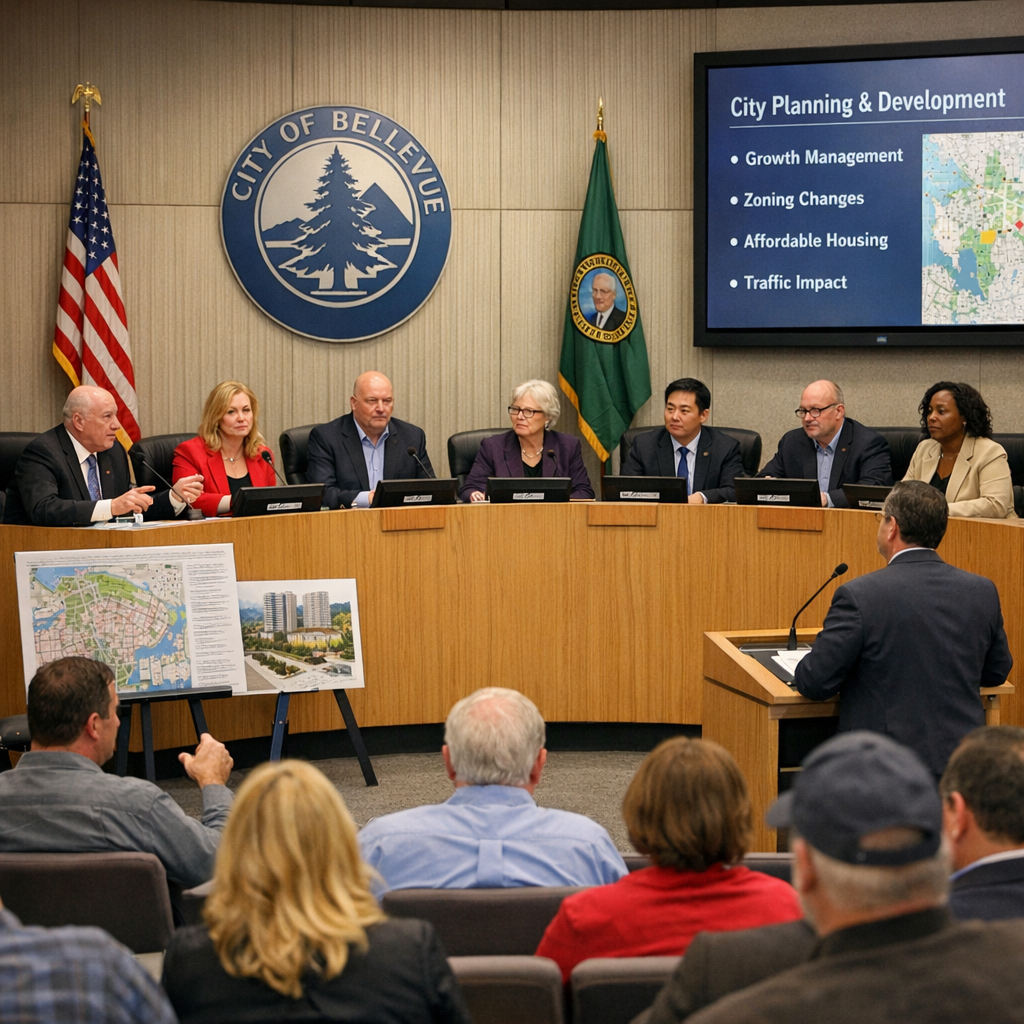
Bellevue is navigating a crucial moment in planning and funding for its future. Recent City Council meetings have focused on three major issues: closing a major transportation funding gap, making streets safer, and expanding affordable housing near transit.
Transportation: A $1.5 Billion Gap
City staff estimate Bellevue’s 20‐year transportation needs will cost nearly $1.5 billion, excluding the Grand Connection Crossing. Current revenue projections cover only about $686 million of that total. To bridge that gap, councilmembers are considering a Transportation Benefit District (TBD) that could include a small sales tax increase and vehicle fees to raise additional funding.
Speeding, Noise, and Street Safety
Traffic enforcement is rising sharply under the Bellevue Police Department’s Safer Roads Initiative, which began earlier this year. Speeding citations in July jumped 35% compared to the same month last year while overall traffic citations rose 54%. Noise violations (modified exhaust, etc.) also surged, reflecting widespread concern from neighborhoods.
The council’s Safe Speeds Bellevue program carried out speed limit reductions on certain streets in July. These changes resulted in fewer high‐end speeding incidents—those 40 mph or greater. Residents have also expressed frustration about reckless driving, cut‐through traffic, and intersection safety.
Affordable Housing Near Transit
In BelRed, a new Transit Oriented Development (TOD) proposal with BRIDGE Housing could deliver 170 affordable homes, including special units for individuals with developmental disabilities and dedicated space for artists. The plan asks for more height, design flexibility, and reduced parking requirements to support affordability and access. Council supported moving the project forward toward a public hearing.
Also under review is a revision of Bellevue’s Multifamily Tax Exemption (MFTE) Catalyst program. Changes under discussion would adjust income requirements, clarify eligibility, and improve timing of development approvals to ensure that new housing meets affordability goals while aligning with community priorities.
What’s Next & What You Can Do
- The City Council will take up the TBD funding options, including revenues and project prioritization, in upcoming budget sessions this fall.
- Public feedback is being gathered on speed limits, noise issues, street design, and where affordable housing is located. Attend council meetings or submit comments via city engagement platforms.
- Keep an eye on BelRed TOD’s progress: project design plans, public space elements, and housing impact will be central in its public hearing.
Bellevue is growing fast—thousands of new homes, jobs, and residents are expected by 2044. How the city manages transportation, safety, and housing will help shape what Bellevue feels like for the next generation. These decisions aren’t easy—but they’re essential for keeping Bellevue connected, livable, and equitable.