

By William Gray
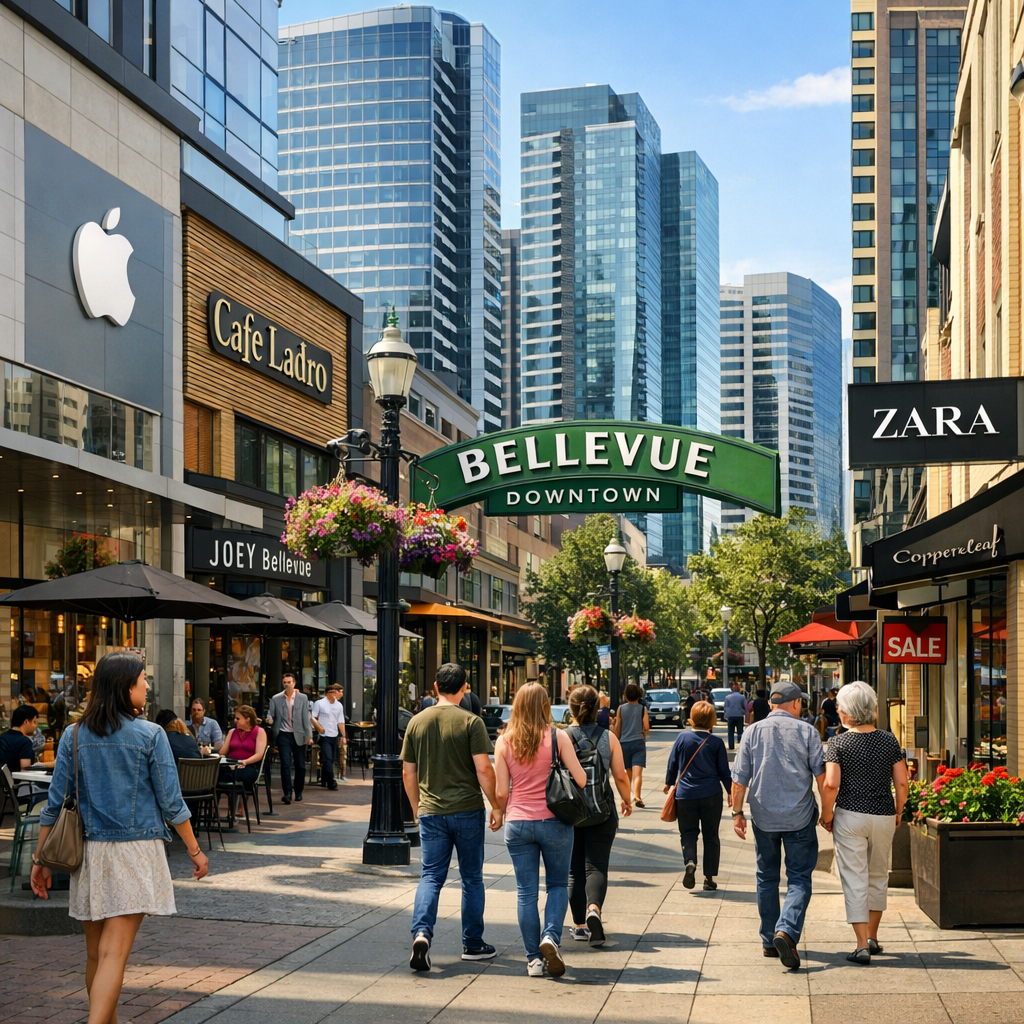
Bellevue’s economy is in a phase of steady transformation. Between the rising demand for office space, growing retail planning efforts, and city policy changes, there’s a lot that local business owners should be watching. Here’s a look at what’s unfolding, what it means for entrepreneurs, and where opportunity lies in our city.
1. Tech expansion fuels demand and competition
Large tech firms continue to grow their footprint in Bellevue, bringing in jobs and filling up office buildings. Companies like Snap, Zoom, OpenAI and others have leased substantial space downtown, signaling a strong appetite for high-quality commercial real estate.
That said, as big companies take up more of the large office suites, smaller businesses may face fierce competition—not in just space, but also in rising commercial rents and operational costs.
2. Retail strategy shifting toward district identity
Bellevue’s recent retail study underlines healthy retail performance city-wide, but highlights challenges: increased competition, the need for distinct local district identities, and strategic balance between the growth of retail space and population increase.
For owners of boutiques, cafes, wellness or service shops, this means there’s opportunity in creating niche experiences and being part of local identity rather than just replicating generic retail models.
3. Policy and economic planning are evolving
The city’s Economic Development Plan for 2026-2031 reflects this changing marketplace. It shows Bellevue offering new opportunities in neighborhoods like BelRed and Wilburton. Median household income has grown significantly in recent years, and upcoming light-rail expansions are expected to further connect more neighborhoods to downtown commerce.
At the same time, businesses report concerns around costs—of living, of doing business—and the red tape associated with permitting, zoning, and development standards. These remain barriers, especially for smaller operators.
4. What local businesses can do to thrive
- Consider location carefully—neighborhoods that are gaining transit access, like those near future light-rail stations, may offer long-term growth.
- Seek out local branding and community events—participation in district-level initiatives and place-based marketing helps customers connect with what makes a business local and special.
- Be proactive on regulatory and cost challenges—anticipate permitting needs ahead of time, explore cooperation with other small businesses, and plan for rising operational expenses.
- Stay attuned to real estate trends—while large-scale leases dominate headlines, smaller flexible spaces (pop-ups, co-working, shared retail) may provide more affordable entry or expansion opportunities.
Conclusion
Bellevue is not standing still. The city’s economic foundations—strong incomes, transit investment, and tech growth—offer real promise. But those rewards won’t materialize automatically. Local business leaders who understand the dynamics of policy, place, and participation will be best positioned to succeed.