

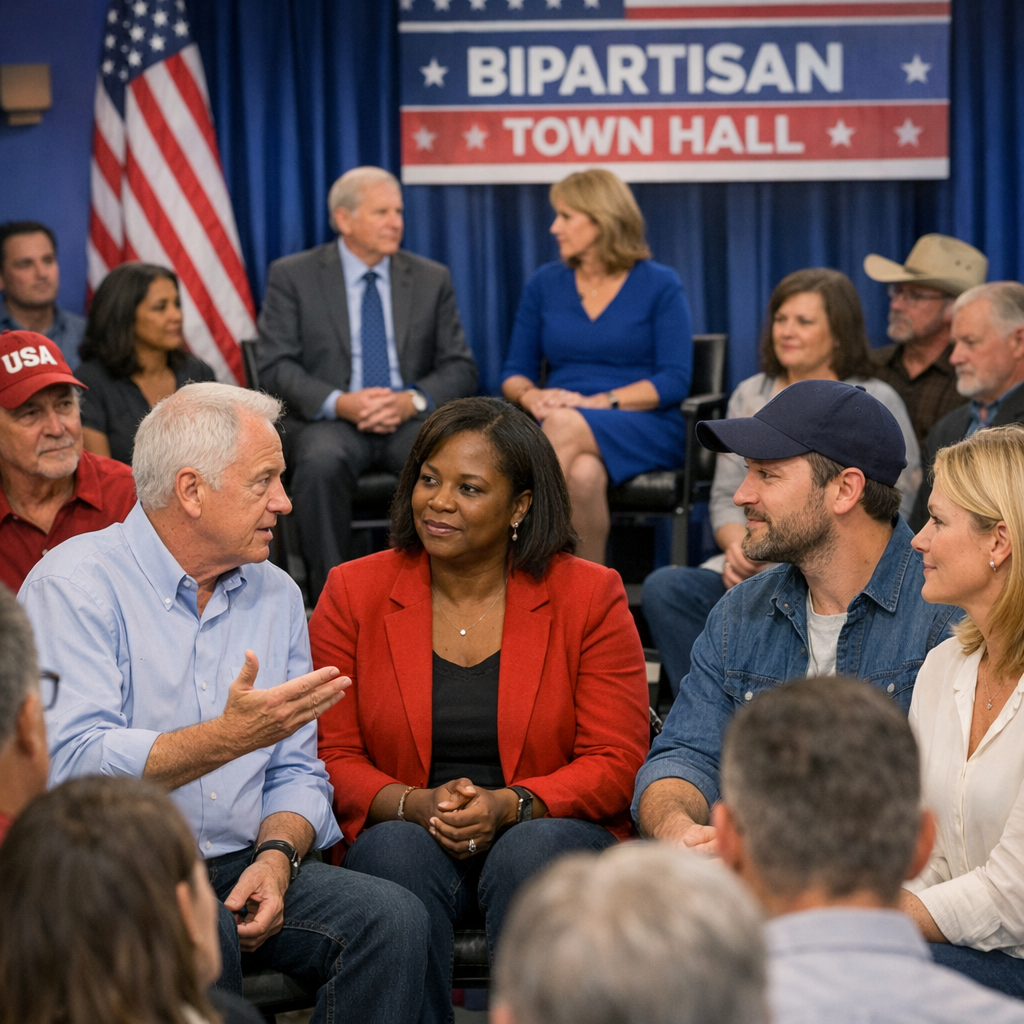
As someone covering national news from Bellevue, I’ve been thinking lately about what issues are drawing Americans together — and what’s driving us further apart. Recent polling and independent analysis show that many of us share concerns over economic challenges and governance, even as we remain deeply divided over several major policy areas.
Shared Concerns Across the Political Spectrum
One of the few consistent through-lines in recent surveys is agreement across party lines on economic struggles. Inflation, healthcare affordability, and the federal budget deficit are frequently cited by both Democrats and Republicans as urgent national problems. Around two-thirds of Americans say healthcare costs are unreasonable, and a similar share worry about inflation and the rising cost of living.
Other issues — like “the role of money in politics” and poverty — also draw widespread concern. Many Americans believe special interests and campaign finance influence drive policy more than the voices of everyday citizens, and they want to see reform.
The Partisan Gaps That Are Growing
Where people disagree tends to be just as important as where they agree. Two glaring areas of stark division are climate change and immigration. Surveys indicate Republicans are far more likely to view illegal immigration as a very big national problem, while Democrats are far more likely to see climate change and gun violence as existential threats. These aren’t just policy differences; they reflect fundamentally different priorities for what Americans believe the government should act on.
Trust in institutions and the ability of Congress to work together are also polarized topics. While a majority sees the dysfunction of national governance as distressing, Republicans and Democrats often frame the problem differently — one side pointing to overreach and bureaucracy, the other to gridlock and partisan obstruction.
What It Means Locally in Washington State
Here in Bellevue — and across King County — these national contradictions feel familiar. The burdens of housing costs, healthcare, and economic uncertainty are very real for many households. Yet we also live in a state that has leaned greener, more supportive of broad-based social programs and immigration reform — perspectives that sometimes clash with federal policy trends.
Our local leaders and communities often play out these divides in school board meetings, city council sessions, and public forums. Issues like school funding, local environmental protections, and housing regulations often become proxies for the larger national debate.
Paths Forward: Where Compromise and Action Could Take Root
Despite polarization, there are clear opportunities for bipartisan progress. Economic issues, for instance, offer some of the best potential for coalition-building — especially with regard to health care cost reforms and policies to ease pressure on worker budgets.
Campaign finance reform, greater government transparency, and strengthening voting rights are other areas where majorities in both parties express interest. These aren’t flashy flashpoints — but they are essential pieces of a functioning democracy that many people believe are overlooked.
In a moment marked by loud divides and partisan angry rhetoric, perhaps the real work starts by listening to where Americans already agree — and finding ways to build policy from those agreements outward.