

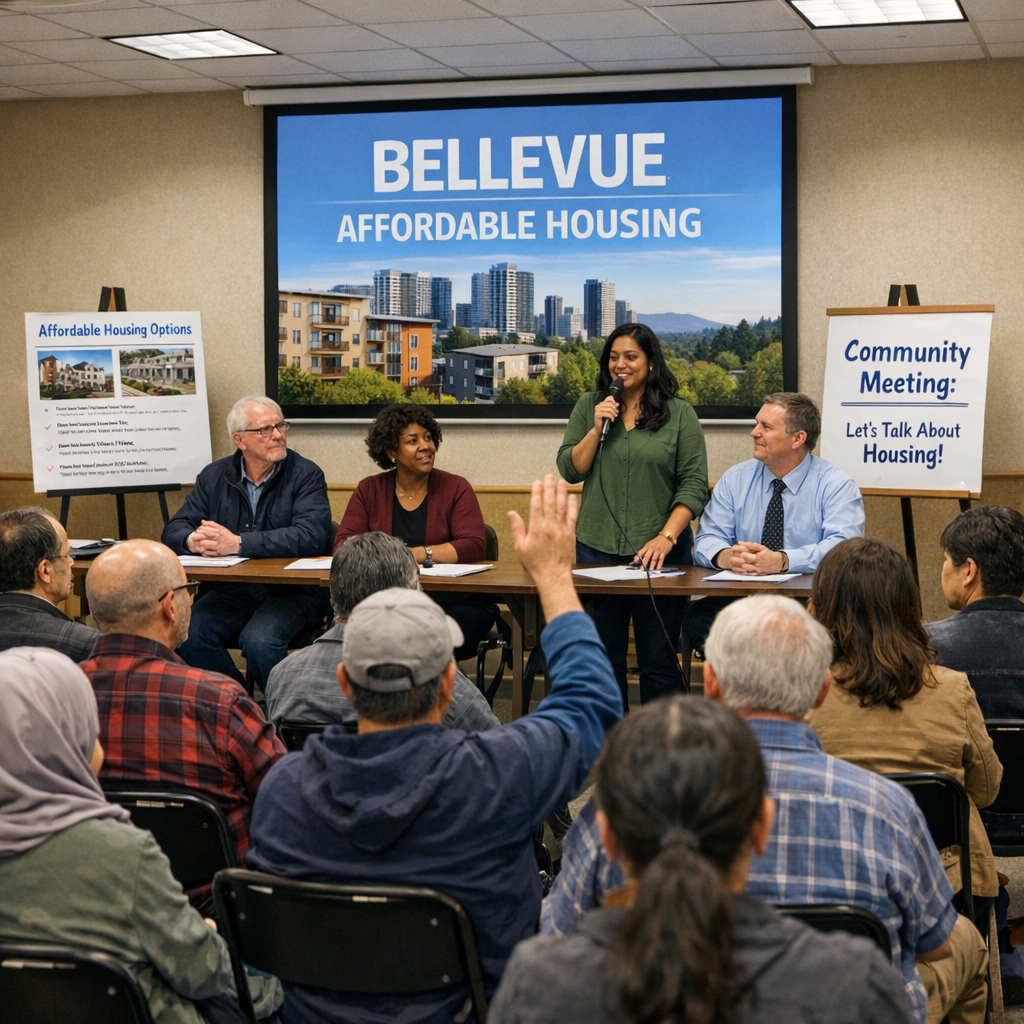
My name is Mia Cooper, and I’ve lived in Bellevue for over a decade. As someone who has seen neighborhoods grow, traffic increase, and housing prices soar, I want to talk about what “affordable housing” means not just as a policy term, but in the lived reality of our community.
The numbers we can’t ignore
Bellevue’s newly adopted 2026-2032 Affordable Housing Strategy sets out big goals: build or preserve 5,700 affordable homes over the next ten years, and tackle housing equity, stability, and diversity. But affordability remains out of reach for many.
Home values in Bellevue have surged—typical home prices increased by about $598,000 between 2020 and 2025, a roughly 61% jump. That far outpaces wage growth for many workers, especially in industries like retail, hospitality, and the arts.
Roughly one-third of Bellevue households now spend more than 30% of their income on housing; for many seniors, that number is even higher. Included are renters, families, people working in essential services—many don’t meet the income needed for stability.
Stories from our neighbors
I recently spoke with a young teacher who’s been renting modest apartments for years. She tells me she spends half her income just on rent and utilities, leaving too little for groceries, emergencies, or saving. She’s considering moving farther away, giving up time with family just to afford shelter.
Then there’s a couple in their late 60s who have called Bellevue home for decades. They’ve seen taxes rise, maintenance costs skyrocket, and many of their social circles move out. Staying means constant financial balancing, but leaving means losing connection to everything they’ve built here.
What the city is doing—and what still needs doing
Bellevue has already made strides: in February, the City Council approved its largest ever allocation for affordable housing, funding four projects that will add 271 affordable units, plus additional support for more across the Eastside.
The updated Affordable Housing Strategy emphasizes key priorities: reducing costs to build, dedicating public land for housing, streamlining permits, promoting transit-oriented development—all with a focus on equity and accountability. But policies are only part of the solution.
A community-centered path forward
For housing to feel affordable, we need three things: enough supply, homes that match incomes, and trust that government plans will work. Bellevue residents have repeatedly said they want transparent processes, community input, and policies that lead to real homes—not just promises.
Here are a few ideas emerging from conversations with residents:
- Partner with nonprofits and community groups to build deeply affordable units tied to incomes below 50% of the Area Median Income.
- Use public land creatively—reconsider underused lots or city-owned property for mixed-income housing.
- Ensure that incentive programs like MFTE (Multifamily Tax Exemption) make it worth the developer’s while to include affordable units.
- Improve transit access so people can live where housing is more affordable but still remain connected to work and daily needs without long drives.
- Strengthen renter protections and support longer-term renting options, acknowledging that buying a home remains out of reach for many.
Why this matters for all of us
Bellevue’s character is being shaped now. If we want a city where people from different backgrounds—teachers, health workers, artists, seniors—can continue living, working, and contributing here, housing needs to be part of the plan. Affordability isn’t just about homes; it’s about stability, care, community.
When moving costs, commuting times, and financial stress rise, we lose something deeper than affordability—we lose belonging.