

By Michael Carter
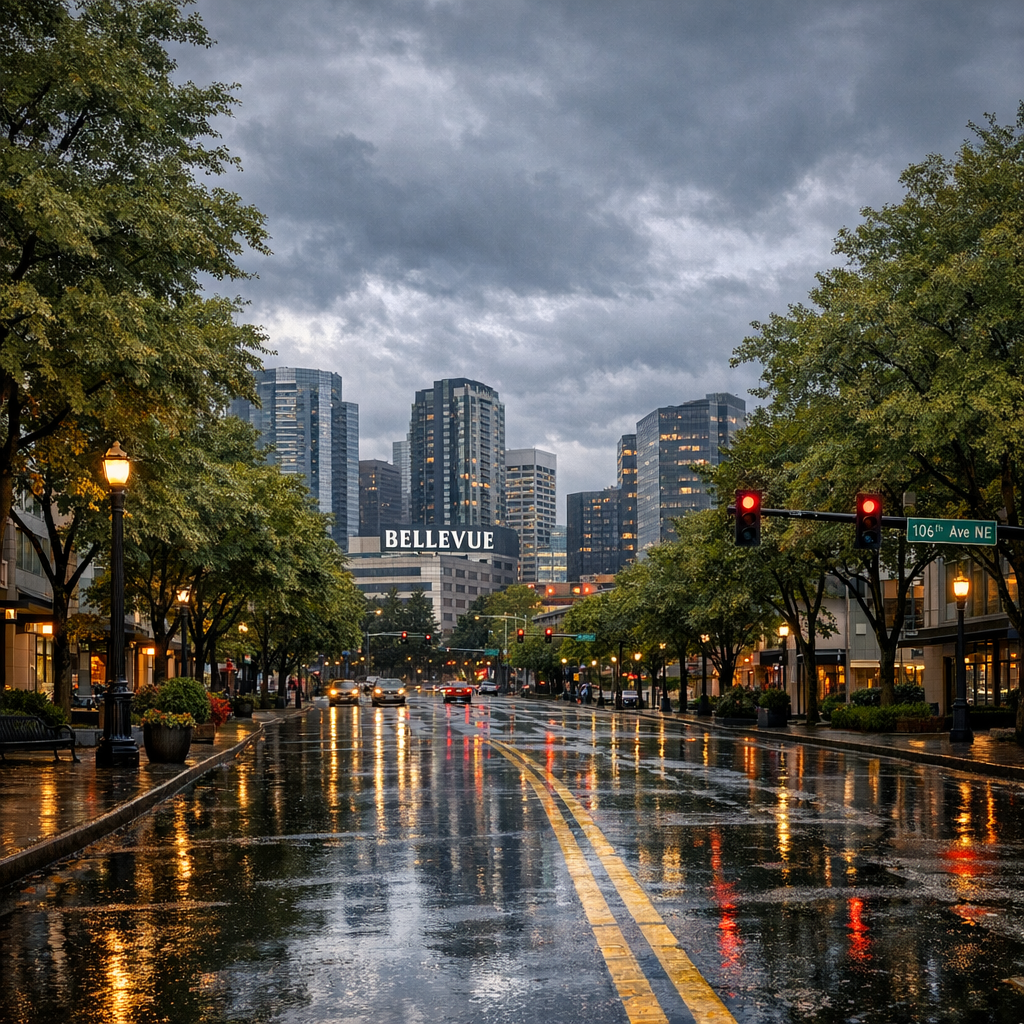
Bellevue sits squarely in the Pacific Northwest’s maritime climate zone — one defined by mild, moist winters, comfortable summers, and frequent rainfall. Understanding how the seasons work here is essential for environmental planning, storm preparation, and sustainability efforts.
What We Can Expect Weather-Wise
Summers in Bellevue are generally warm and dry. Daytime highs reach the low 70s to upper 70s°F, with little humidity and sparse rainfall. Winters contrast sharply — daytime temperatures hover in the upper 40s to low 50s°F, nights drop into the mid-40s or lower, and most of the annual precipitation falls between October and April. Snow is rare and usually light. Bellevue averages around 37 inches of rainfall annually under normal conditions.
Seasonal Impacts & Challenging Weather
This pattern of wet winters and dry summers brings both benefits and risks. Fall and winter storms can test the city’s stormwater systems; roof leaks, flooding, and saturated soil become real concerns. Late summer droughts stress vegetation, increasing wildfire risk in the region. And heat waves — while historically occasional — are projected to become more severe and frequent due to climate change.
How Bellevue Is Preparing & Adapting
The city’s recent “Sustainable Bellevue Plan 2026-2030” outlines strategies in five focus areas including natural systems, energy and buildings, mobility, and climate resilience. Among them:
- Targeted tree canopy investments, especially in areas with low tree cover and greater heat vulnerability. The tree canopy city-wide was measured at about 39.3%, a slight decline from prior assessments. Bellevue’s working to reverse that drop.
- Stormwater improvement through low-impact development (LID), designed to slow runoff and protect streams during heavy rain. Bellevue’s 25 drainage basins all ultimately feed into Lake Washington or Lake Sammamish, so upland flooding or runoff can affect water quality downstream.
- Decarbonization efforts: expanding renewable energy usage, electrifying buildings (including heat pump programs), and reducing dependence on fossil fuels. The city is aiming for carbon neutrality by 2050.
- Public health and infrastructure resilience plans, which cover wildfire smoke mitigation, emergency notifications, and preparing critical facilities for extreme weather.
What You Can Do Around Bellevue
Residents can help the city’s efforts while also protecting their homes and wellbeing:
- Plant native trees or support canopy restoration efforts. Shade helps reduce heat and protects streams by moderating water temperature.
- Use water-wise landscaping — with drought-tolerant species, mulch, rain gardens or other green infrastructure to reduce water demands in late summer.
- Update heating, cooling, and ventilation systems — better insulation, heat pumps, and quality filters help with energy savings and reduce smoke intrusion.
- Stay informed of seasonal forecasts and advisories: heavy rainfall, storm warnings, and poor air quality alerts.
Looking Ahead
Bellevue’s weather won’t drastically change its identity — we’ll still have lush winters, breezy summers, and colorful falls. What will shift is how our environment handles extremes — whether heavy rainstorms, hotter summers, or wildfire smoke drifting inland. By aligning adaptation and sustainability, Bellevue can reinforce its resilience and ensure that the natural world remains an asset, not a liability.
Stay curious. Stay prepared. Our climate is local—and it’s shaping our future.