

By Ava Washington
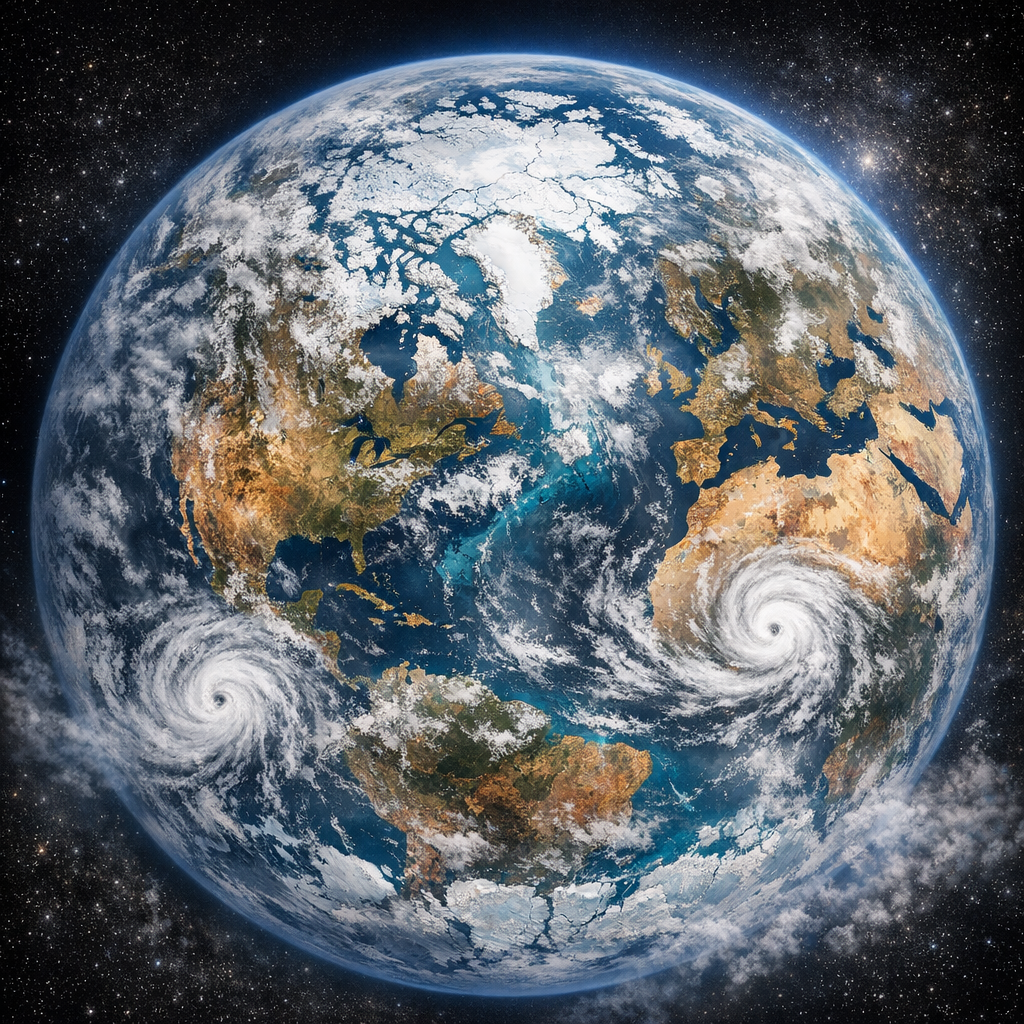
Around the world, scientific reports reveal that we are living through a climate emergency: every major climate indicator—oceans, ice, atmosphere—is showing that the planet is more out of balance than ever. Here’s a breakdown of what we know, what’s at risk, and what it means for Bellevue and beyond.
A long list of climate warning signs
The World Meteorological Organization confirms that the most recent decade is now the hottest on record globally. Ocean heat content, greenhouse gas concentrations and melting ice have all reached levels not previously seen in human history. Between 2015 and 2025, global temperatures consistently set new records. Greenhouse gas levels—especially carbon dioxide, methane, and nitrous oxide—are far above pre-industrial baselines. Energy imbalance, or the mismatch between how much solar energy comes in versus escapes, continues to grow. All of this signals accelerated, large-scale change in the Earth system.
Many scientists now believe that the 1.5 °C warming threshold—long viewed as the upper limit to prevent the worst impacts—has already been breached in terms of average global temperature. While efforts can still limit future warming, returning permanently below that threshold may no longer be possible. As warming intensifies, severe heatwaves, stronger storms, sea level rise, glacier melt, and threats to food and water security are becoming more frequent.
Why this matters everywhere—including here in Bellevue
Even though Bellevue doesn’t bear the brunt of all climate impacts, the ripple effects are felt locally. Rising global sea levels affect coastal shipping routes and weather patterns. Warmer oceans disrupt fish populations, affecting fisheries and marine ecosystems. Extreme heat and wildfire risks increase across the Pacific Northwest. Water availability shifts as snowpack dwindles and rain patterns change. More broadly, climate instability contributes to displacement, political tension, and global insecurity—events that ripple into migration, trade, and supply chains that reach us.
What’s being done—and what must come next
Some positive trends are underway. Renewables have overtaken coal globally as the primary source of energy, and investments in clean energy now double those in fossil fuels. National adaptation plans are becoming more widespread, and early warning systems are increasingly deployed to protect communities ahead of extreme events. But momentum is far from sufficient.
To put it plainly: meaningful global coordination is essential. Achieving net-zero emissions needs to become the norm across industries and nations. Carbon budgeting, stronger regulation, and transitions away from fossil fuels must be accelerated. Research shows that even seemingly small delays in cutting emissions today make the path harder in the years ahead.
How you can help—from Bellevue to global impact
- Support local climate initiatives—energy efficiency programs, public transit expansions, tree planting, stormwater resilience projects.
- Consume thoughtfully—reduce single-use plastics, prioritize products with lower carbon footprints, recycle and compost.
- Stay informed—look to reliable science sources and verified data to understand climate trends and policy proposals.
- Advocate—use your voice with elected officials to prioritize climate policy, clean energy investments, and protections for vulnerable communities.
We’re already living through the consequences of a warming world. What we do—or don’t do—now will shape the climate future for decades to come.