

Hello Bellevue — Michael Carter here. As our city grows, so do the changes in our weather and environment. Let’s take a look at what’s happening in Bellevue, why it matters, and how we can adapt together.
Climate Patterns and Projections for Bellevue
Bellevue has a mild, maritime climate with moderate temperatures, wet winters, and dry summers. We average around 37 inches of rain annually. Temperatures in summer generally fall between 72–80°F, while winters hover in the mid to upper 40s°F. Snow is rare and light.
However, recent climate assessments show some clear shifts:
- More days over 88°F are expected by the 2050s, putting pressure on health, infrastructure, and energy systems.
These hotter days will likely occur in neighborhoods already facing vulnerabilities.
(Paraphrased from Bellevue’s Climate Vulnerability Assessment.) - Warmer winters, decreased snowpack, and shifting precipitation patterns are projected, including more rain during traditionally snowy months and potential strain on streamflows and natural ecosystems.
(Based on regional projections for Washington State.)
Emerging Hazards & Why They Matter
With these changing patterns come increased risks:
- Extreme Heat and Health: Heat-related illness can rise, especially for older adults, young children, or those without cooling at home.
- Smoke and Air Quality: Longer wildfire seasons bring more smoke drifting into Bellevue, degrading air quality even when fires are far away.
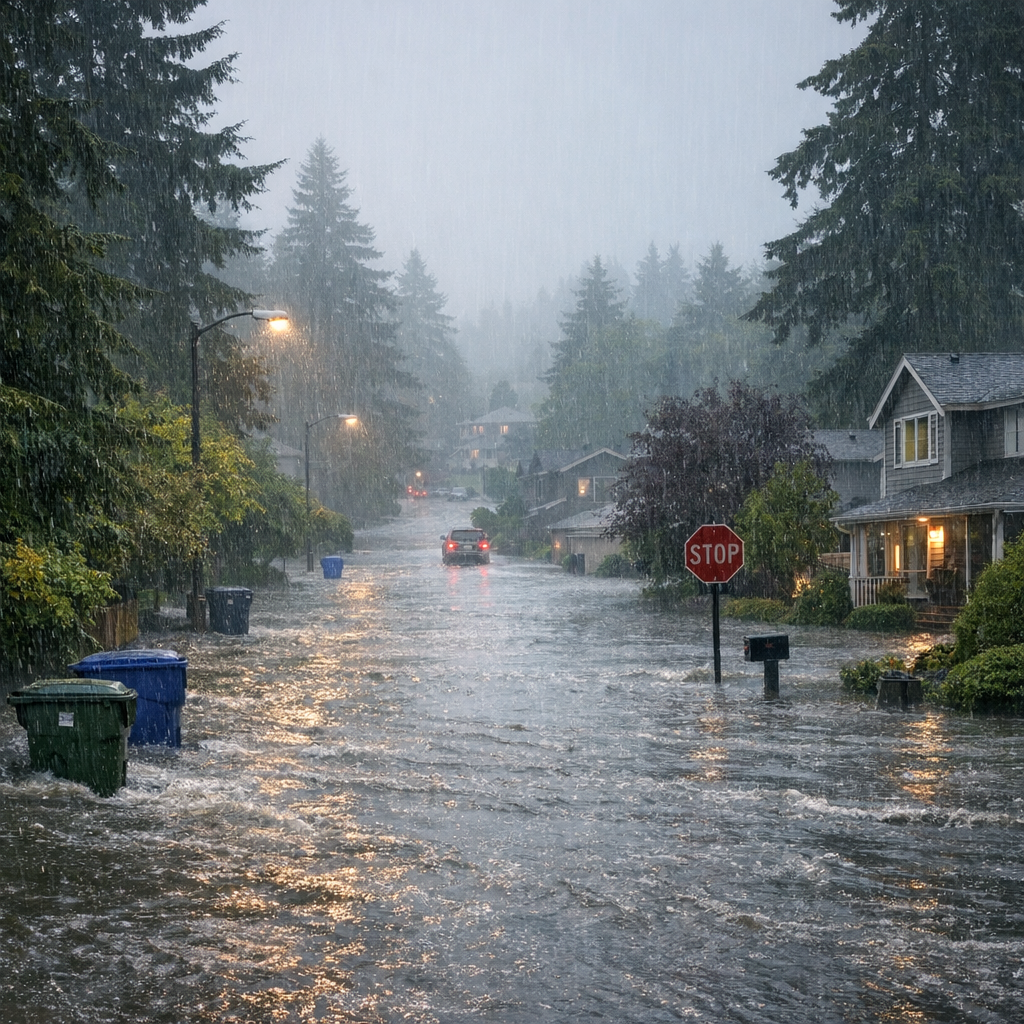
- Flooding and Storms: Intensified storms may lead to flash flooding, saturated soils, and higher river and stream levels. Our drainage systems and natural basins will feel the pressure.
- Ecosystem Stress: Changes in snowmelt, stream temperature, and plant stress threaten fish, wildlife, and tree health.
What Bellevue Is Doing
To respond to these challenges, the city has laid out a broad set of goals and actions:
- Reducing Greenhouse Gas Emissions: Bellevue is working toward carbon neutrality by 2050, with interim goals to cut emissions significantly by 2030. Electricity clean-up, fleet modernization, and reduced fossil fuel heating are part of the plan.
- Tree Canopy & Natural Systems: The city’s urban forest is under assessment, and efforts are underway to preserve and expand green space — key to cooling, absorbing water, and supporting biodiversity.
- Resilience Planning: Bellevue’s 2026-2030 Sustainable Bellevue Plan emphasizes preparedness — from ensuring building codes account for storm resilience to promoting equitable access to cooling measures.
How You Can Help At Home
Even small actions can help protect both yourself and the city’s environmental health:
- Planting native trees or incorporating rain gardens and permeable surfaces helps manage stormwater and keeps neighborhoods cooler.
- Reducing energy use — better insulation, energy-efficient appliances, and switching to clean energy sources — can lower your carbon footprint and help with bills.
- Staying ready for extreme weather: know where local cooling centers are, watch air quality alerts, or prepare for sudden intense storms.
- Stay informed and engaged: the city often shares environmental performance dashboards and solicits input on climate resilience projects.
Looking Ahead
Bellevue’s changing weather isn’t just about hotter summers or wetter winters — it’s about how we live here. With proactive steps, supportive city policy, and community engagement, we can build resilience. It’s about protecting public health, ecosystems, infrastructure, and ultimately our shared quality of life.
If you want to dig into any of these topics — trees, stormwater, air quality, or community programs — I’m listening. Let’s face the changes together, Bellevue.