

By Evelyn Parker
For those following real estate and housing in Bellevue, the latest data points toward a market that’s cooling — but far from collapsing. If you’re buying, renting, or keeping tabs on city development, here’s what matters now.
Home Prices & Inventory: What the Numbers Say
The median sale price for homes in Bellevue now hovers around $1,572,500, down about 1.6% year-over-year. Market supply stands at roughly 4.4 months of inventory — a sign of a balanced market where neither buyers nor sellers dominate. Homes are staying on the market for around 27 days, and most are selling for close to their listed price, often completing sales at about 97–98% of the asking figure.
Rental Market: Slight Softening
In the rental sector, median monthly rents are now around $2,900–$3,000, showing signs of a mild decline compared to prior years. Demand still exists — Bellevue remains in the higher-tier rent spectrum — but renters seem to be more selective, and vacancies have loosened slightly. Landlords should expect tenants to negotiate more, especially outside top-tier neighborhoods.
Where the New Buildings Are Rising
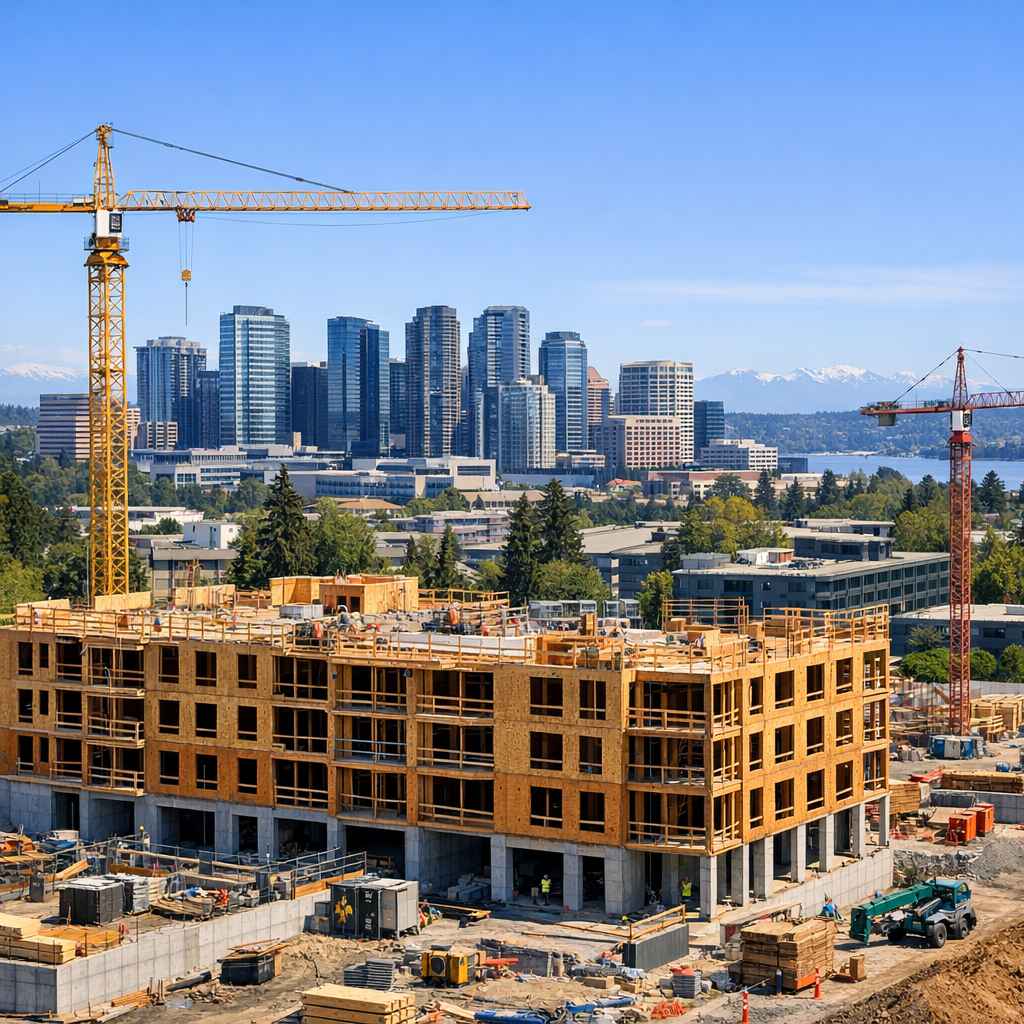
Bellevue is seeing a surge in development, especially in neighborhoods like BelRed, Wilburton, Northwest Bellevue, and Downtown. Across the city, there are approximately 7,500 housing units in the works — ranging from mixed-use to multi-family projects. One large project in BelRed, at 1829 130th Ave NE, alone contains over 600 units. In Downtown, several mid-rise apartment and mixed-use developments are moving through design review or already under construction.
Local Development Initiatives & Affordable Housing
City policies are reshaping how growth is applied. Transit-oriented projects in the BelRed Arts District will deliver both market-rate and affordable housing, including family-sized units at or below 80% of area median income. Features now considered essential include public open space, cultural hubs, and connections to light rail. These projects are meant to support Bellevue’s goal to create or preserve about 5,700 affordable units over the next decade.
What This Means for Buyers, Sellers & Renters
- Buyers have a moment to weigh options more carefully. With fewer bidding wars and slower sales in many neighborhoods, there’s room for price negotiation and better deal comparisons.
- Sellers should price with more care and prepare for longer marketing periods. Homes set above value may linger or require cuts.
- Renters can expect more options—especially for rentals connected to transit or in walkable areas—but luxury or high-amenity units still command premiums.
- Community planners & advocates will want to keep focus on infrastructure: transit access, density, walkability—and how growth can serve overall affordability.
While Bellevue may never be a cheap place to live, the current patterns suggest a shift toward greater balance. Whether you’re plotting your next purchase, lease renewal, or simply keeping an eye on new construction, understanding both the price trends and where development is happening will serve you well.