

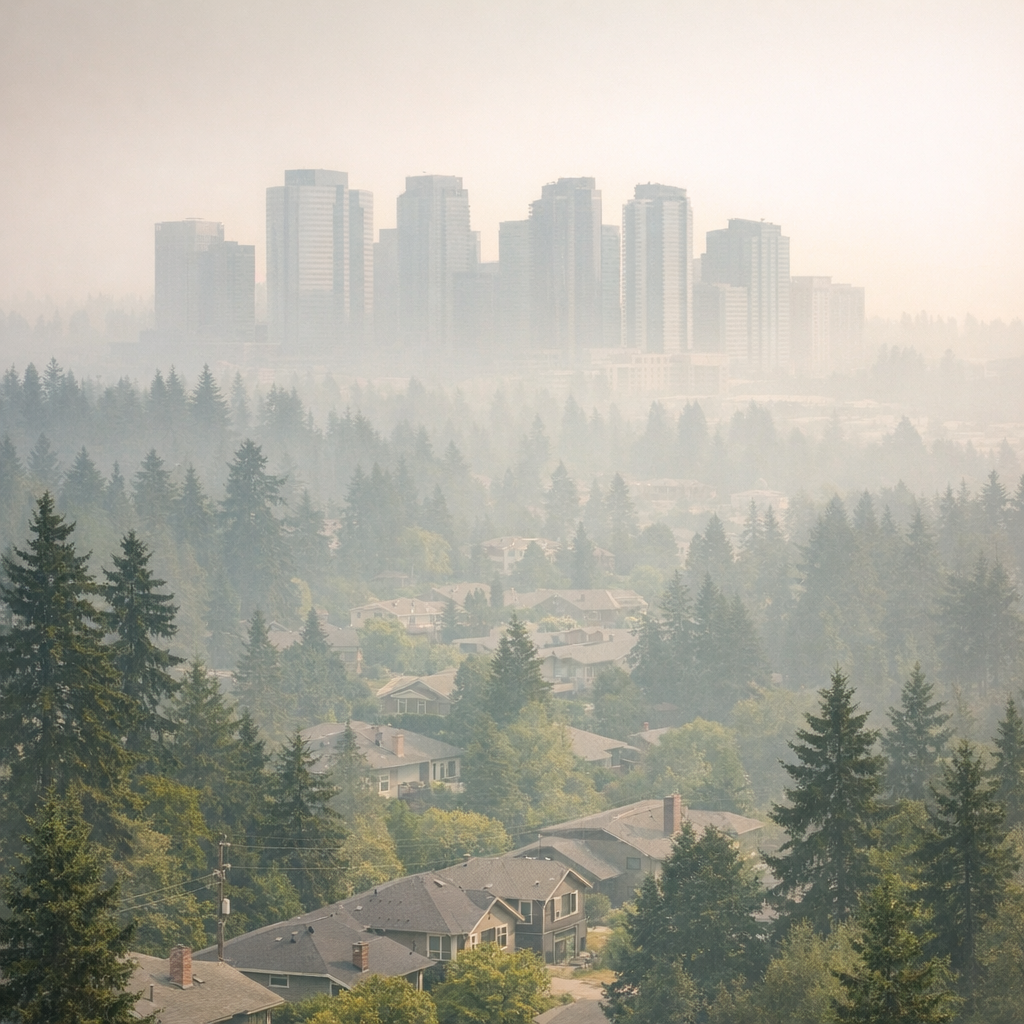
For many living in Bellevue, the weather has felt different over the past decade — hotter summers, wetter winters, more days under safety advisories. These changes aren’t just anecdotes: they reflect measurable trends captured in city and regional climate assessments. Here’s a breakdown of what’s shifting, what the impacts are, and what our community is doing to adapt.
Key Climate Trends in and Around Bellevue
1. Warmer Temperatures & More Extreme Heat
Over recent decades, Bellevue has experienced a steady increase in average temperatures. Days of extreme heat are getting more frequent — especially during summer months. Warmer overnight lows, known as nighttime heatwaves, strain vulnerable populations and can reduce relief when daytime heat recedes. These trends pose risks for public health and energy use.
2. Longer Dry Periods, Wetter Winters
While summer dryness has always been part of life here in the Puget Sound region, those dry spells are lengthening. Winters, on the other hand, are bringing heavier rainfall events. The timing and intensity of precipitation are shifting, which affects both how we manage water and how we prepare for flooding or erosion.
3. Smoke, Air Quality, and Wildfire Impacts
Wildfires in the broader Pacific Northwest — and even beyond state lines — are producing smoke that drifts into Bellevue, compromising air quality. Local assessments show increasing concern about particulate matter and pollution near freeways. During smoky periods, residents with asthma, heart conditions or other respiratory issues are the most affected.
How These Changes Affect Bellevue’s Ecosystems & Built Spaces
From our city parks to private properties, natural systems and infrastructure are adapting (or struggling) with shifts in climate. Trees, especially evergreens, face stress when summer droughts are more intense. Soil moisture drops, native species may struggle, and invasive plants or pests can take hold more easily. Meanwhile, buildings and utilities are under pressure too — needing better insulation, cooling, and water-resilient design.
What Bellevue Is Doing & What You Can Do Too
City-Wide Plans and Policies
The city has laid out ambitious targets: cutting community-wide greenhouse gas emissions roughly in half by 2030 and aiming for net zero in the decades ahead. New plans also address air quality by focusing on development near busy roads, strengthening natural systems, and improving building standards. Bellevue’s updated Comprehensive Plan (2024–2044) integrates climate vulnerability analyses to inform growth and resilience.
Practical Actions for Residents
- Watch for burn bans and air quality advisories. Use high-efficiency filters for your HVAC system and consider portable air purifiers during smoky periods.
- Choose native or drought-tolerant plants to reduce water needs and support local ecosystems.
- Conserve energy and water at home — efficient appliances, mindful landscaping, and reducing vehicle trips all help.
- Get involved: attend Bellevue’s neighborhood meetings or city forums on climate, air quality, and urban planning.
The Outlook: Preparing for What’s Ahead
Climate models project that Bellevue will continue to see rising temperatures, increasingly frequent extreme weather events, and changes to weather patterns that challenge traditional seasonal rhythms. Planning for heat, managing stormwater, protecting clean air, and preserving green spaces will be essential. While Bellevue won’t face the same severity seen in more arid regions, the margin for adapting wisely is narrowing.
Understanding these changes helps us all — individuals, organizations, and government — make more informed decisions. Bellevue’s natural beauty and livability depend not just on preserving what we have, but planning for what’s coming.