

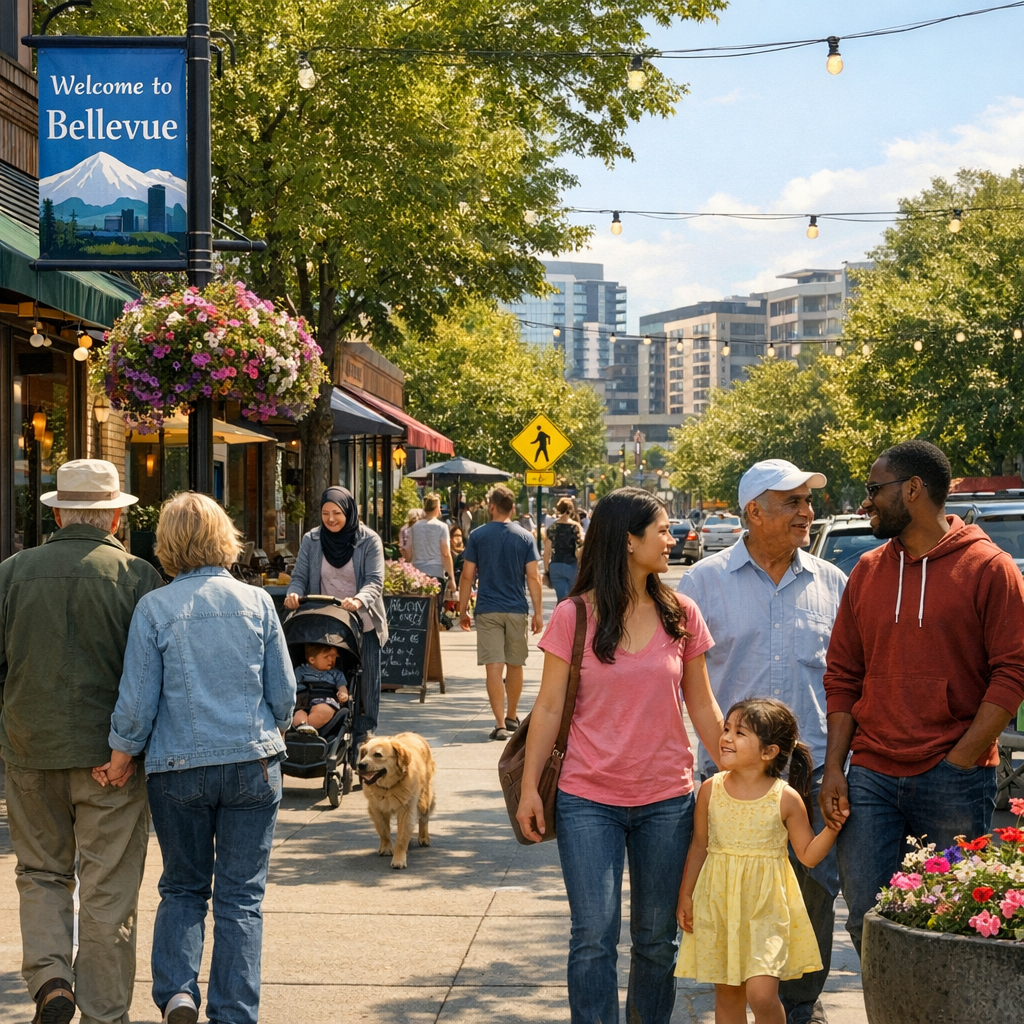
There’s a lot I love about Bellevue—green spaces that feel like breathing room, neighborhoods where diversity isn’t just a buzzword, and public services that generally work. But beneath the surface—if you listen closely to friends, neighbors, and folks gathered at community meetings—there’s growing unease. Together, these voices paint a picture of a city at a crossroads.
What locals are saying
“I love where I live, but can I keep it?”
Almost everywhere I go, people talk about pricing and housing. With Bellevue’s Comprehensive Plan survey showing “affordable housing”—especially for those working essential jobs or raising young families—as their top concern, this isn’t just a private worry anymore. Many residents are supporting more mixed housing types across the city but getting uncomfortable when the change comes to their own neighborhood.
Change is visible—and sometimes hard to love
People notice new buildings, more traffic, light rail construction, and fewer empty storefronts. Some see progress: improved transit options, more food variety, parks upgraded, trails better connected. But others—and usually those who have been here longer—express nostalgia: they feel Bellevue is changing faster than the places they once recognized. The sprawling growth doesn’t always come with room for every neighborhood’s voice.
Affordability remains the elephant in the room
No surprise here. Housing prices continue to stretch budgets. There’s growing anxiety about whether young people—or local workers—will ever afford to stay. Alongside housing, taxes, healthcare costs, and everyday expenses loom large. Support for solutions is strong, but the frames diverge: people want private sector innovation, smart growth, and regulatory reform more than new taxes.
What Bellevue can lean into
Preserve what makes our neighborhoods feel like home
Bellevue has been called a “city in a park”—trees, green spaces, good sidewalks, and walkable corners are part of what draws folks here. If growth doesn’t come with preserving nature, historic landmarks, and the sense of community in smaller corners like Crossroads, Eastgate, or Lake Hills, we risk losing what makes Bellevue feel like ours.
Shape growth thoughtfully
It’s one thing to accept new housing and businesses. It’s another to ensure they’re integrated in ways that support mobility, affordability, and access. I hear a lot about “housing for people like me”—not what someone else somewhere else needs. Policies need to deliver housing diversity—duplexes, apartments, accessory dwellings—while protecting neighborhood character.
Listen—and keep listening
Community forums, surveys like VIBe, and engagement tools like Engaging Bellevue are helpful. But there’s also fatigue. Often, the loudest voices win. Those feeling left out tend to be renters, younger people, or folks whose first language isn’t English. Expanding outreach, offering translation, going to neighborhood spaces (not just city halls), and trusting people whose experiences don’t always get spotlighted will be vital.
Looking ahead
Bellevue doesn’t have to choose between being prosperous and being just. We can keep the green trees, the quiet paths, the feeling of safety—all of that—and also be a place where a teacher, a single mom, or a young tech worker can find a home. Our leaders—city council, planning departments, business owners—will decide whether our future feels like a city everyone belongs to, or one only some can afford. But that future depends on the many small choices we make and the voices we refuse to let go unheard.
— Mia Cooper