

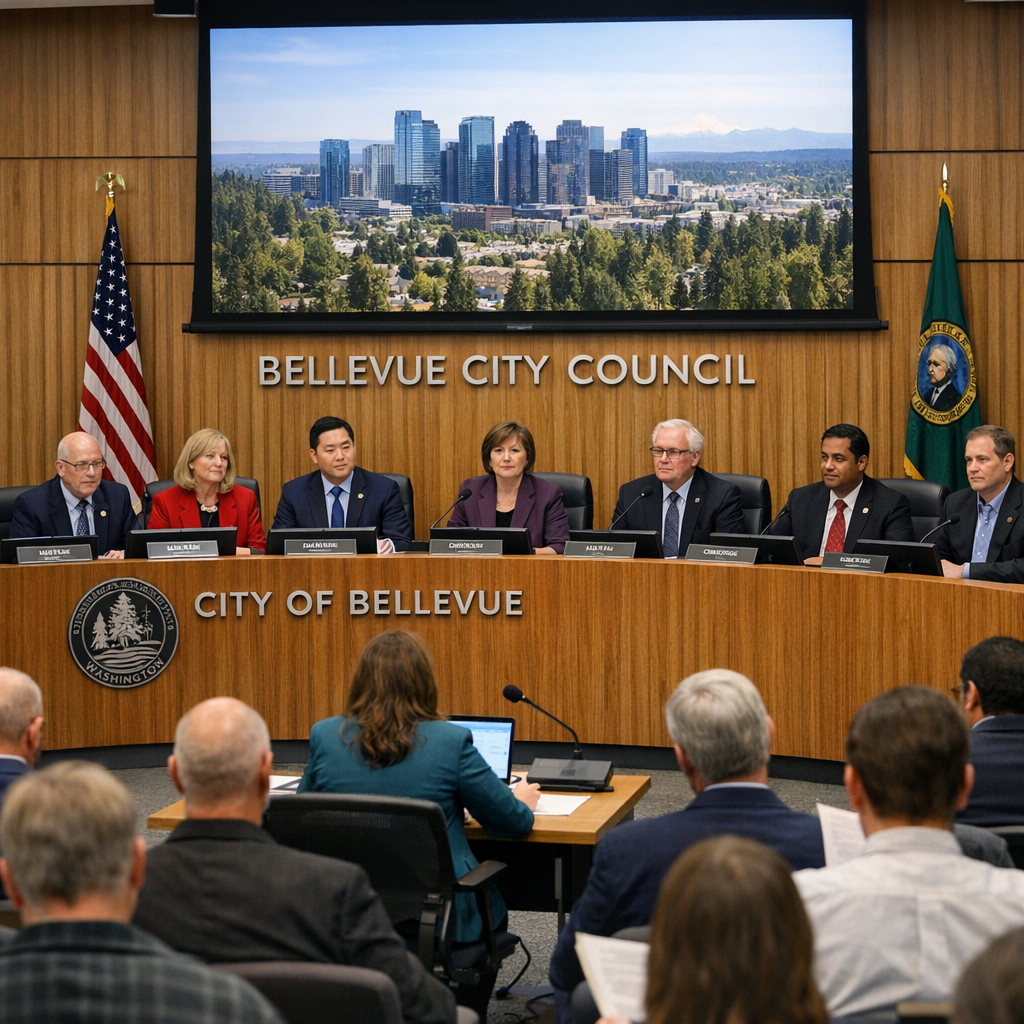
By Olivia Adams – A closer look at what’s shaping Bellevue today: big-dollar infrastructure needs, housing policy pushes, and public concerns made visible in recent City Council discussions.
Bridging Bellevue’s $1.5 Billion Transportation Funding Gap
In July, Bellevue officials presented a sobering long-term forecast: between now and the next two decades, the city needs roughly $1.5 billion in transportation capital funding just to maintain existing systems, not including major new projects like the proposed Grand Connection Crossing. Yet current revenue streams only support about $686 million over that same timespan. Council directed staff to prepare budget options in September that could help close that gap—including choices around the Transportation Benefit District. This makes clear how much residents may see changes ahead: new fees, bond measures, or reprioritized projects.
Progress, Pushback, and Policy: Housing Incentives Under Scrutiny
Bellevue’s MFTE Catalyst program—an incentive offering multifamily tax exemptions in exchange for affordable units—recently became a focus of debate as leaders weighed implementing a proposed 1,500‐unit cap. Supporters say it balances market feasibility and affordable housing supply; opponents worry limits threaten housing needed in transit corridors.
Meanwhile, Bellevue Development Services reports improved permit workflows: first‐review completion rose from about 72% to 82%, supported by new tools like AI assistants and a Small Business Concierge program. New middle housing permit options, required by state law, were also introduced. But not all feedback has been positive—some residents express concerns about missing‐middle housing projects increasing density and impacting safety on nearly dead‐end streets.
Resident Feedback: Noise, Roads, and Neighborhood Character
In public comment sessions, citizens raised issues from nearly head‐on collisions on Bel‐Red Road bike lanes (after turning‐lane removals) to noise pollution from yard tools. One resident measured leaf blower noise at more than 80 decibels at property lines—far above city limits. Another asked for clearer rules on permitting roosters and resolving impacts from perception of stranger activity.
Council also affirmed a one‐year moratorium on detention centers, with community advocates pushing for permanent policy changes. The intention is to limit operation of private or federal detention facilities and provide better regional coordination for immigrant communities.
Looking Ahead
These ongoing debates—about how Bellevue handles transportation funding, housing equity, neighborhood safety, and resident input—aren’t going away soon. As budget season approaches, Council decisions will likely define growth priorities: what infrastructure gets built, what housing incentives remain in place, and whose concerns guide city policy.