

By Evelyn Parker
Understanding Current Market Trends
Bellevue’s housing market is showing signs of adjustment. The Zillow Home Value Index places the median home value at around $1,418,231, a drop of roughly 3.9% from the previous year, and homes are going pending in about 32 days. The city has 647 homes currently listed for sale.
On the rental side, the median asking rent is hovering close to $2,800–$2,830/month, a figure that has remained relatively stable year-over-year. Rent growth is modest, and smaller apartment types like studios and one-bedroom units are in high demand.
What Buyers Should Know
Price Tiers & Terrain
Bellevue isn’t a single market—it’s made up of diverse neighborhoods with highly divergent price points. Entry-level single-family homes tend to start in Lake Hills, Eastgate, Crossroads, or Robinswood at around $1.1 million, while ultra-luxury homes in West Bellevue, Meydenbauer, and waterfront zones can exceed several million dollars.
Financing based on price tier matters: many homes above approximately $1.4–$1.5 million require jumbo loans, which carry stricter debt-to-income and reserve requirements.
Neighborhoods & Priorities
Buyers who value school district alignment, commute time, or transit access can find better value if they review boundaries carefully. For example, homes in one district may carry a premium per square foot compared to similar homes just across a boundary line.
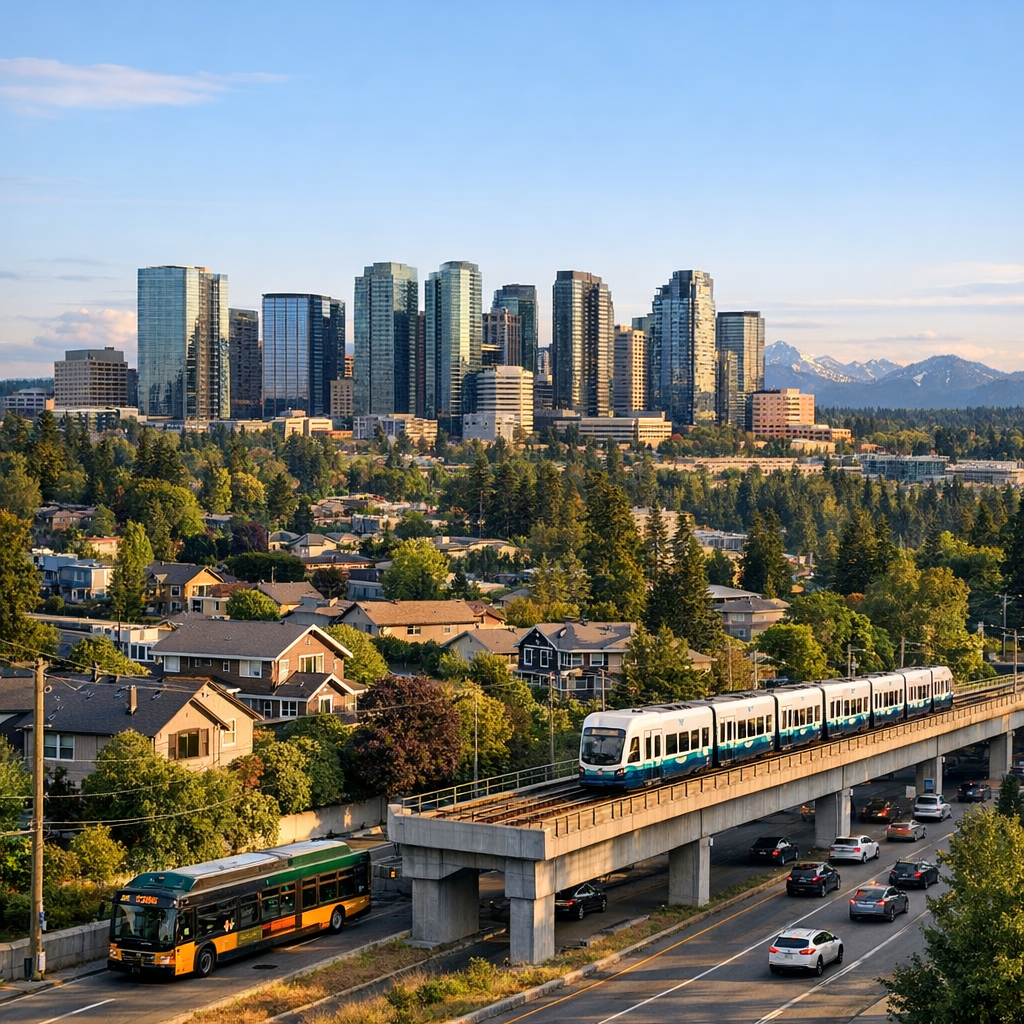
Light rail impacts are growing. Neighborhoods near planned or existing stations—like parts of Crossroads and Wilburton—are seeing increased buyer interest and price pressure.
What Renters Should Know
Cost & Unit Types
The average rent in Bellevue is about $2,825/month. Studios and one-bedroom units are in the $2,000-$2,600 range, two-bedrooms often go for $3,100 or more, and three-bedrooms can exceed $4,300 depending on neighborhood and condition.
Rent changes are modest: some neighborhoods are seeing rent decreases year-over-year, while others are up, particularly in areas with strong amenities or transit proximity.
Opportunities & Challenges
For buyers: increasing inventory, a slight softening in price per square foot, and more days on market suggest leverage in negotiations—especially for homes priced above the entry tier.
For renters: relatively stable rents but intense competition for well-kept units in transit-friendly areas. Expect higher costs near downtown and amenities. Budget carefully for move-in expenses, deposits, and utility costs.
How to Make Smart Decisions
- Get pre-approved: Sellers and agents expect serious offers with full documentation—especially for higher-priced homes requiring jumbo financing.
- Check school boundaries and tax jurisdictions at the parcel level—not just by neighborhood names.
- Factor in transportation and transit costs. Homes close to light rail or major bike routes may have higher up-front costs but lower long-term commuting expenses.
- Renter tip: inspect HOA documents if renting in a condo or multi-use building, and ask about potential assessments and reserve funds.
- Buyers and renters alike: consider neighborhoods with rising infrastructure investment, which often signal future value improvements.
Final Word
Bellevue’s housing and rental markets are navigating a transition—from steep growth toward more nuanced stability. That shift brings opportunity: buyers may find more room to negotiate, and renters can benefit from modest price changes. But in both cases, success depends on local insight—into schools, transit, financing, and the small differences that change the bottom-line over years.