

By Olivia Adams
What Bellevue residents are telling city leaders
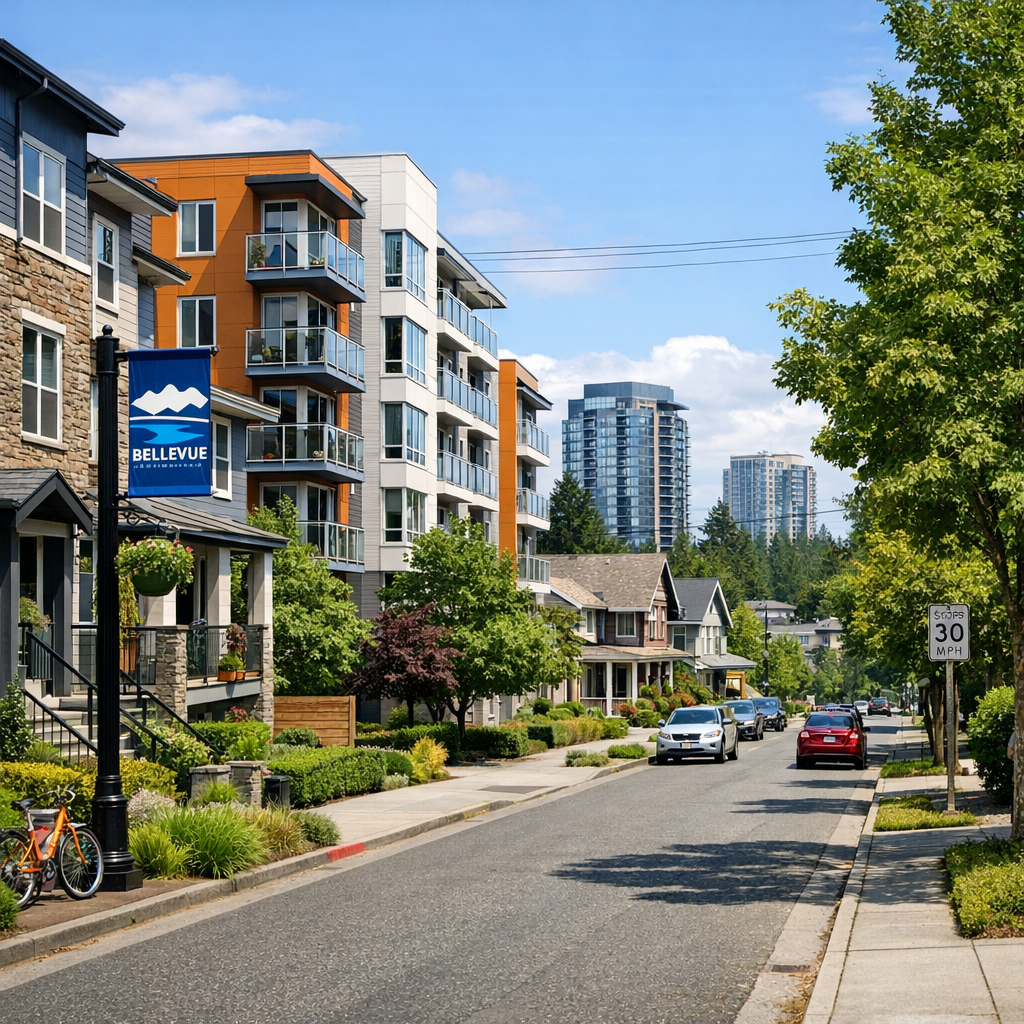
Recent surveys—like the VIBe (Voter Insights Bellevue) effort—show that affordability has overtaken many other concerns across Bellevue. Nearly one in three likely voters now cite housing costs and cost of living as the top issue facing the city. Over the past year, public priorities are shifting: while safety, growth, and congestion remain relevant, they’ve taken secondary importance to ensuring housing remains accessible. Many residents are expressing concern that rising costs could outpace incomes and force families to leave or settle elsewhere. VIBe survey results also show a dip in support for low-income units in neighborhoods—a signal that communities want affordability, but also care deeply about where and how it’s achieved.
Zoning reforms and street-grid requirements in focus
Policy efforts underway aim to reform how housing gets built in Bellevue. One such discussion is the BelRed Street Grid requirement—developers must build wide roads (50–60 feet) as part of a mapped street grid. A letter from the Bellevue Chamber and Housing Development Consortium points out that these road-width mandates remove land from potential housing development and raise costs. Especially for affordable housing, infrastructure costs get passed down in ways that can render projects unviable.
Meanwhile, land use code updates—within Bellevue’s “Next Right Work” initiative—are pushing for changes like allowing accessory dwelling units (ADUs, duplexes, triplexes, quadplexes), simplifying permitting, and adjusting floor-area ratio limits. These reforms aim to accelerate development of housing options for diverse incomes while cutting red tape.
Balancing growth, infrastructure, and neighborhood character
Growth comes with trade-offs. Policies designed to keep neighborhoods walkable, preserve green space, and maintain distinct local character can sometimes clash with densification. For example, residents in Old Bellevue and other established areas often express concern about taller buildings, traffic, and changes to urban fabric. City leaders must consider how to support housing that’s both affordable and respectful of neighborhood identity.
Infrastructure needs are another factor. Projects like future sewer-line programs, utility upgrades, and road improvements are essential—and costly. Bellevue Utilities’ recent community survey found that while reliability and safety of water, wastewater, stormwater, and solid waste systems remain trusted, affordability and clear, understandable utility bills are now also critical to community trust.
Paths forward and what’s at stake
Local leaders have several levers to pull. Reforming land-use policies to allow more housing types, relaxing overly prescriptive infrastructure requirements, and streamlining permit processes are already under discussion. The city’s engagement hub shows active projects related to land-use code amendments, parking reform, and neighborhood planning—all opportunities for residents to voice priorities.
How these policies are shaped will affect Bellevue’s future. If affordability pressures aren’t addressed—and if housing continues to be costly—longtime residents may be displaced, economic diversity could decline, and traffic and housing shortages could worsen. But if reforms succeed, Bellevue could become a model for balancing growth, infrastructure, and inclusion in the fast-growing Puget Sound region.