

By Michael Carter
Shifting Weather Patterns in Bellevue
Bellevue lies in a region defined by wet, mild winters and relatively warm, dry summers. Typically, most of our annual rain falls between October and March, while summer brings longer stretches of warmth with much less precipitation. Average daytime highs in summer usually hover in the 70s to low 80s (°F), rarely extreme, and snow is infrequent in most neighborhoods. Our low-lying areas near Lake Washington tend to moderate extremes since large bodies of water act as climate buffers.
Emerging Environmental Trends
Multiple climate assessments for Bellevue and King County point to increasing average temperatures across all seasons. Forecasts suggest more days above 88°F in the coming decades—heat that poses risks, particularly in neighborhoods lacking shaded trees or sufficient cooling infrastructure. Our region is also observing more intense rainfall, a decrease in snowpack in the Mountains, and shifts in stream flows. These changes affect aquatic habitats, flooding, seasonal water availability, and even wildfire risks via smoke drifting into our air.
Impact on Local Ecosystems and Human Health
Critical natural environments—including streams, wetlands, riparian zones, and shoreline areas—play vital roles in maintaining Bellevue’s ecosystem health. These areas buffer flooding, support wildlife like salmon and toads, and help manage storm runoff. Under climate strain, they face erosion, higher water temperatures, and soil runoff.
On the health front, extreme heat and poor air quality—especially during wildfire seasons—can affect vulnerable residents, including infants, older adults, people with asthma, and those lacking air conditioning or clean air access. Flooded or waterlogged homes may also lead to mold, which can further degrade indoor air quality and cause respiratory issues.
City Actions and What Residents Can Do
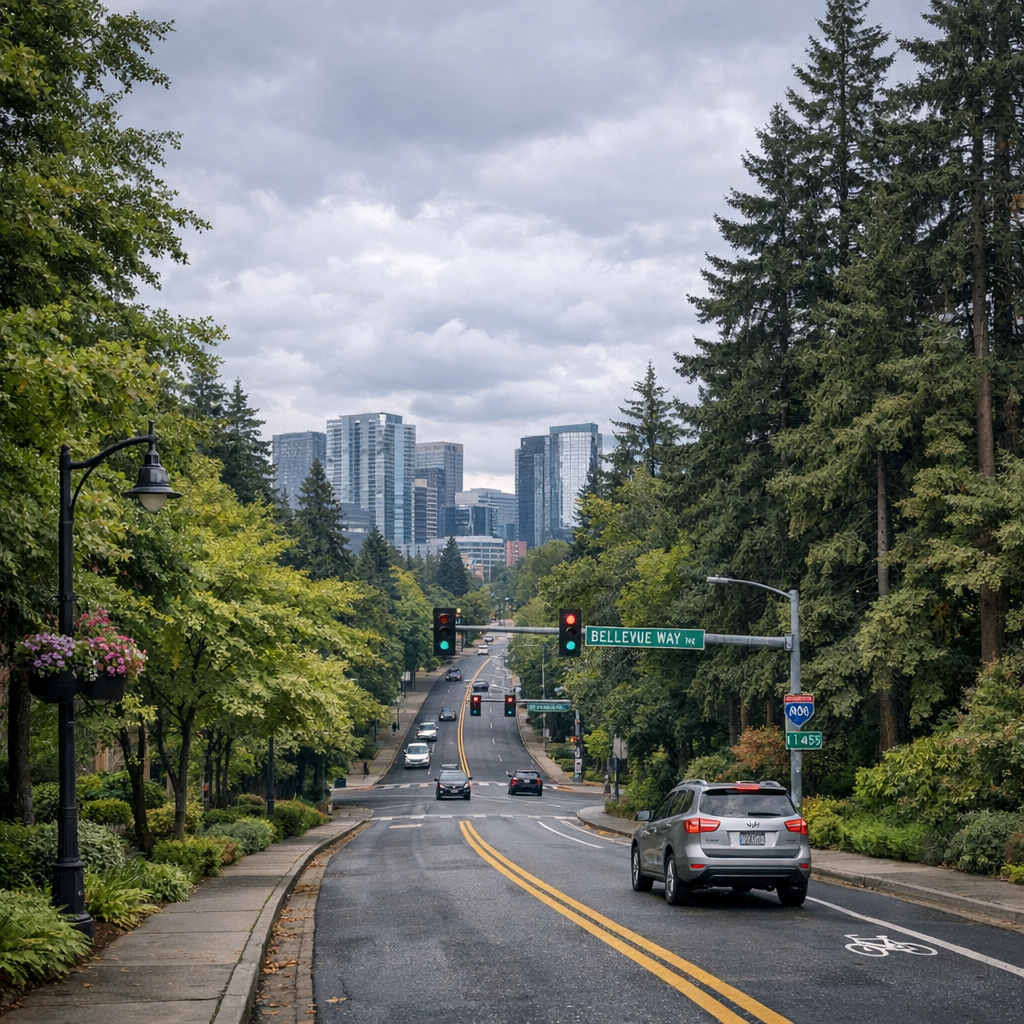
Over recent years Bellevue has reduced greenhouse gas emissions from city operations by over 50%, with communitywide emissions also trending downward. Efforts include boosting renewable energy use, improving building efficiency, and supporting cleaner transportation. At the same time, the City has been tracking its tree canopy—in 2023 about 39% of Bellevue was covered by tree canopy, just under its goal—and working to protect critical habitats and wetlands.
Residents can help by planting climate-resilient trees, reducing water waste, using public transit or carpooling, and being ready for heat or flood events—whatever our neighborhood. If your home is in a floodplain or near a stream, you may want to review flood risk, install proper drainage, and consider home upgrades that guard against heat or water intrusion.
Preparing for the Future Together
Addressing climate change isn’t about far-off predictions—it’s about what’s happening now, and how we prepare for what’s coming. With Bellevue’s Comprehensive Plan extending to 2044, local policies emphasize resilient infrastructure, habitat protection, and equity, recognizing that some groups face the greatest risks. By working together—city, community, families—we can strengthen Bellevue’s resilience, protect its beauty, and make sure everyone here is safer and healthier.