

By Olivia Adams
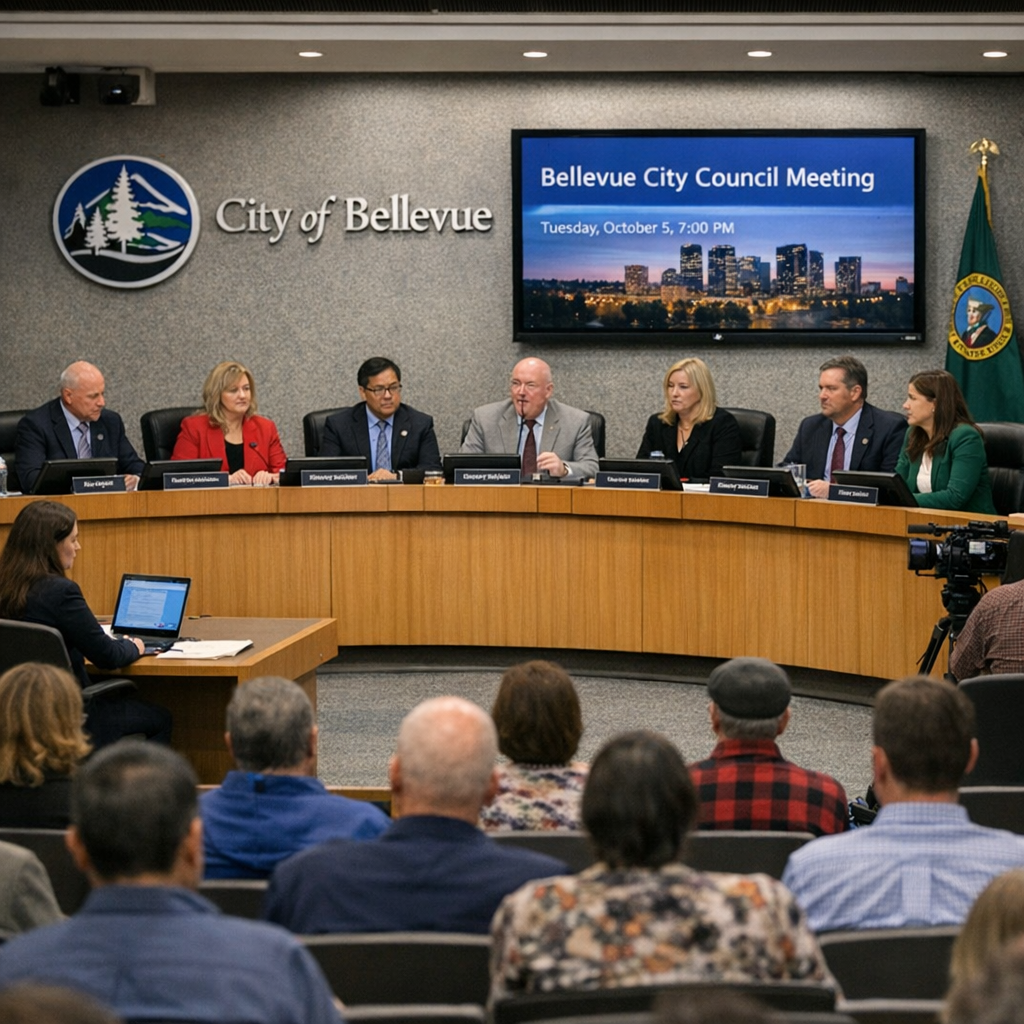
Bellevue’s City Council has been busy lately with decisions shaping the near-future of housing, transit, and utilities. Here are some highlights from recent meetings—and what’s moving forward for the city and its neighborhoods.
Development and Housing: More Affordable Units, Fewer Parking Spaces
A major item was approval—unanimous among councilmembers—to negotiate a development agreement with BRIDGE Housing for the BelRed Arts Transit-Oriented Development project. The plan calls for 170 units, all income-restricted (100% affordable), including 24 units reserved for people with developmental disabilities, and dedicated artist space and community room. Near the light rail station, it also eases parking requirements and boosts opportunities for ground-floor arts and activation. Council discussion emphasized ensuring benefits are delivered as promised and speeding up permitting processes.
Transit, Streets & Mobility Improvements
Bellevue is exploring funding a Transportation Benefit District (TBD) to help fill a roughly $1.5 billion gap in transportation funding over the next two decades for everything from road expansion to bike corridors. A TBD with modest new sales tax coupled with a vehicle fee could raise hundreds of millions toward those goals—while the city also works through public input on what projects should be priorities.
An $80 million proposal to complete Spring Boulevard between 124th and 130th Avenues NE—the last missing link—made headlines. The proposal includes sidewalks, bike lanes, and a bridge over a tributary to Kelsey Creek. But as of now, there’s no dedicated funding. Community leaders are pushing for its placement on the next list of priority projects.
Utilities Upgrades & Environmental Resilience
Residents around Lake Hills Boulevard recently celebrated the ribbon-cutting of the Horizon View 2 Reservoir and Pump Station. The new infrastructure increases water storage and adds resilience to Bellevue’s supply. At the same time, work is underway to replace an undersized and unstable culvert under Lake Hills Boulevard—along with nearby aging sewer and water pipelines—to address flood risk and drainage issues.
On solid waste and sewer fronts, Bellevue’s Utilities department has secured $500,000 in federal funds to move forward planning for the Lake Washington Sewer Lines program. This work is part of broader efforts to protect public health, safeguard creek and lake water quality, and ensure the system can reliably serve growing demand.
Looking Ahead: What to Watch
- The public inputs on the TBD funding scenarios—these will help shape what mobility projects Bellevue invests in (e.g., transit, bike lanes, road capacity).
- Finalization of the BRIDGE Housing agreement and its enforcement language, especially around affordability quotas and timelines.
- Tracking the utility projects’ timelines and community traffic impacts, especially around Lake Hills Boulevard where constructions could disrupt daily commutes.
In total, Bellevue officials are balancing growth with responsibility—taking steps to make housing more affordable, mobility more equitable, and infrastructure more resilient. How the city moves forward depends on how well funding and community feedback align with these big plans.