

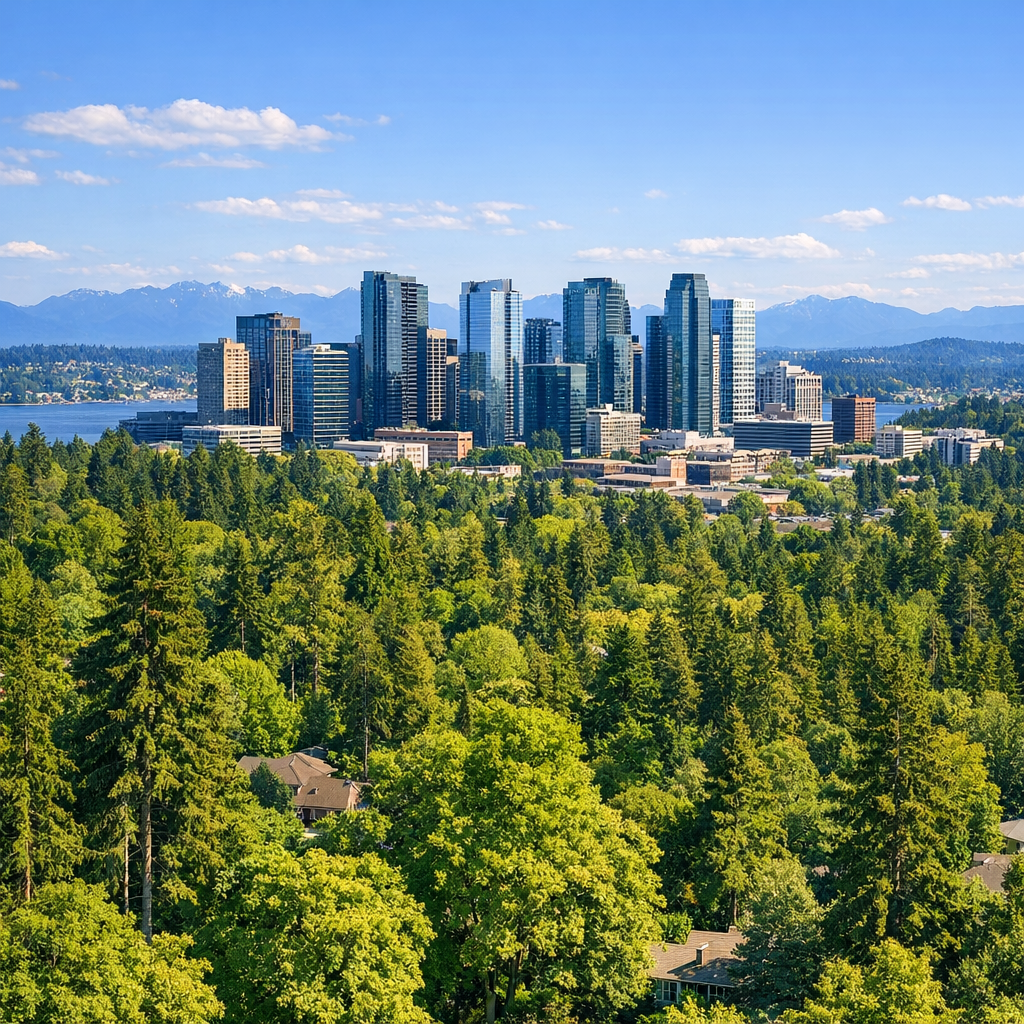
Hello, this is Michael Carter bringing you insights on Bellevue’s evolving climate — how weather patterns are shifting, what the city is doing in response, and what residents can prepare for.
What’s changing in Bellevue’s climate
Recent studies in Bellevue point to several notable environmental shifts. Summers are becoming hotter, with projections showing that by around 2050 Bellevue could see upwards of 30 additional days per year with humidex values above 88°F — a sharp rise from historical averages. These changes not only bring discomfort, but also heightened risks to public health. Alongside the heat, extreme precipitation events are expected to increase, stressing stormwater systems and local waterways. Wildfire smoke drifting in from other parts of the Pacific Northwest remains another concern during warm, dry evenings.
Environmental goals and accomplishments so far
Bellevue’s city government has adopted ambitious targets under the Sustainable Bellevue Plan. Communitywide greenhouse gas emissions are set to drop by 50% by 2030, and the city aims to reach a 95% reduction by 2050. Meanwhile, municipal operations are working toward carbon neutrality by 2040.
Between 2023 and 2024, Bellevue saw a 4.6% decrease in greenhouse gas emissions, driven by less energy use, cleaner electricity sources, and declines in transportation emissions. Efforts to preserve tree canopy are ongoing, though recent assessments show tree cover fell slightly city-wide, even as park areas added canopy overall.
Strategies to strengthen resilience
Bellevue’s action plan addresses multiple fronts:
- Natural Systems & Stormwater: Watershed health, stream protection, and low-impact designs are being expanded. Encouraging green stormwater infrastructure across both new and existing developments helps buffer runoff and protect waterways.
- Heat Exposure: Tree canopy loss, especially in suburban neighborhoods, increases exposure to heat. Efforts to conserve and restore canopy in private and public spaces are key.
- Reducing Pollution: Bellevue’s air quality work includes modeling freeway emissions, addressing smoke impacts from wildfires, and planning development to reduce exposure for sensitive populations.
- Community Engagement: The city is making space for residents to help shape responses — from recycling and composting to landscaping and efficient buildings. Programs aim to ensure vulnerable groups have access to information and resources.
Things Bellevue residents can do now
Here are practical steps you can take to adapt and contribute:
- Plant native trees and shrubs in your yard — even small patches help shade your home and cool your neighborhood.
- Reduce impervious surfaces like driveways and patios, or install permeable materials to improve stormwater absorption.
- Stay informed and prepared for heat and air quality alerts. Whenever possible, limit outdoor time during poor air quality or extreme heat days.
- Examine your home and transportation energy sources — efficient heating and cooling systems, electric vehicle use, and green appliances all add up.
Why it matters for Bellevue’s future
The changes aren’t just about temperature or rain — they’re about quality of life. Safety during heatwaves, clean air for children and elders, healthy parks and creeks, and urban design that supports communities rather than amplifies harm. Bellevue’s planning documents recognize that public health, environmental resilience, and sustainable growth are all connected.
While goals are bold, success depends on steady progress — from leaders, businesses, and everyday residents. The weather shifts we’re seeing now are the kind that will shape Bellevue for decades. And the sooner we act together, the better prepared we’ll be. Thanks for reading — I’m Michael Carter, keeping an eye on the skies and the structures beneath.