

By Olivia Adams
Key City Council Deliberations
During its late summer sessions, the Bellevue City Council has been heavily focused on two closely linked policy fronts: transportation infrastructure and housing affordability. These plans and debates are shaping what the city will look and feel like in the coming decades.
The $1.5 Billion Transportation Shortfall
City officials estimate Bellevue faces roughly $1.5 billion in transportation capital needs over the next several decades—not including upcoming projects like the Grand Connection Crossing. Meanwhile, existing revenue sources are projected to cover less than half of that. To close the gap, Council is exploring a Transportation Benefit District (TBD), potentially paired with modest sales tax and vehicle fee increases. The aim is to model funding scenarios through 2044 to keep pace with population and job growth. The next major milestone is a preliminary budget proposal, expected in September. Staff will offer both a base revenue plan and enhanced options.
Multifamily Tax Exemption (MFTE) as a Housing Incentive
To encourage mixed-income development in mixed-use zones, Council is advancing modifications to the MFTE program. A proposed “catalyst” version would offer tax exemptions in exchange for providing affordable units, especially in areas outside the downtown core. Staff are working on draft legislation, with progress reviews built in two years. The goal is to ensure that as Bellevue grows, housing remains accessible to a wider range of residents.
Voices from Bellevue Neighborhoods
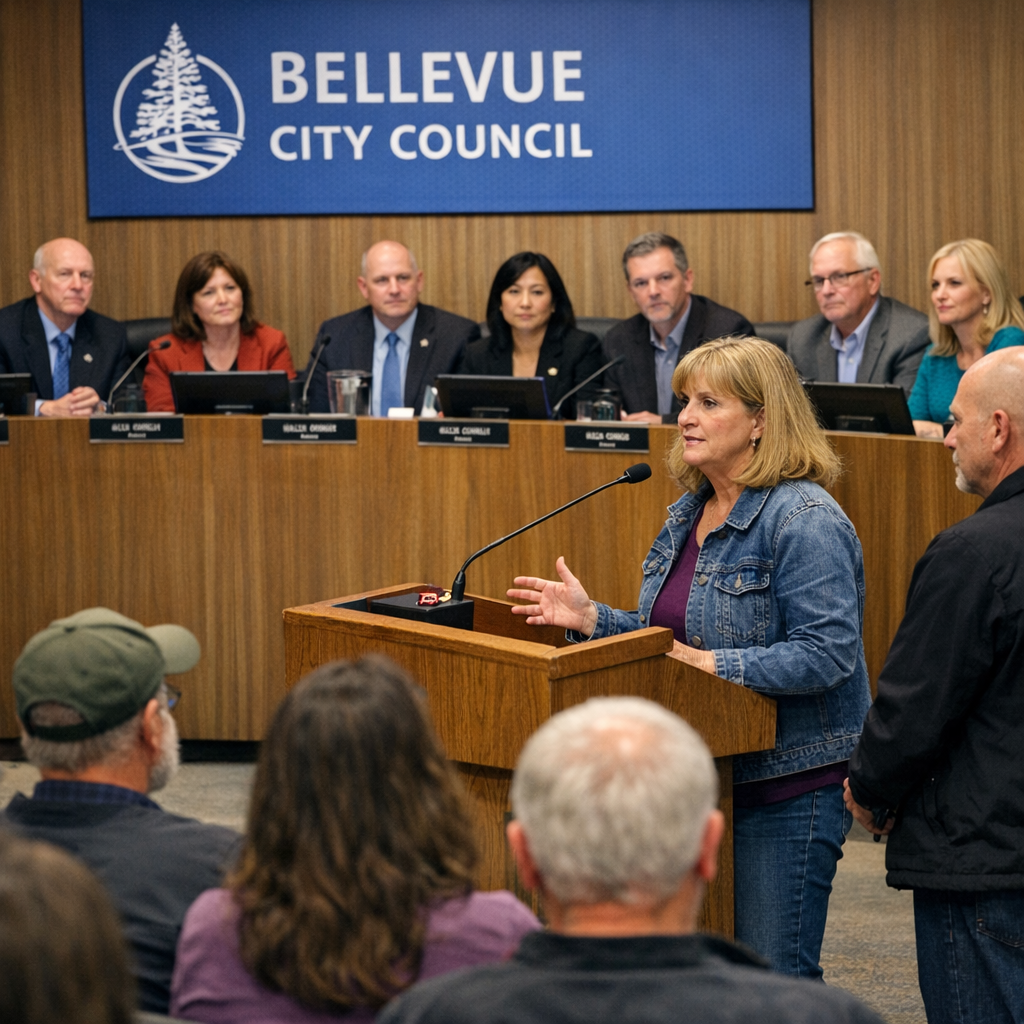
Community members raised concerns that city permitting under recent code changes—including those allowing more middle housing—may clash with private covenant restrictions. Long-time neighborhoods, especially, feel these conflicts disrupt expectations. Council heard from large and small associations urging clearer, more coordinated planning instead of permit-by-permit adjustments.
Traffic safety also came up repeatedly. Residents noted intersections at risk, missing sidewalks and bike lanes, and impacts of road construction. Pedestrian and bicycle networks are a recurring theme in what people say they need—and what many believe has been under-prioritized.
What’s Next & How You Can Engage
Council is set to receive more detailed transportation program options in September, including how revenue might be raised and allocated. Simultaneously, draft updates to the MFTE catalyst program are in development, with council action expected in upcoming months. If you live in a zone affected by proposed upzoning or code changes, now is the moment to review city materials, ask questions at public sessions, and submit comments.
For agendas, meeting documentation, and ways to participate (both in person and virtually), visit the Bellevue City Council’s website. Public input continues to weigh heavily in shaping how Bellevue grows—not just in buildings, but in infrastructure, character, and accessibility.