

By Olivia Adams
Bellevue is actively rolling out a series of city-level updates in policy and planning that touch on housing affordability, traffic safety, public safety, and environmental sustainability. Here’s a snapshot of what’s unfolding.
Housing Affordability & Multifamily Incentives
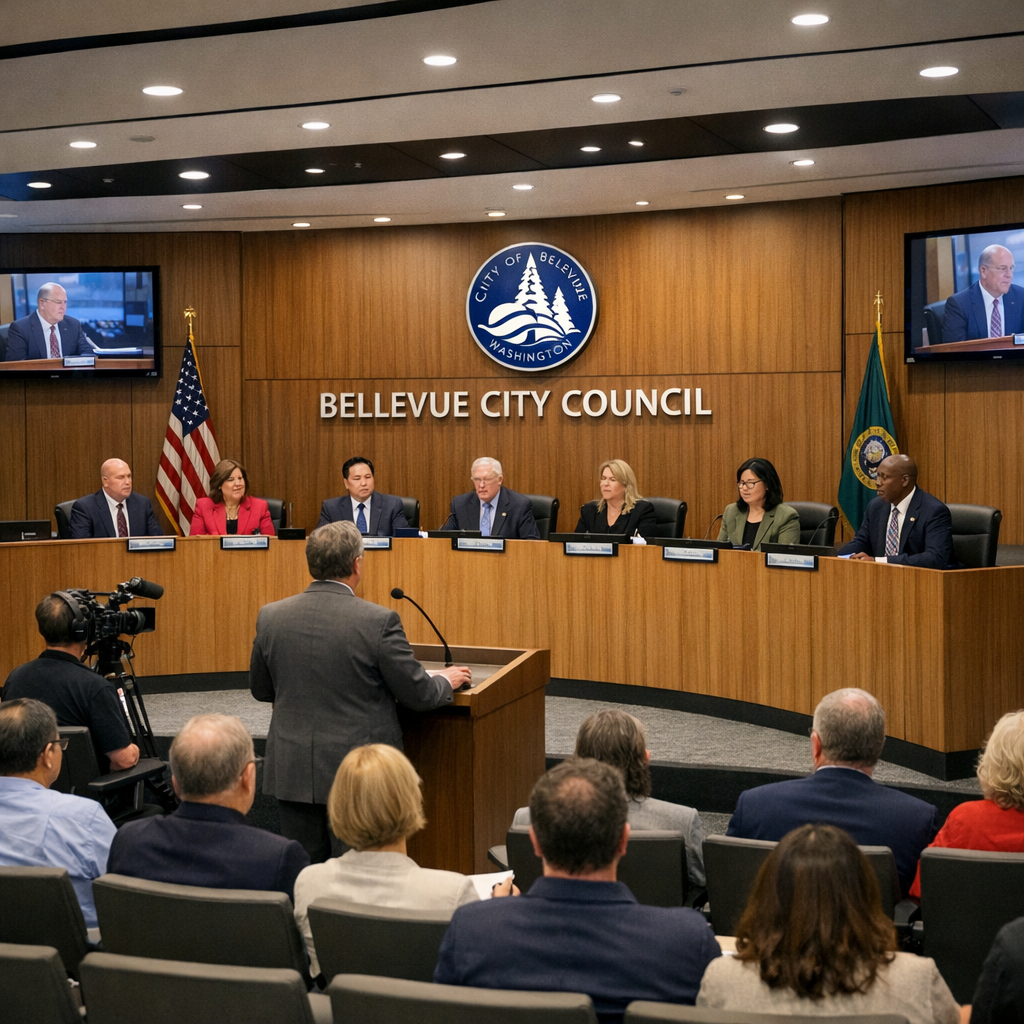
In a recent Bellevue City Council study session (July 21, 2026), officials discussed a proposed Multifamily Tax Exemption (MFTE) catalyst program to encourage development of more housing options—especially near transit hubs. The goal: ease the middle housing gap while supporting sustainable growth. The conversation also covered citizen concerns over private property covenants that may conflict with new middle-housing permit requirements, raising the need for clearer guidelines or legal resolutions.
Transportation & Traffic Safety Measures
Bellevue has begun installing new speed limit signs throughout neighborhoods including North East, North West, Crossroads, Bridle Trails, Lake Hills, and Wilburton, reducing limits from 25 mph to 20 mph in many areas. These changes are part of the city’s broader Vision Zero initiative, which seeks to eliminate traffic deaths and serious injury collisions by 2030 using a Safe System approach.
Meanwhile, speed enforcement efforts are facing challenges: some newly installed speed cameras have already been vandalized, emphasizing both resistance to enforcement and the need for public education accompanying policy change.
Sustainability & Climate Resilience
With the adoption of the 2026–2030 Sustainable Bellevue Plan, the city set new targets and strategies across five focus areas: Climate Change; Energy & Buildings; Mobility & Land Use; Materials & Waste; and Natural Systems. These include reducing greenhouse gas emissions, expanding renewable energy, enhancing EV charging and retrofits, as well as convening programs to bolster environmental equity and resilience for vulnerable communities.
An active action plan outlines steps such as supporting efficiency measures in multifamily and commercial buildings, strengthening outreach, and improving natural systems. Community input played a big role in shaping the plan.
Public Participation & Community Direction
These policies aren’t being developed in a vacuum. Bellevue’s residents continue to have opportunities to provide input—through public comment periods, city sponsored surveys, and neighborhood programs. One example: the voter insights survey revealed that affordability—particularly housing costs—has overtaken other concerns for many residents. Also, the Neighborhood Enhancement Program (NEP) enables neighborhood-backed small capital projects downtown, giving people a real say in how public space evolves.
As Bellevue grows, these intersecting efforts—housing incentives, traffic safety, sustainability, and resident engagement—define the city’s direction. How these threads are woven together will shape Bellevue’s character and livability in the years to come.