

By Olivia Adams
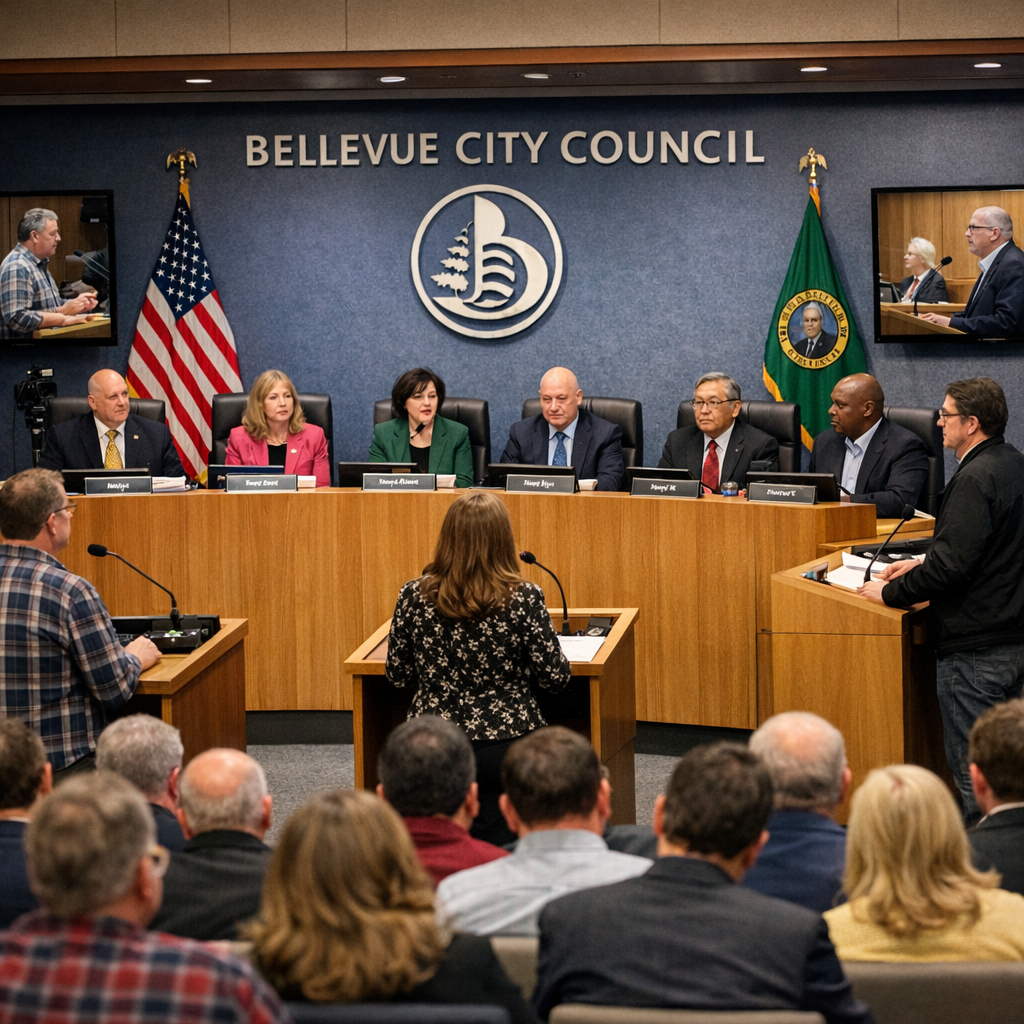
The Bellevue City Council is currently advancing several proposals that aim to reshape how the city handles transportation funding, middle housing regulations, and affordability—issues residents have flagged as crucial amid growth and rising housing costs.
Transportation Benefit District: Funding the Growing Needs
A high-level staff presentation detailed Bellevue’s projected growth: approximately 35,000 more homes, 70,000 new jobs, and 77,000 additional residents by 2044. Daily round trips are expected to rise nearly 28% during that timeframe. Alongside that, many arterial streets lack pedestrian and bike facilities, and several intersections are forecasted to exceed capacity limits. Councilmembers are now exploring a Transportation Benefit District (TBD), which would add a small sales tax and vehicle fee to generate significant funds for major projects, pedestrian safety, bike infrastructure, transit connectivity, and more. Staff are to bring back a comparative revenue model for scenarios with and without a TBD by mid-September.
MFTE Program Expansion and Middle Housing Conflicts
The Multifamily Tax Exemption (MFTE) catalyst program is being revised. Proposed amendments would enable more projects in certain areas—especially in Housing Opportunity Mobility Areas (HOMA)—to qualify. The changes include allowing fee-in-lieu participation, adjusting income thresholds, and simplifying timing requirements for applications. At the same time, residents in neighborhoods with private covenants are raising concerns that middle housing permits may conflict with recorded restrictions in their agreements. The council heard calls for notice processes, covenant-awareness signage, and better transparency.
Utility Charges & Micromobility Updates
Another key shift involves how utility connection charges are calculated. The council unanimously directed staff to remove the highest upfront charges (direct facility connection charges), switching to a system based on meter capacity and spreading costs more equitably among users. Changes are expected to take effect in the next budget cycle.
Meanwhile, Bellevue is poised to launch a shared micromobility program on August 10, which will bring hundreds of e-scooters, e-bikes, and seated scooters to public deployment. To manage safety and compliance, plans include parking corrals, geofencing, and AI-enabled monitoring of improper use. Councilmembers emphasized follow-through—mapping high-traffic routes, ensuring devices do not congest sidewalks, and evaluating performance six months after launch.
Why These Moves Matter
Bellevue is balancing ambitious growth with preserving liveability and equity. These proposals aim not just to manage expansion, but to ensure affordability, inclusivity, and safer street design. If adopted as expected, changes like the MFTE tweaks, revised utility fees, and TBD funding could stretch Bellevue’s budget while helping cushion the effects on people most vulnerable to housing and infrastructure costs.