

By Olivia Adams
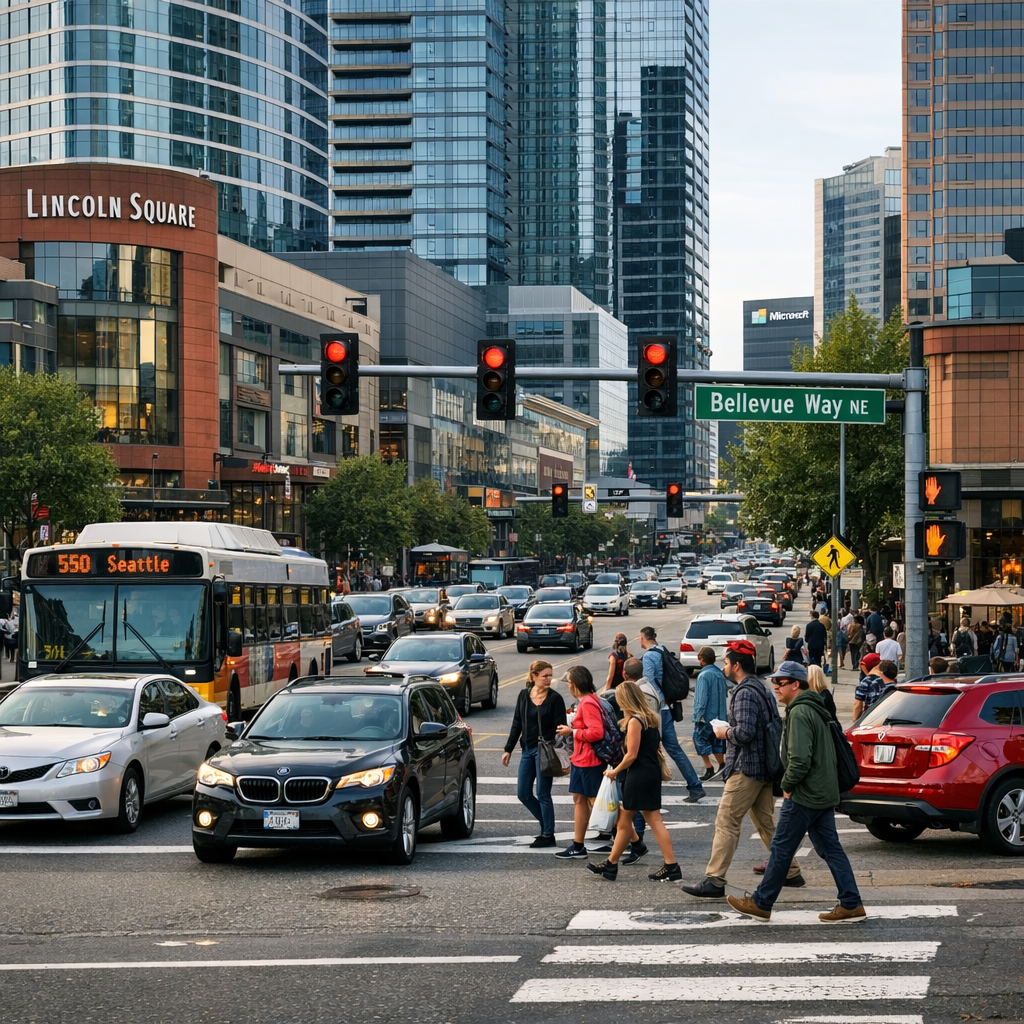
Bellevue is in a moment of transformation when it comes to transportation. The city is taking concrete steps to address congestion, improve safety, and keep up with rapid growth in population and travel demand.
150th Avenue SE Mobility Project nearing completion
One of Bellevue’s major infrastructure efforts, the 150th Avenue SE Mobility Project, works to reduce evening peak congestion between SE 38th Street and Eastgate Way. The project involves adding a southbound travel lane and enhancing highway access. As of October 2026, the project is substantially completed, with just a few final improvements remaining. Once fully finished, it’s expected to cut travel delays during peak hours in half on that corridor.
Upholding Congestion Standards despite calls to relax them
City officials recently discussed proposals to loosen Bellevue’s intersection congestion standards. In response, the Bellevue Transportation Commission, reflecting input from groups like the Bellevue Mobility Coalition, opted to hold existing performance targets while exploring engineering-based alternatives instead. Officials emphasized that maintaining strict intersection efficiency is crucial, especially with projections showing major growth in housing, jobs, and residents over the coming decades.
Vision Zero: a road safety plan aimed at ending serious traffic injuries
Bellevue’s “Vision Zero” initiative continues to guide city efforts to eliminate traffic fatalities and serious injuries. The plan takes a “safe system” approach—combining safer infrastructure, vehicle standards, speed management, and public education—to bring the city toward its goal of zero tragic crashes by 2030. Streetscape changes, improved crossings, and better signal timing are part of what residents can expect.
Big picture: how the city plans to meet future transportation demand
Growth forecasts show thousands of new housing units and tens of thousands of new jobs and residents in Bellevue by mid-century. That’s prompting city staff and leadership to explore additional funding tools and visionary infrastructure investments. Ideas like a Transportation Benefit District (TBD), signal upgrades, and sidewalks and bike paths where facilities are lacking all factor into these plans.
What this means for you
- Commuters should see reduced delays along 150th Avenue SE once final touches on the project are complete.
- Stricter congestion standards may limit new shortcuts that degrade traffic flow, but engineering-driven fixes may bring innovation.
- Expect more focus on pedestrian and cyclist safety, especially in areas without good infrastructure.
- New funding tools or tax measures could affect residents, but could also enable faster delivery of needed traffic and safety projects.
Bellevue is not just planning for more cars—it’s planning for smarter roads, safer streets, and a transportation network capable of handling the growth already coming our way.