

By Olivia Adams
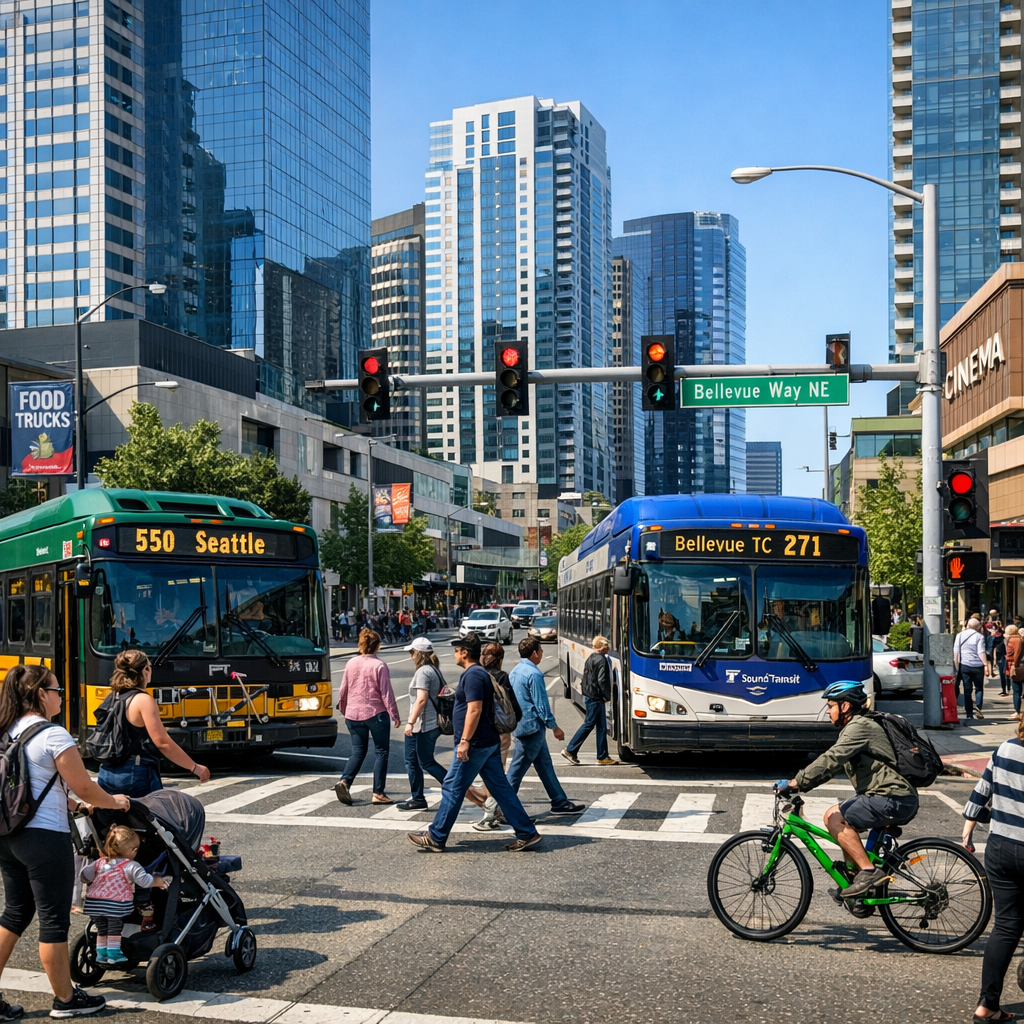
Bellevue is facing a major crossroads when it comes to the transportation infrastructure that will shape our everyday lives for years. With over $1.5 billion in needed projects still unfunded, the city is rolling out a public survey so residents can help decide which improvements should come first. This isn’t just about potholes—it’s about how we get around.
What’s on the table
The funding gap covers a wide range of projects across Bellevue, including sidewalks, bike lanes, transit enhancements, and street corridor upgrades. Many of these projects are tied to Bellevue’s comprehensive goals for growth, mobility, and safety as set out in its 2044 Comprehensive Plan. Key among them is the Grand Connection Crossing, a proposed east-west multimodal bridge over I-405 connecting downtown and Wilburton that remains only partially funded. Other initiatives include safer crossings, improved transit stations, and expanded bike and pedestrian access. The gap not only reflects costs—but the ambitions Bellevue has for becoming more walkable, transit-friendly, and sustainable.
Why public input matters
The city has launched a Transportation Investments Survey as part of the “Moving Bellevue Forward” initiative, open to everyone who commutes, travels, bikes, walks or drives through Bellevue. It asks people to weigh in on which transportation capital projects matter most over the six-year span from 2027 through 2032. Responses are scheduled to help inform the City Council’s decisions in September.
Key decisions waiting ahead
One of the city’s big challenges is aligning its priorities with available tools. There’s often talk of introducing or expanding a Transportation Benefit District that could generate new local revenue (through sales taxes or car tab fees) to pay for some of these projects. Balancing which projects get prioritized—downtown transit, neighborhood streets, pedestrian safety—won’t be easy, especially when some corridors face constraints that make improvements complex or expensive.
How to make your voice heard
The survey is open through August 20 and takes about five to seven minutes. It’s anonymous and asks respondents to rank different types of transportation investments. Even if you don’t use public transit every day, your input helps shape how Bellevue’s funds will be invested—and how safe and efficient our streets will feel for everyone.
With growth and change already underway, this moment could set the transportation direction for years. If you care about better sidewalks, safer crossings, faster buses, quieter streets—or all of the above—now’s the time to let the city know.