

By Olivia Adams
Bellevue is entering a busy period for city government — with major updates unfolding in budget planning, utility services, and transportation policy. These issues have long-reaching consequences for residents across neighborhoods.
Preliminary Budget Reflects Priorities and Growth
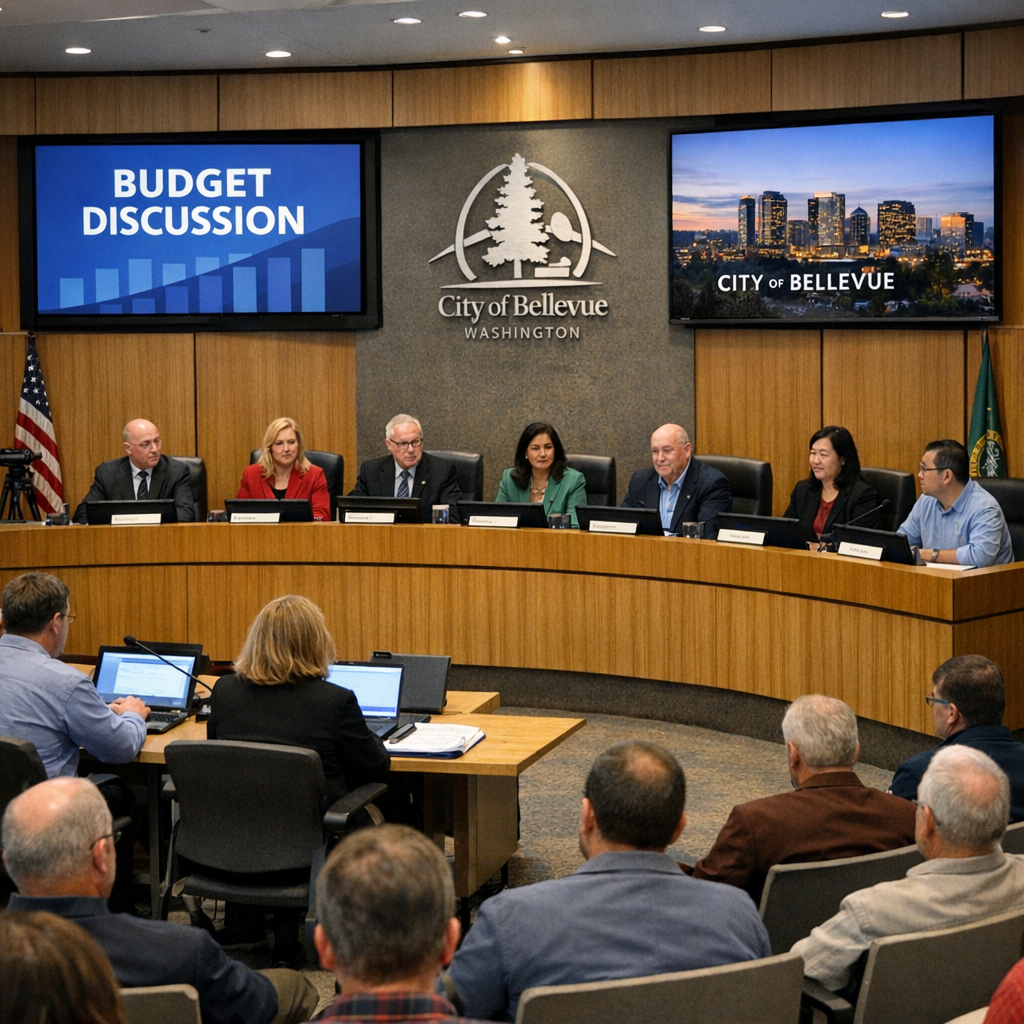
The Bellevue City Council has begun reviewing the preliminary 2027–2028 operating budget and a new six-year Capital Improvement Program totaling approximately $2.3 billion. This budget aims to fund core services while meeting increasing demands tied to population growth, infrastructure scaling, and strategic priorities like equitable prosperity, environmental sustainability, and livability.
City staff say the budget review will emphasize efficiency and strategic use of one-time funds while maintaining ongoing services. Public input will continue to be important as council discusses various investments and trade-offs. Residents should watch for budget sessions and ways to give feedback.
Utility Services: Affordability, Reliability, and Communication
Utility services remain top of mind for many Bellevue residents. A recent city survey showed people highly value safety, reliability, and clean water — yet affordability ranks as their greatest concern.
In response, Bellevue Utilities is enhancing communications (including clearer rate structures and billing explanations), improving digital tools, and promoting assistance programs for rate-payers. Concurrently, several infrastructure and system plans are under revision to ensure long-term reliability for water, wastewater, stormwater, and solid waste services.
Transportation Standards: Holding the Line Against Relaxation
Bellevue’s Transportation Commission recently considered relaxing performance standards related to intersection congestion, specifically the volume-to-capacity (V/C) ratios that influence when and where the city invests in road improvements.
After pushback from business and professional groups, commissioners decided not to ease those standards — at least for now. More engineering studies and stakeholder engagement will be required before any possible changes. Many see this as a statement of intent: Bellevue is not willing to normalize congestion simply by lowering performance goals.
What to Watch Going Forward
- Public meetings on the budget and CIP proposals — these forums will shape what projects move ahead and how resources are allocated.
- Updates to utility master plans and rates — changes to connection fees, possible new grant or subsidy opportunities, and infrastructure investments.
- Transportation policy revisions — particularly around performance targets and neighborhood traffic spillover as Bellevue continues to grow.
These are interconnected issues: how Bellevue plans for growth, maintains essential services, and preserves quality of life depends on decisions being made now. Residents’ voices and engagement will matter as much as the numbers on spreadsheets.