

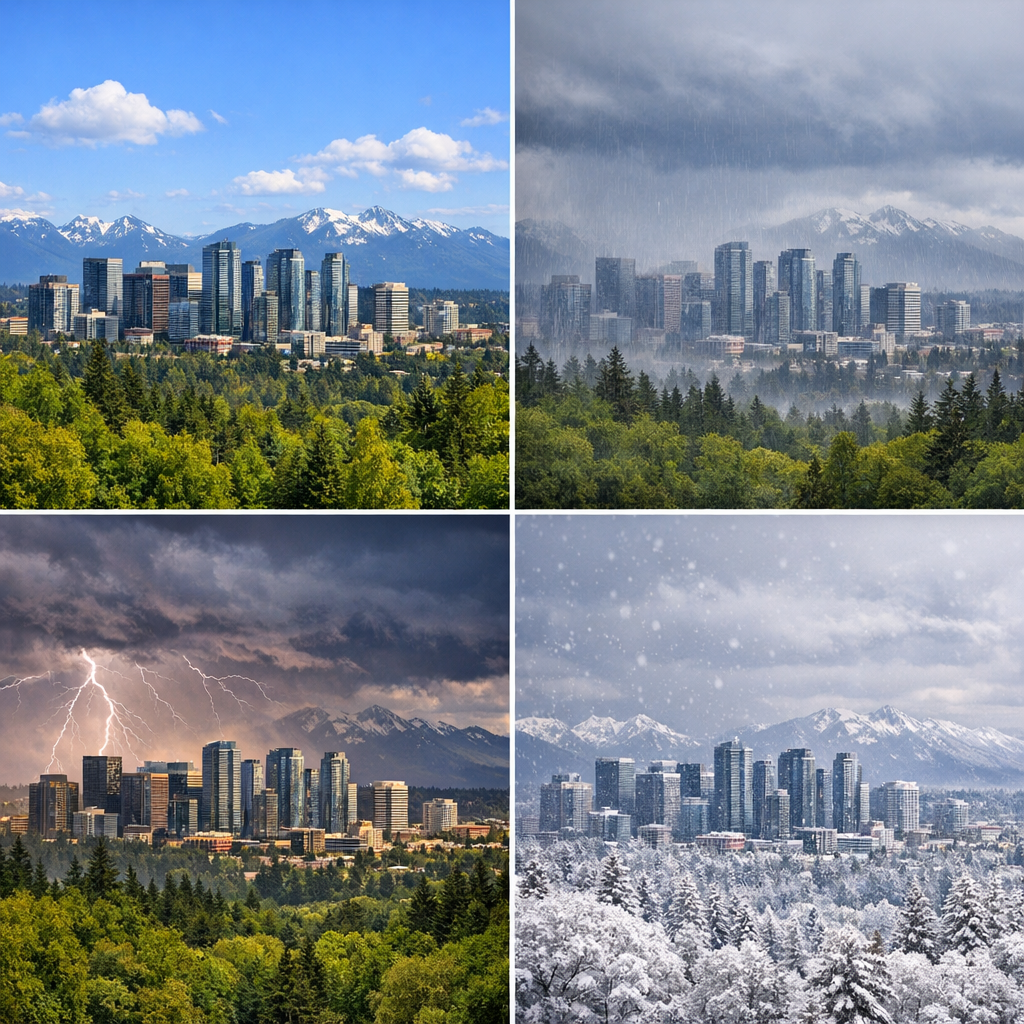
Hi, I’m Michael Carter, writing today on Bellevue’s weather & environment. As our city grows, so do the changes in our climate and how they affect us day to day. Here’s what folks should know—and what we can do together.
Seasonal Patterns in the Puget Sound Region
Bellevue and the broader Puget Sound lowlands experience a maritime climate: mild, wet winters and dry, cool summers. More than 70% of annual precipitation typically falls between October and March, when Pacific storms sweep inland and the landscape gets saturated. In contrast, summers are relatively dry, kept cool by marine influence and offshore high-pressure systems. This rhythm shapes everything from gardens to outdoor plans.
Emerging Climate Trends
However, historic weather patterns are shifting. Bellevue’s climate assessments show rising average temperatures and more frequent episodes of extreme heat. Nights that used to be cooler are now warmer. Snowpack in the Cascades declines, and streamflows are starting earlier in the year. We’re also seeing more intense rainfall events—raising the risk of flash flooding and erosion in local watersheds. Wildfire smoke, even from fires hundreds of miles away, is becoming a growing seasonal concern.
Conservation & Vital Natural Areas
Bellevue is home to critical habitat—wetlands, streams, riparian zones, and forests that support salmon, cedar, and other species central to our local ecology. City regulation protects these “critical areas,” setting buffers and restrictions for development. These protections are vital as climate stress—like hotter summers and heavier storms—threatens water quality, habitat health, and overall ecosystem resilience.
What Bellevue Is Doing
To respond, the city has adopted the Sustainable Bellevue Plan for 2026–2030. Key goals include reducing greenhouse gas emissions 50% by 2030 (with an eye toward 95% by 2050), strengthening resilience to climate impacts, preserving natural systems, and targeting energy use in buildings and transport. Bellevue is also part of regional collaborations that work to align climate goals across King County and neighboring cities.
What You Can Do as a Resident
- Make small changes at home: better insulation, lowering thermostat swings, choosing efficient, clean energy sources.
- Reduce waste. Composting and recycling help cut methane emissions from landfills.
- Support and participate in green city programs—tree planting, habitat restoration, and watershed protection.
- Stay aware of air quality alerts, especially during wildfire season, and have plans for bad-smoke days.
- Adapt landscaping to climate trends—use drought-tolerant plants, conserve water in summer, and build buffers to manage storm runoff.
Looking Ahead
Bellevue’s environment and weather are no longer static. Our choices now—collectively—will help shape how resilient and livable this city is for future winters, summers, rainstorms, fires, and clean-air days. It’s not just what the weather does to us—it’s what we do in response.