

By Michael Carter
Local Climate Basics
Bellevue has a temperate, maritime climate. Average summer highs range between 72–79 °F, winters usually hover between 46–50 °F, and the area gets about 37 inches of rainfall annually, mostly during the fall and winter. Heavy snow is rare. Bellevue lies within 25 drainage basins that all drain into Lake Washington or Lake Sammamish. These facts shape environmental planning and risks.
Shifts We’re Seeing
Gradual Temperature & Rain Pattern Changes
Long-term monitoring shows increases in summer heat stress, shifts in when rain falls, and heavier downpours during winter. Bellevue’s vulnerability assessment cites risks of extreme precipitation and flooding, especially in stormwater infrastructure. Dry spells during warm months are also becoming more noticeable.
Tree Canopy Trends
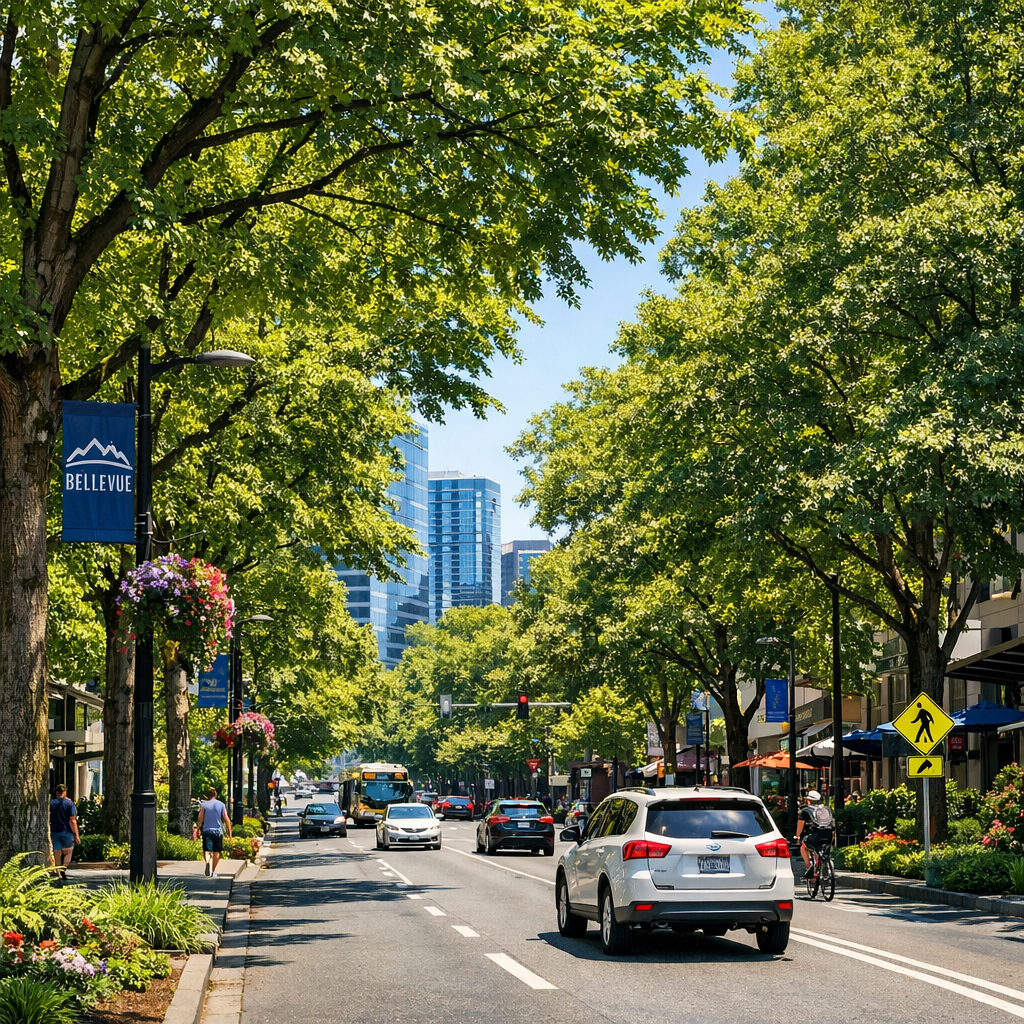
As of 2023, Bellevue’s tree canopy covers about 39% of land—just shy of the city’s goal of 40%. But the benefits are not evenly distributed. Some neighborhoods (like Bridle Trails and Cougar Mountain) have more than 50%, while others, including Downtown, have as little as 9%. Overall canopy fell slightly—by roughly 70 acres—from 2021 to 2023, mostly in suburban residential areas. Parks, however, saw gains.
Environmental Risks & Natural Systems
Bellevue supports diverse ecosystems including salmon streams like Kelsey Creek and habitats connected to Lake Sammamish and Lake Washington. Climate forecasts warn that hotter summers, more frequent drought, and warming stream temperatures could harm aquatic life. Degradation of wetland and riparian zones—areas along waterways—is a concern, especially when coupled with urban runoff and sedimentation.
What’s Being Done
The city’s latest Sustainable Bellevue Plan (2026–2030) outlines a roadmap to reduce greenhouse gas emissions, improve natural systems, and increase resilience. Key strategies include expanding the urban tree canopy, improving stormwater infrastructure, encouraging electric yard tools, and helping buildings reduce energy use. Bellevue aims for carbon neutrality by 2050.
Actions Residents Can Take
- Plant native trees and support efforts to enhance canopy in underserved neighborhoods.
- Reduce water use during dry spells; practice water-wise landscaping.
- Use sustainable modes of transportation when possible: walking, biking, transit, or carpooling.
- Volunteer: stream cleanups, habitat restoration, or planting events organized through city or local nonprofits.
Why It Matters
These changes don’t just affect wildlife or city infrastructure—they influence air quality, public health, comfort during heatwaves, flood risk, recreational access, and the character of Bellevue itself. Staying informed and taking action collectively can help Bellevue remain a healthy, livable place for all.