

By Michael Carter
Understanding Bellevue’s Typical Climate
Bellevue lies in the Pacific Northwest’s maritime climate region. Summers are warm and relatively dry, with average daytime highs in the mid-70s °F and cool nights. Winters bring consistent rainfall—most of Bellevue’s ~37 inches annually—and temperatures that rarely drop below freezing, while snowfall remains quite rare. Overall, coldest highs in winter hover around the upper 40s°F, and summers rarely exceed 80°F.
This consistency shapes daily life, landscaping, and transportation in our region.
Emerging Trends: Heat, Rain & Environmental Impacts
More Hot Days
Analyses show Bellevue is projected to see a sharp rise in the number of days exceeding heat thresholds (e.g. above 88°F) by mid-century. That means more summer days that can feel oppressive especially for people without easy access to cooling or outdoor shade.
Shifting Rain Patterns & Storm Intensity
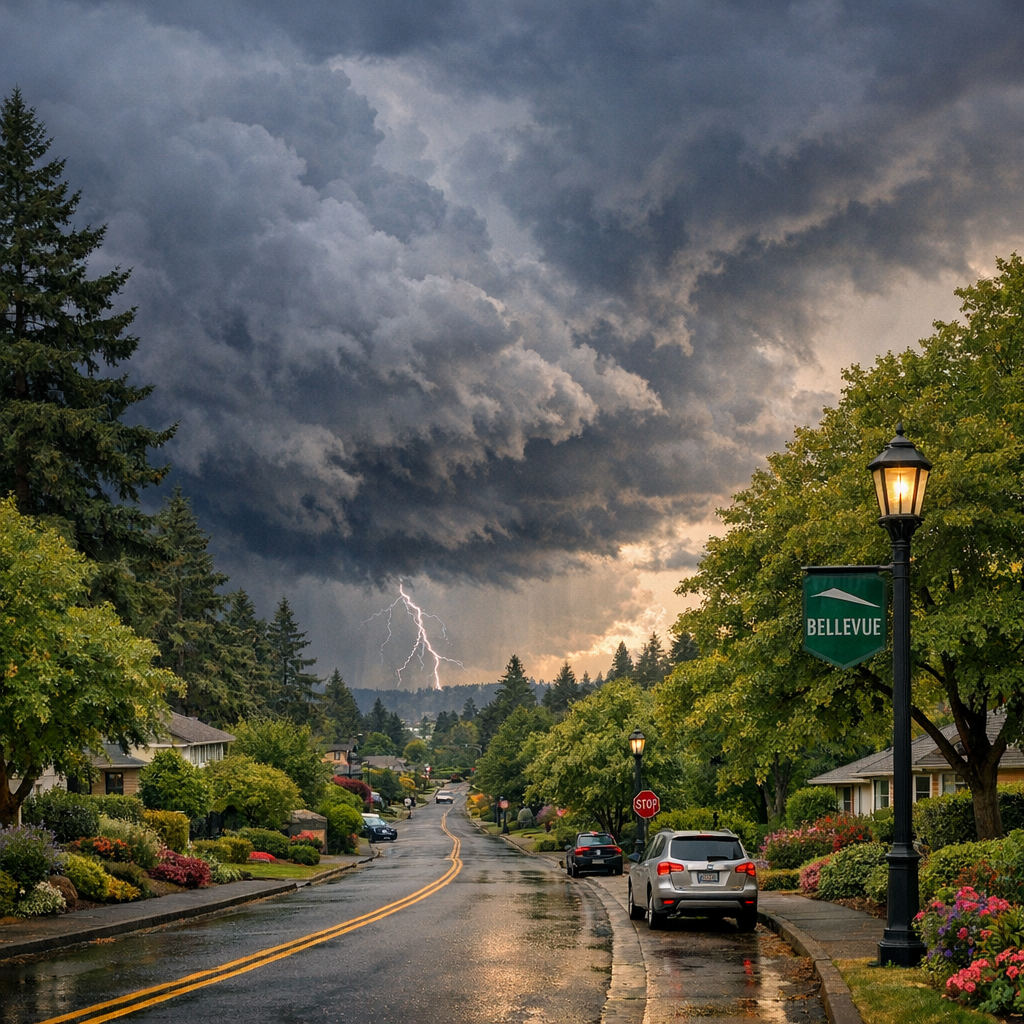
While summer dryness remains the pattern, rainstorms are expected to become more intense—to dump more in shorter time spans. Winter creek flooding, runoff, and erosion are growing concerns, particularly in or near developed areas. Even as shorter dry spells lengthen, the risk of heavy downpours increases.
Water, Habitats, and Health Under Pressure
Lower snowpack in nearby uplands means less stored water leading into late summer, and stream temperatures are trending warmer, stressing salmon and other cold-water species. Wildfire smoke, even if from distant fires, becomes more frequent. Meanwhile, heat and air pollution pose growing risks for older adults, those with existing health conditions, and lower-income households.
Actions Bellevue is Embracing & What Residents Can Do
The city has set ambitious goals: reducing greenhouse gas emissions by 50% by 2030 and becoming carbon neutral by 2050 for the community, with municipal operations targeted for neutrality even earlier. Bellevue is advancing a 2026-30 Sustainable Bellevue Plan that spans energy, buildings, urban trees, land use, and natural system protection.
On the citizen side, planting trees, reducing vehicle idling, and conserving water help—but adaptation matters too: ensuring homes are better ventilated, keeping informed about air quality, and helping protect stormwater systems.
What to Expect Going Forward
The picture ahead is one of trade-offs: warmer summers accompany drier periods and wildfire threats; winters keep delivering rain but with more volatility. Bellevue’s resilience depends on how well we plan for extremes—not just averages. As infrastructure adapts and natural systems are protected, residents will benefit from investments made now in cooling, green spaces, water management, and planning.
Bellevue’s weather and environment are evolving—but with informed choices, community engagement, and smart policy, we can protect both nature and the health of all who live here.