

By Michael Carter
How Bellevue’s Climate Shapes Life Here
Bellevue enjoys a mild, maritime climate typical of the Pacific Northwest. Winters are wet and cloudy, while summers are warm, relatively dry, and pleasant. Average high temperatures in summer reach the upper 70s°F, while winter lows often hover in the 40s. Au naturel rainfall is heavily concentrated between October and April, with a sharp dropoff during the summer months. Flooding, erosion, and dwindling snowpack are among the most visible risks tied to climate trends. There are good months and less-good months — but understanding the patterns helps us adapt.
Current Environment & Growing Pressures
Tree Canopy & Neighborhood Heat
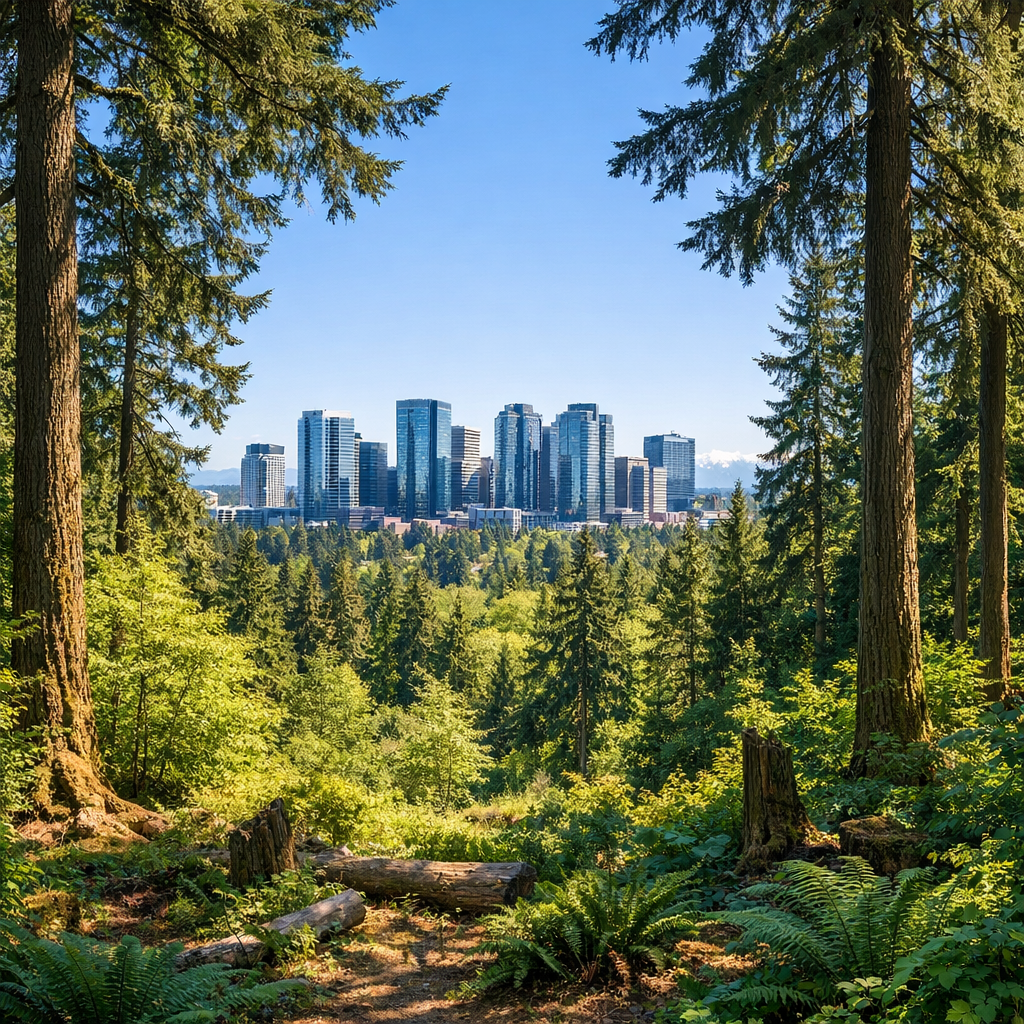
Trees are a critical part of Bellevue’s environmental identity. As of 2023, the citywide tree canopy covers about 39 % of the land area — nearly reaching its initial goal of 40 %. But this number masks stark differences among neighborhoods: while areas like Cougar Mountain and Bridle Trails enjoy dense canopy, Downtown has less than 10 % tree cover. That imbalance contributes to hotter summer temperatures in urban core areas and amplifies heat-related risks for people living there.
Protecting Aquatic Ecosystems & Wildlife
Bellevue is home to critical habitats for species such as Chinook salmon, coho, mussels, western pond turtle, and several bird varieties. Streams, wetlands, and riparian corridors are regulated as “critical areas” under city rules, which means there are restrictions and buffer requirements to protect water quality, habitat, and slope stability. These protections are increasingly important as climate change intensifies rainfall, sediment runoff, and stream temperature swings.
What Bellevue Is Doing
Sustainable Bellevue Plan 2026-2030
Bellevue has adopted a multi-pronged plan focused on greenhouse gas emissions, land use, mobility, energy, natural systems, and waste management. Among its goals: reducing communitywide emissions by half by 2030 and reaching 95 % cuts by 2050; achieving carbon neutrality in city operations by 2040; and strengthening actions around tree canopy, open space, and climate resilience.
Community and Infrastructure Resilience
The city’s 2023 Climate Vulnerability Assessment emphasized risks from extreme precipitation, heat, and wildfire smoke — not only to natural systems, but to infrastructure like stormwater facilities, roads, and steep slopes. Bellevue is working to update zoning, enhance buffers near streams, and align public building design with evolving climate realities.
How You Can Be Part of the Solution
- Plant a climate-adapted tree in your yard or support local canopy projects — especially in hotter, less green neighborhoods.
- Support measures and land use practices that protect streams, wetlands, and their surrounding buffers.
- Track air quality, especially during wildfire season, and limit outdoor activity or use air purifiers when levels are unsafe.
- Consider energy efficiency upgrades at home — insulation, heating systems, solar — and reduce car trips where possible.
- Get involved: Bellevue offers volunteering and advisory boards focused on sustainability, and public input is solicited on key environmental plans.
Bellevue’s climate and environment face evolving challenges, but also notable strengths: a robust canopy goal, strong protection for habitat, and active planning underway. By staying informed and engaged, residents can help shape a more resilient, equitable environment for all.