

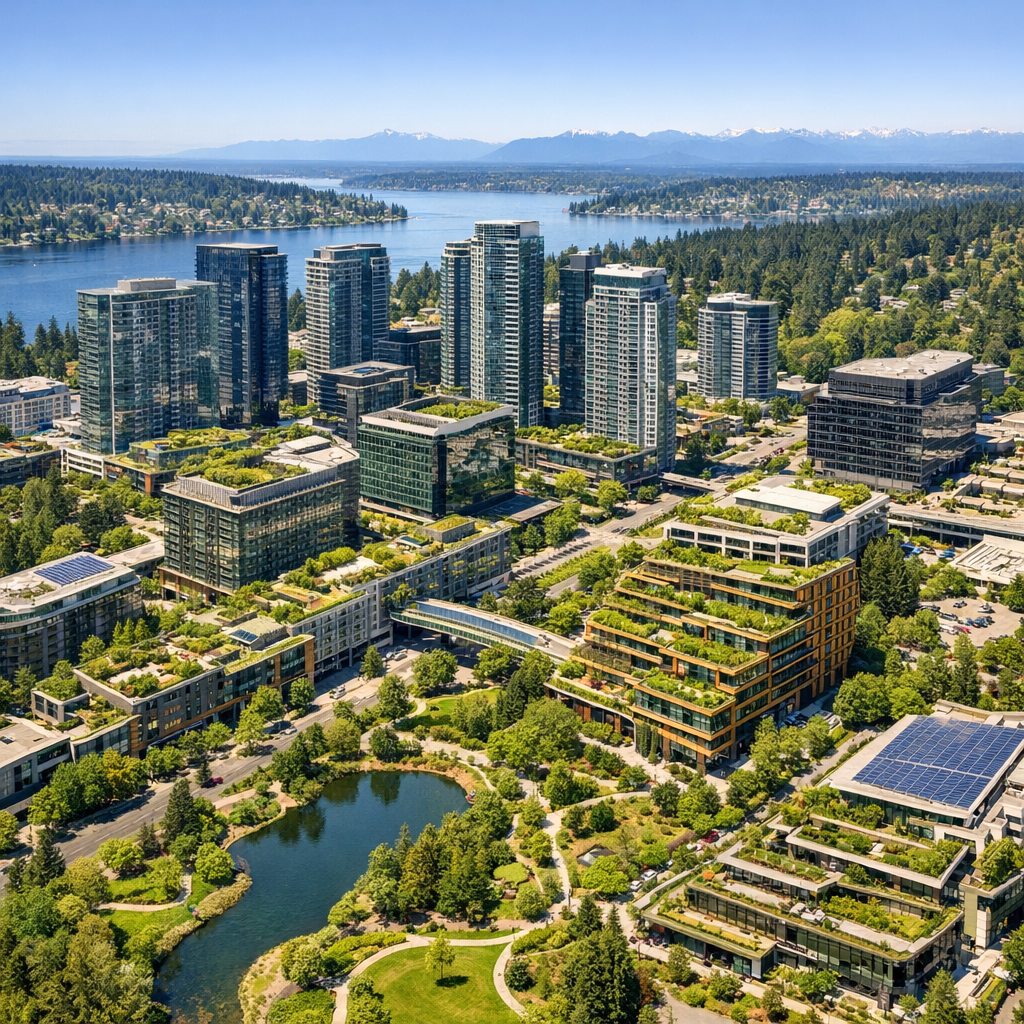
Bellevue has long been recognized for its commitment to environmental stewardship. The city’s Sustainable Bellevue Plan sets forth ambitious goals, including a 95% reduction in greenhouse gas emissions by 2050. This plan encompasses strategies across five key areas: climate change, energy and buildings, mobility and land use, materials and waste, and natural systems.
Progress in Emission Reductions
Recent data indicates that Bellevue’s greenhouse gas emissions decreased by 4.6% from 2023 to 2024. This decline is attributed to reduced energy consumption, a shift towards cleaner transportation options, and an increased reliance on renewable energy sources. Notably, since 2011, emissions from municipal operations have dropped by 52%.
Enhancing the Urban Canopy
The city’s commitment to maintaining and expanding its urban forest is evident. The latest tree canopy assessment revealed a slight decrease from 39.6% to 39.3% between 2021 and 2023. While suburban residential areas experienced some loss, city parks saw an increase of 38 acres in tree canopy, underscoring efforts to preserve green spaces.
Community Engagement and Initiatives
Residents are encouraged to participate in programs like the Bellevue Climate Challenge, which offers actionable steps to reduce individual carbon footprints. Additionally, the city provides resources such as the Clean Buildings Incentive Program and Energy Smart Eastside to support energy efficiency in homes and businesses.
Looking Ahead
Bellevue’s dedication to sustainability is a collaborative endeavor. By staying informed and actively participating in local initiatives, residents can contribute to a healthier, more resilient community. For more information on ongoing projects and how to get involved, visit the city’s Environmental Stewardship page.