

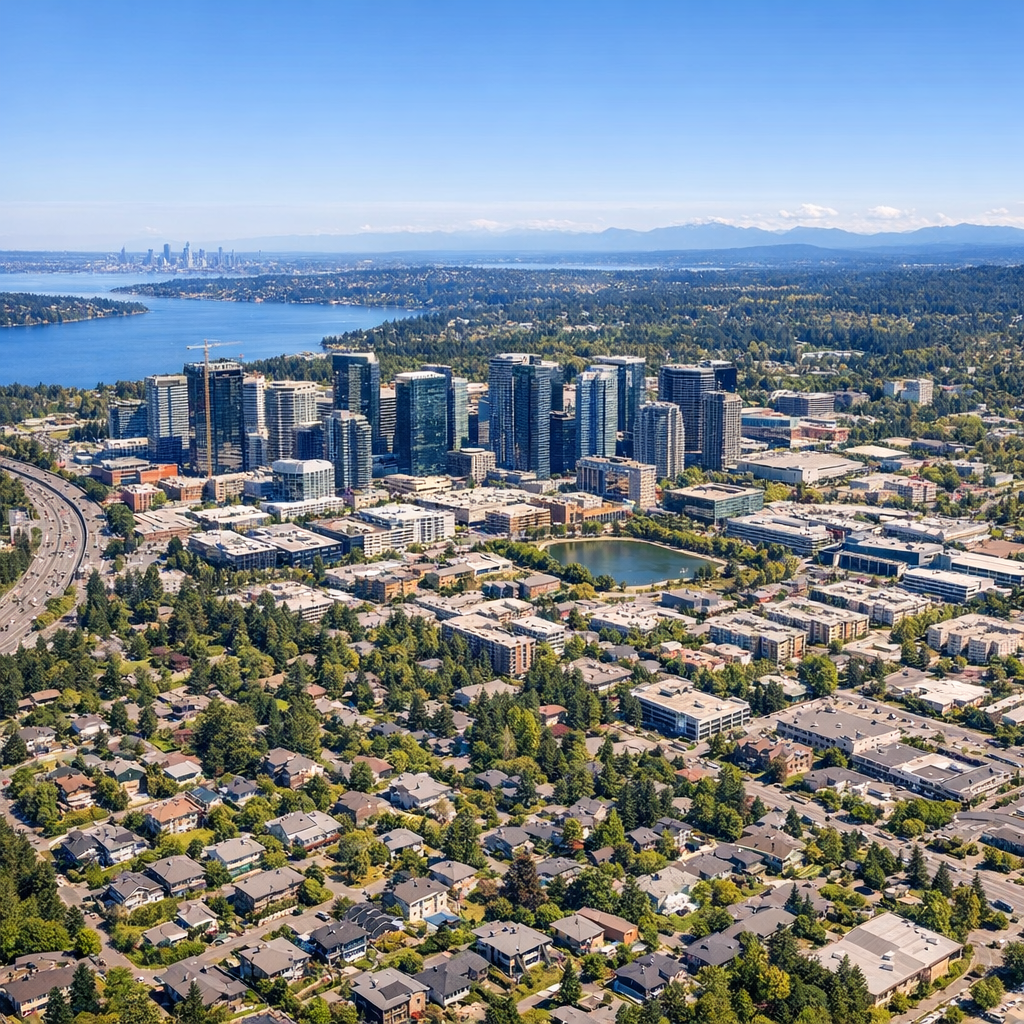
Bellevue, Washington, has experienced significant economic growth over the past two decades, establishing itself as a dynamic regional center. This article provides an overview of the city’s economic landscape, focusing on employment trends, business environment, and housing market dynamics.
Employment Trends and Projections
As of 2015, Bellevue was the second-largest city in Washington State in terms of employment, boasting over 150,000 jobs. Despite economic fluctuations, the city has maintained an average annual job growth rate of 1.12% since 2000. Projections indicate that by 2035, Bellevue’s employment figures could reach 192,800, underscoring its role as a robust and diverse economic hub.
Business Environment and Competitiveness
The city’s commitment to fostering a competitive business environment is evident in recent surveys. The 2025 Business Survey revealed that 71% of businesses believe Bellevue is headed in the right direction, and 85% view it as an improved place to conduct business. Additionally, 69% would recommend Bellevue as a business destination, highlighting the city’s appeal to entrepreneurs and established companies alike.
Housing Market Dynamics
Bellevue’s housing market reflects its economic vitality. As of May 2026, the median sale price of homes was $1.5 million, with properties typically selling in about 8 days. While this represents an 11.3% decrease compared to the previous year, the market remains competitive, with homes receiving multiple offers on average.
Tourism and Economic Impact
Tourism plays a pivotal role in Bellevue’s economy. In 2025, visitor spending supported approximately 14,000 hospitality industry jobs and generated $142 million in state and local taxes. This underscores the importance of tourism in sustaining the city’s economic ecosystem and enhancing the quality of life for residents.
Transportation Infrastructure
Enhancements in transportation infrastructure are set to further bolster Bellevue’s economic prospects. The upcoming launch of the light rail service between Seattle and Bellevue on March 28, 2026, is anticipated to improve connectivity, facilitating easier commutes and potentially attracting more businesses and residents to the area.
In conclusion, Bellevue’s economic landscape is characterized by steady employment growth, a favorable business environment, a dynamic housing market, and strategic infrastructure developments. These factors collectively contribute to the city’s ongoing prosperity and appeal as a place to live and work.