

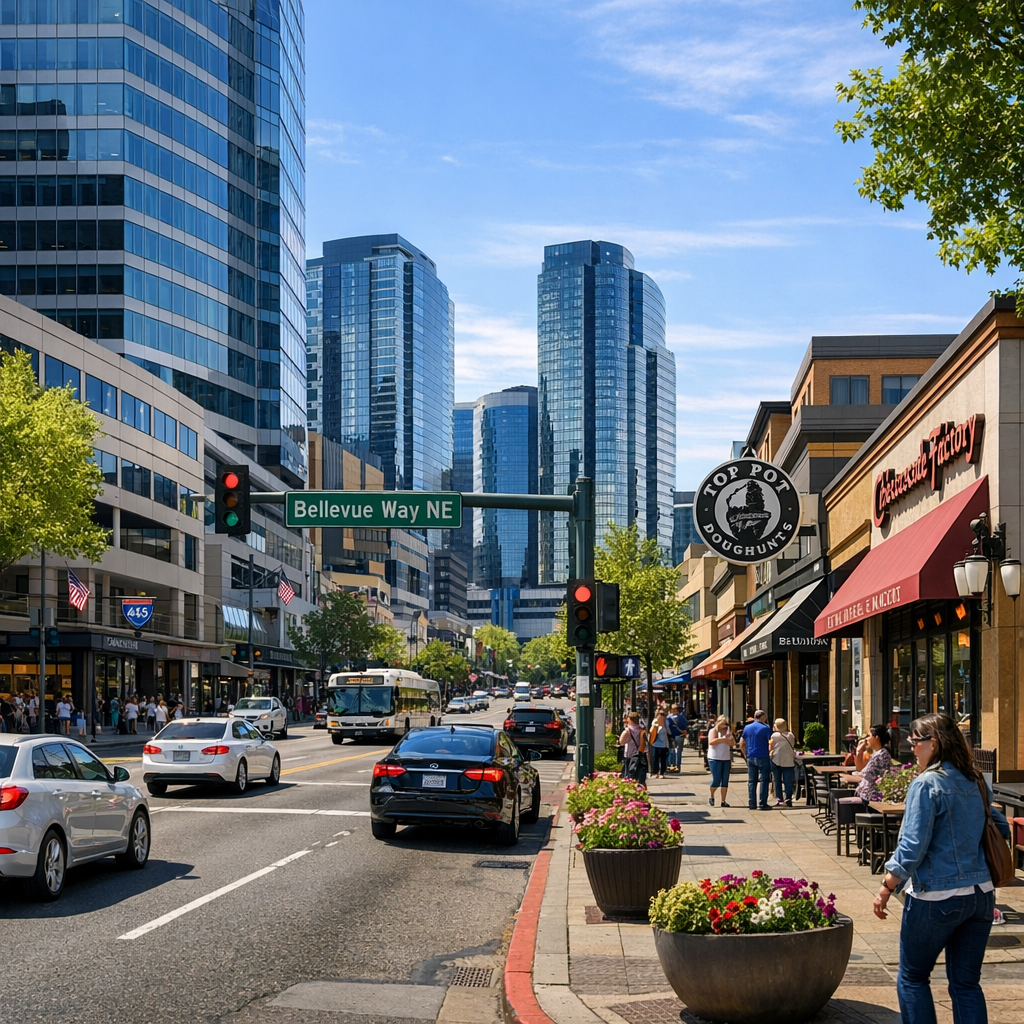
Bellevue, Washington, has solidified its position as a dynamic economic hub in the Pacific Northwest. With a population of approximately 154,486 residents, the city has experienced steady growth, reflecting its appeal as a place to live and work.
Employment and Business Environment
As of 2015, Bellevue boasted over 150,000 jobs, making it the second-largest city in Washington State in terms of employment. The city’s job market has grown at an average annual rate of 1.12% since 2000, with projections estimating 192,800 jobs by 2035. This growth underscores Bellevue’s role as a regional employment center, attracting workers from across the Puget Sound region.
The business climate in Bellevue is notably favorable. A 2025 business survey revealed that 71% of businesses believe the city is headed in the right direction, and 85% view Bellevue as a better place to do business. Additionally, 69% would recommend operating a business in the city, highlighting the supportive environment for entrepreneurs and established companies alike.
Tourism and Economic Impact
Tourism plays a significant role in Bellevue’s economy. In 2025, visitor spending supported approximately 14,000 hospitality industry jobs and generated $142 million in state and local taxes. This influx of visitors not only bolsters local businesses but also contributes to the overall economic vitality of the city.
Housing Market Dynamics
The housing market in Bellevue reflects the city’s economic vibrancy. As of May 2026, the average home value was $1,499,175, a slight decrease of 3.7% over the past year. Homes typically go pending in around 11 days, indicating a competitive market. The median sale price per square foot stands at $672, down 7.3% from the previous year. Despite these fluctuations, the market remains robust, with a median sale price of $1.5 million over the last three months.
Transportation and Infrastructure
Enhancements in transportation infrastructure have further strengthened Bellevue’s economic landscape. The introduction of the Sound Transit 2 Line has improved connectivity, with light rail stations at South Bellevue, East Main, Bellevue Downtown, Wilburton, Spring District/120th, BelRed/130th, Overlake Village, and Redmond Technology. This development facilitates easier access for commuters and supports the city’s growth.
Demographics and Workforce
Bellevue’s diverse population contributes to its economic success. The city has a median household income of $165,576, significantly higher than state and national averages. Educational attainment is also notable, with 72.1% of residents holding a bachelor’s degree or higher, and 36% possessing a graduate degree. This highly educated workforce attracts businesses seeking skilled professionals.
In summary, Bellevue’s economic landscape is characterized by steady employment growth, a favorable business environment, a competitive housing market, and robust infrastructure. These factors collectively contribute to the city’s status as a thriving economic center in the region.